|
Can Scotland make health fairer? |
Related newsAll public bodies must focus on health, urges charity Carers charities urge greater transparency in reforms Unpaid carer: Funding is vital to delivering the NCS Cost-of-living ‘devastating’ for disabled people Social workers call for disability funding rethink Long COVID putting Scots at risk of poverty Redefining clinical meaningfulness Oversight group for government drug action Medical trainee abuse reports ‘shut down and silenced’ Politicians must take ‘bold’ action on child poverty Government to act on A&E failures 
|
|

Image Credit: © Thomas
|
||
|
||
|
Ahead of Voluntary Health Scotland’s annual conference next week entitled Fair Health – who gets it?, healthandcare.scot takes a look at where we are now in addressing Scotland’s health inequalities from the perspective of a researcher, a campaigner and a committee of MSPs.
A report on Scottish parliament’s inquiry into health inequalities published last month acknowledged that work to-date has “largely failed” to reduce health inequalities.
With the gap in health between the wealthiest and most deprived areas widening in recent years, the Health and Social Care Committee called for urgent “bold and strategic”actions at all levels of government.
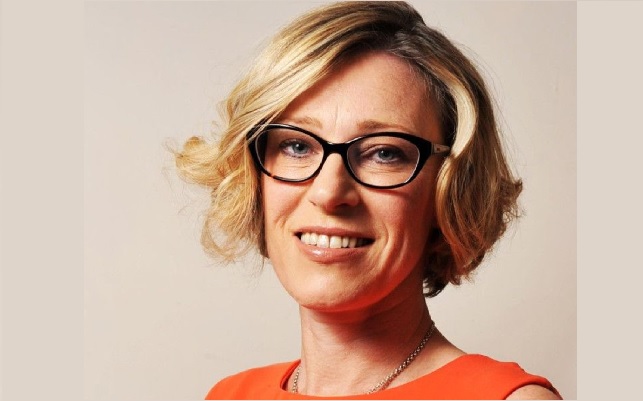
That need for a bold approach is a perspective shared by Chris Creegan who has a background in social research and work in both executive and non-executive roles – most recently as a Strategic Advisor to the independent review of health inequalities in Scotland.
He says Scotland has had no shortage of bold policy ambitions over previous decades but the outcomes reveal an implementation gap. There is a continuing decline in life expectancy at birth in Scotland and the widening gap between most and least deprived areas and Edinburgh researchers have also linked social deprivation to frailty among older Scots.
Launched five months ago by the Health Foundation, the independent review focuses on the social determinants of health – social, cultural, political, economic, commercial and environmental factors that shape the conditions of people’s lives.
Mr Creegan explains the overarching aim of the project:
“What particularly attracted me to work with the Health Foundation on this project was that they were very clear that they wanted this work to be rooted in a Scottish context and informed by experts in Scotland. The review set out – in the first place – to get a clearer sense of how Scotland has fared since devolution with, ultimately, the purpose of this review being to look forward.
“We must first look back and understand what progress made in relation to tackling inequalities in Scotland – and that’s not just about the Scottish government… It’s asking that very broad question over the last 21 years: how have we fared in terms of inequalities?”
He adds that there are four main strands to the review: health trends, socio-economic trends, stakeholder perspectives and public understanding.
How has the inequalities landscape changed in Scotland?
In Scottish parliament’s ‘Tackling health inequalities in Scotland’ report, MSPs identified the 1980s as an inflection point where it “became really apparent” that health improvements were slowing compared to other high-income countries.
In formal evidence to the inquiry, Professor Gerry McCartney from the University of Glasgow highlighted the impact of policy decisions and deindustrialisation:
“That was all exacerbated by the change in economic policy…which led to widening of income inequalities and to privatisation. From 2010 onwards, austerity has further widened health inequalities.”
He explained that the high proportion of council housing in Scotland and the large industrial employment in the 1980s meant Scotland was more vulnerable to certain economic policy changes. When investment turned away from council housing and when de-industrialisation occurred, the loss of vital housing and employment support led to Scotland’s worsening health outcomes compared other UK countries.
Emerging trends identified in the Health Foundation’s review indicate three broad periods of health and socio-economic factor changes.
During the first decade since devolution(pre-2012), there was improvement in health and narrowing inequalities which was followed by a period from 2012-19 where, in this seven-year timeframe, there was a deterioration in health and widening inequalities, which was accelerated by very wide inequalities in drugs deaths in Scotland.
In 2021, the First Minister Nicola Sturgeon announced a National Mission to reduce drugs deaths in Scotland.
Progress on this effort has been criticised with 1% reduction in drugs deaths this year which Drugs Policy Minster, Angela Constance acknowledged as “unacceptable”, adding that the first year has laid the foundations of work to come.
Today, Ms Constance announced that £65m is being distributed to services working on the frontline of Scotland’s drugs crisis via the Local Support Fund, the Improvement Fund and the Children and Families Fund.
Ongoing efforts are to be supported and scrutinised by the oversight group on drug action set up earlier this year.
In the final period identified – from 2019 until today – there have been shocks to health including covid-19 and the cost-of-living crisis. Mr Creegan says the data shows things getting worse:
“Of particular concern from the health trends data is that across a raft of measures, it is clear that the fortunes of people in our most deprived communities throughout the life course are worsening, storing up trouble for the future.”
While the review is still ongoing, assessing information from across Scotland, Mr Creegan says its is essential to analyse the data properly and act on it.
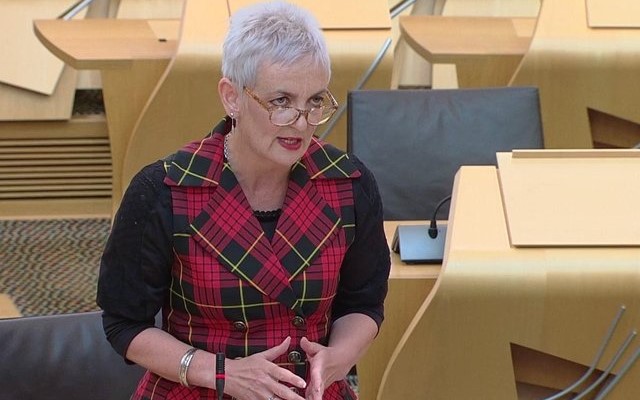
Ashley McLean, from Scotland’s anti-poverty network – the Poverty Alliance – agrees data is key but says one of the challenges is difficulties is with data sharing across arms of government, local councils and community organisations.
She says there needs to be more effective and meaningful channels for community organisations to share information, especially as people can be more willing to engage with community groups.
What can we do to solve inequalities?
Within the parliamentary report, the committee calls for “coordinated and preventative action” across all levels of government, including local government and communities, to create cross-government, cross-sectoral efforts.
The committee recommends creating “an overarching strategy or set of principles” for tackling health inequalities that fosters active collaboration across portfolios of government.
Chris Creegan agrees that solutions must be informed by, and rooted in, local communities and those experiencing health inequalities. He says we must think about reversing trends and closing the implementation and inequalities gaps:
“While responding to the shocks from covid-19 and the immediate cost of living crisis will continue to be a priority, the solution lies in a long-term approach – and collaboration across sectors – public, private, third – and between national and local agencies.”
He explains that emerging perspectives mirror those of the Scottish Parliament’s committee that a coordinated approach is vital but go further adding that concerns are raised around “short-termism” and a lack of coherent planning, investment and joined-up thinking.
Poverty Alliance’s Ashley McLean says that simply taking time to meaningfully listen and engage with the experiences and solutions put forward by those on the ground is essential to tackling health inequalities:
“Listening to people with lived experience, listening to people who work in community organisations – they are the ones who know how poverty works and have the best understanding of what’s going on.
“Listening to them and challenging your own biases around health inequalities and just approaching poverty with a more empathetic and compassionate view.”
As we enter winter with the cost-of-living crisis, many organisations like Inclusion Scotland are calling for targeted financial solutions from Scottish and UK government “to avert the tragedy of avoidable deaths”.
Most of the members of the Health and Social Care Committee agreed that the UK government should – within budget constraints – align benefits and tax credits with inflation and reinstate the uplift in Universal Credit.
Only Tess White MSP and Sandesh Gulhane MSP, also an NHS GP, dissented from this recommendation.
Additionally, the majority called for Scottish government to work with the relevant UK agencies on a pilot of a universal basic income in Scotland in order to begin to address health inequalities, and to continue discussion with the UK government on overcoming obstacles to implementing a minimum income guarantee in Scotland. Again, only Ms White and Dr Gulhane dissented from these.
Where are we getting it right in Scotland?
Ms McLean shared with healthandcare.scot some of the ongoing work she believes is getting it right for people living in deprived areas and experiencing the impacts of poverty.
These included Cranhill Development Trust – a community group addressing social exclusion through a range of programmes and events for around 3,000 people annually – and Child Poverty Action Group who work UK-wide to understand, prevent and solve child poverty.
Ms McLean added that Includem also does incredible work with young people, caregivers and families across Scotland facing challenges with education or transitioning to adulthood.
She says simple things like community pantries which operate like supermarkets, with the aim of minimising the stigma associated with foodbanks, where people check-out at tills with a week’s worth of shopping for a few pounds.
Mr Creegan says that the public consciousness and concern has an important role in tackling these inequalities:
“More encouraging – there is widespread recognition of the scale of the problem and the challenge – and a determination to meet it.
“In contrast to the life expectancy figures, new data from the British Social Attitudes survey, released on the same day as the life expectancy figures, offers cause for optimism that bold action would be popular in Scotland.”
This data shows that 60% of people in Scotland recognise that poverty is a major cause of poor health while 64% think it is unfair that wealthier people can afford better health care.
Mr Creegan says tapping into this widespread understanding can help improve public engagement on health equalities and build understanding across Scotland:
“This is crucial because we have to guard against approaches to tackling inequalities driven by poverty and deprivation which stigmatise by focusing narrowly on lifestyles and behaviours and focus on action which responds to the root causes of poor health outcomes.”
Ms McLean also raised concerns about telling individuals to change their behaviours instead of “looking at whether our structures facilitate” good health choices and access to services.
She also praises the work of Deep End GPs and community links workers, adding that embedding more mental health and community link workers across Scotland alongside investing in community action groups will go a long way to improving this access.
Chris Creegan will be joining Jason Leitch CBE, Clinical Director in Scottish government in the first session on health inequalities in Scotland for Voluntary Health Scotland’s annual conference next week.
Read more: Fair health – who gets it?; Unpaid carers “spiralling” in cost-of-living crisis; Social deprivation linked to frailty; Analysis: Why people are left behind
Sign up to our bulletin for key health & social care updates straight to your inbox and you can follow healthandcare.scot on Google News. |