|
Norway visit explores realistic medicine approach |
Related newsScotland at the table with UN healthy air commission Respiratory care vision unveiled Drive to detect undiagnosed HepatitisC Transforming vaccination delivery across Scotland Tayside team achieves global kidney study milestone National Pharmaceutical Agency remains on hold Primary schools in breastfeeding project first NHS Lanarkshire reprimand over WhatsApp Jann Gardner moves to NHS Lanarkshire NHS Lanarkshire out of code black Scotland reaches heart valve treatment milestone NHS board tells GPs to cease non urgent work 
|
|
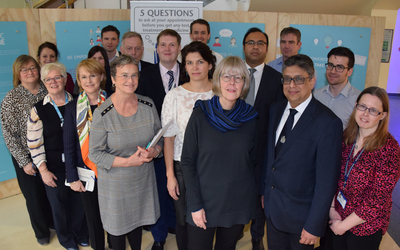
Norwegian state secretaries of health and care services Inger Klippen and Anne Grethe Erlandsen with NHS Lanarkshire’s clinical lead for realistic medicine, Dr Babu Mukhopadhyay and colleagues.
|
||
|
||
|
Norwegian health ministers have visited NHS Lanarkshire to find out more about a new personalised approach to patient care.
The ‘realistic medicine’ concept, which is being rolled out nationally, aims to give people the power to influence their own treatment plans.
One example is encouraging all new hospital outpatients to ask five key questions when discussing treatment options, to help them make an informed choice.
These include asking if they really need the test or treatment, what the benefits and risks are, how will it improve their health and what will happen if they do not take the option up.
NHS Lanarkshire said the realistic medicine approach has helped improved rates of procedures like tonsillectomies and reducing waiting times in gastroenterology.
A delegation led by Norway’s state secretary of health and care services, Anne Grethe Erlandsen, visited University Hospital Hairmyres as part of a two-day visit to Scotland.
Dr Babu Mukhopadhyay, NHS Lanarkshire’s clinical lead for realistic medicine, said: “This is an approach that not only transforms how we engage with our patients, but genuinely gives them the power to make the healthcare decisions that influence their daily lives.
Tags: Healthier Scotland; Medicines. |
