|
Insight: National care service not the answer |
Related newsConcerns at rise in care home dementia drugs Ministers urged to update care staff isolation rules Lack of home care deaths investigations ‘unjust’ Care home families: "we are not unnecessary footfall" Failure to understand social care ‘unsurprising’ Decades of “shameful failures” at root of care issues 
|
|
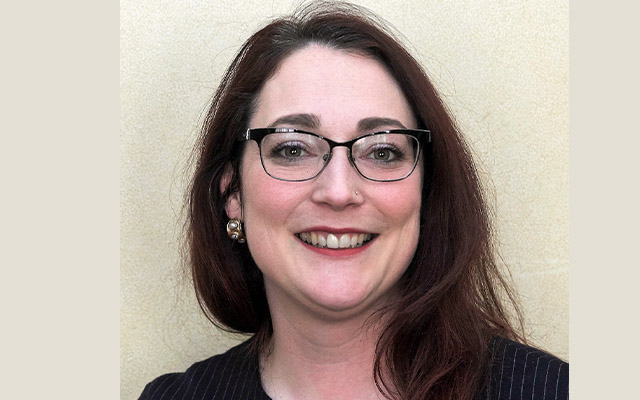
Scottish Care National Director Karen Hedge
|
||
|
||
|
Scottish Care’s national director warns things can’t return to business as usual for social care as a lifting of lockdown looms, but says nationalising care services is not the right answer.
Care homes as well as its intensive care units have become the epicentre of the coronavirus pandemic in Scotland.
Last week, the weekly number of deaths in care homes rose above those in hospitals.
From the early days of the outbreak, concerns have been raised across social care about a number of issues, including a lack of access to suitable PPE and a lack of testing for staff and residents.
Many in the care sector have been making the case for years that the way care services are commissioned and procured needs to change, but others have started to ask if a national care service might be the answer to some of the problems brought to light by covid-19.
National director of Scottish Care, Karen Hedge, thinks not – and cautions against nationalising a sector that needs to be centred on giving people a choice over how they live:
“There’s a real difference between health and social care – in an emergency situation I just need to know that there are qualified health professionals there able to help me survive,” Ms Hedge says.
“When it comes to social care though I want to have a bit more choice and control over what that is because social care is also about enabling people to live life to the fullest.
“It’s very important that people have choice in the type of social care that they have and if there was to be a nationalising of social care than that would remove that choice.
“It would also be in contravention of the self-directed support act which is absolutely about ensuring people have a choice and control over the care and support that they can access.”
89% of care home places in Scotland are provided by the independent care sector including private, voluntary and charitable care homes, with a majority run as small to medium sized businesses and many of them are family owned and operated.
“Different care homes will be run in different ways,” Ms Hedge continues. “If you are choosing somewhere to live, you want to enjoy that space, you want to have a bit of control over what your room looks like, perhaps what your view is like, the other people who live there and the ethos and feel of the place.
“You wouldn’t get that if it was nationalised because it becomes standardised and very vanilla.
“If you’re choosing somewhere to live and choosing your house, you have a real vested interest in what the place looks like and what it feels like; any move towards a more national programme would see that choice removed.”
Echoing the comments of care providers across Scotland who joined healthandcare.scot for a series of roundtable meetings earlier this year, Ms Hedge highlights the disjoint between how much caring costs have increased in recent years and how much funding is provided.
“We know even in the last couple of years there has been a significant change in the people who live in care homes.
“They are coming in much later in life with multiple co-morbidities and neurological conditions like advanced dementia that require much more specialist care and support.
“But what we have not seen at the same time is an increase in funding that is coming from health and social care partnerships to pay for that additional specialist support that is required.
“Most care home places in Scotland are paid for by the public purse, but that rate paid to non-public sector providers is significantly lower than what it costs local authorities to deliver an equivalent level of care and support.”
That disjoint, providers say, has left many of them on a financial knife-edge, unable to pay staff the real living wage, and often relying on care workers going above and beyond what they are paid to do to make sure residents are properly looked after.
Delivering care and support is a skilled profession, Ms Hedge explains: “Carers are regulated and they have to pay for that regulation. They are highly qualified and highly skilled people there delivering care and support not because of the great swathes of pay attached to that job but because it’s a substantially rewarding and fulfilling job.
“We have seen significant steps being taken in passing on funding to enable payment of the Scottish living wage to care workers and that is something as well which is not necessarily taken into account in the way care and support is funded.”
The Scottish Government recently extended death in service benefits for all healthcare workers involved in tackling covid-19, but made no similar promise to social care workers – something that is wholly unacceptable according to the national director of Scottish Care.
“We hope the Scottish Government is looking at that and will be implementing something soon,” she says.
The number of local authorities paying social care staff by the minute through electronic call monitoring (ECM) has decreased during the pandemic as councils try to improve working conditions for staff whose workloads have shot up.
Asked whether she fears a reintroduction of things like ECM and a more general return to ‘business as usual’ after lockdown lifts and Scotland’s health service moves away from the emergency footing, Ms Hedge says that is a real concern.
“We know that for care homes, in particular, infection control measures will continue far beyond lockdown to ensure the safety of residents given that many are not in the shielding category.
“The same goes for care at home. Many of the people care workers visit in their own homes are not in the shielding category and they require additional care and support, so yes we would be very concerned if businesses usual was picked up after lockdown is lifted.”
Sign up to our bulletin sent twice a week so you don’t miss out on the latest health and social care news.
Tags: Infectious disease; Older People; Social Care. |
