|
Insight: Protecting the NHS left out social care |
Related newsChief Medical Officer: ‘Critical connections’ priority Programme for Government: the reaction FM signals national pay bargaining in NCS Government review admits care home ‘search for blame’ Care staff could be ‘forced’ into skipping isolation Staff isolation changes to be used “in extremis” 
|
|
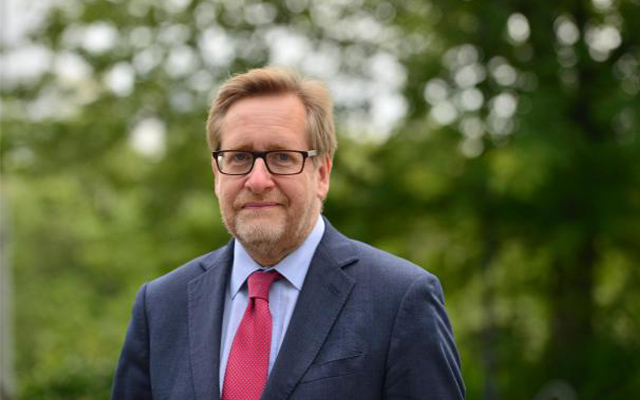
Dr Donald Macaskill
|
||
|
||
|
Since the start of the covid-19 outbreak in Scotland, concerns have been raised across social care about a number of issues, including access to PPE and testing for staff and residents.
Head of Scottish Care Dr Donald Macaskill says the mantra of ‘preserve the NHS at all costs’ has sometimes been at the expense of the social care sector.
Some care providers have seen costs for PPE surge by 2,500%, while others had their usual deliveries diverted to the health service.
“That has made it virtually impossible to get hold of PPE,” he says. “So I think if people are pointing fingers at professionals who have tried very hard they first have to point them at the system which has made it virtually impossible in some parts of the country to buy PPE, and virtually impractical in other parts of the country to get tested, which are the only measures, together with universal mask wearing, which will save lives.
“We have been calling for a decision around universal mask wearing in care since the 25th April and that still has not been provided.”
Dr Macaskill says he gets the sense from care staff on the ground that things have gone back to a well-rehearsed routine of the care sector being “victimised and blamed”.
“I think in the same way that at the beginning of this pandemic social care frontline workers felt that they were forgotten in terms of being considered as key workers – whether that is with PPE, whether it’s the right to have special times to go shopping in supermarkets, or whether it’s the right to have special discounts on buses and other public transport.
“We are now in an instance in which the social care sector – whether it's care home or home care – is back to the routine of feeling victimised, blamed and the object of political point scoring.
“And very easily people have forgotten that it is the same politicians who have blindly ignored calls for additional funding and the valuing of the care workforce all the way through the last few years and have chosen austerity as a vehicle through which to harm the sector even further.
“I think home care and care home providers are feeling scunnered, disappointed and fairly disillusioned with the way in which they have become the object of blame instead of those responsible for national decision making.”
Some have criticised independent care providers in recent weeks, suggesting the situation could be better if the state ran more social care services directly.
Dr Macaskill says while there may be some instances where some services have fallen short, those sorts of examples can be found across the board.
“If we look at the rate of transmission in older people’s units in NHS hospitals – what does that say about a nationalised system?
“If we look at the rates of transmissions and infection control in local authority-run care homes, tragically we still see the same levels and there is some evidence of exactly the same level of outbreaks in those environments and clearly they are already run by the state.
“I think people have to be very cautious about making assumptions that the reason we have an outbreak in a care home is because of the business model.
“The reason we have outbreaks in care homes is because of the nature of the decisions that have to be taken by the UK Government around how we deal with this virus.
“So instead of adopting models of test, trace and isolate, we have had to struggle to get testing into the care home sector."
This week has seen politicians criticise the government over testing, decrying that promises for mass testing of key workers, including in care homes, are not being borne out in reality.
Last week while giving evidence to the Scottish Parliament’s Health and Sport Committee, Health Secretary Jeane Freeman revealed the care sector had been entirely left out of pandemic planning in 2015.
Issues with staff recruitment and retention have dogged both the health service and social care for many years, and there are concerns the experience of working through the pandemic may cause an exodus of workers in search of better conditions.
Dr Macaskill says he thinks many in social care will begin to reflect on whether or not their sacrifice has been properly respected and regarded.
“We still live in a post-covid normal in a society that values working with things more than people, so this is not about the model of the organisation – whether it’s a local authority, charity or small private provider, or even a larger private organisation – we need to change the way in which we value care and carers otherwise these women and men will disappear.”
Sign up to our bulletin sent twice a week so you don’t miss out on the latest health and social care news.
Tags: Infectious disease; Social Care. |
