|
MSP: A national service would end ‘exploitative’ care |
Related newsChief Medical Officer: ‘Critical connections’ priority Care staff could be ‘forced’ into skipping isolation Staff isolation changes to be used “in extremis” Staff isolation rule change ‘under consideration’ Care home fears over rising community infections Compulsory care staff jabs dismissed for Scotland 
|
|
|
||
|
||
|
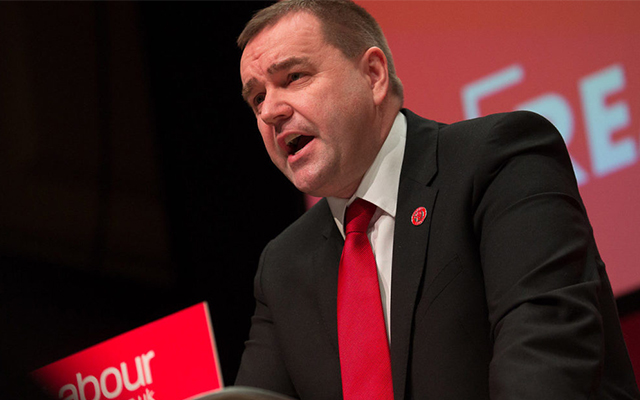
A Labour MSP has taken aim at large corporate providers in social care, accusing them of “ripping as much profit out of the system as possible”, as he called for a national care service.
Speaking to healthandcare.scot, Neil Findlay, who was Labour’s health spokesperson at Holyrood and a former chair of the health and sport committee, says the way in which carers and care home residents have been treated for decades “is absolutely disgraceful”.
The solution, he believes, is bringing in a national care service.
Scottish Labour announced yesterday it will begin developing a plan for the nationalisation of social care services that have found themselves ‘at the epicentre of the covid-19 crisis’.
Although most care, whether at home and in care homes, is delivered by private, voluntary and charitable organisations, Mr Findlay argues bringing all these organisations under one system would not be “too difficult to do.”
Scotland’s care homes and homecare services have been hit hard by the virus. The head of the largest care representative organisation, Scottish Care, says the rallying cry of ‘protect the NHS’ made sure the health service was never overwhelmed, but at the expense of social care.
“These are the same discussions and challenges that we faced when creating the National Health Service."
Mr Findlay says he thinks his experience will have been better than it has for many others; the care home his mother is in locked down earlier than most, he says, as part of a “proactive” approach. It is yet to have a case of covid-19.
Asked if he thinks the increased visibility of social care could lead to long term challenges such as recruitment and retention difficulties and chronic funding issues, the Labour politician is sceptical.
“There has certainly been a change in public opinion but whether there has been a change in state opinion, we will see in due course, because the rhetoric would tell you there has been a shift in opinion at political level.
“I would like to see the rhetoric followed by cash and action. This government talk a good game on so many things but the reality on the ground is different.”
“Labour proposed [a national care service] in 2007,” Mr Findlay explains, “And the SNP government attacked us for it. I have a document from when I was shadow health secretary on an extensive commission that we carried out into social care with a whole range of recommendations and that’s gone nowhere.”
When the Scottish Government announced all care home workers would be routinely tested, there were concerns some staff were too scared to get tested, as any time off work following a positive result could mean they would struggle to get by if they dropped down to statutory sick pay.
Although a welfare fund has been set up by the government promising to maintain care worker wages should they need to take time off, longer-lasting solutions are yet to appear. Collective bargaining was proposed in recent covid-19 legislation but dismissed as an issue for another day.
The situation has caused a growing number of MSPs and trade unions to call for a national care service.
Scottish Care, which represents most care providers, is opposed to the idea of a national care service though.
Annie Gunner Logan – the head of the body representing charitable social care providers in Scotland – has warned against a rush to “glib solutions” such as creating a national service in the wake of the covid-19 crisis.
National director Karen Hedge told healthandcare.scot choice is key when it comes to social care as it’s about how, where and with whom someone wants to live.
But Mr Findlay says a national care system could still provide that choice:
“That can be provisioned with the national service to allow people to have personal support with people who they have a long-term relationship.
“I don’t think what we are talking about is, for example, saying to a disabled person who has had the same personal assistant for the last ten years that you have to sack that person because we are imposing this new regime. I don’t think that would be the case at all.”
“These are the same discussions and challenges that we faced when creating the National Health Service.
“People said it couldn’t happen and it did because there was the political will to do – if there is the political will to do this then we can.”
“I don’t think the motivation for companies like that is to deliver high quality care. I’m afraid I just don’t."
Around 30% of care homes in Scotland are small, many of them family-run, businesses that perform well compared to their larger corporate or local authority counterparts.
Asked what would happen to them under a policy that could effectively see them nationalised, Mr Findlay drew a distinction between smaller enterprises and the big corporate players.
“These are issues that need to be discussed and we need to work at through this. If you look at the care sector you have small care homes – generally family-run – these tend to be the ones who have personal relations with the staff.
“They know the communities they serve and try to look after their staff and the residents and it’s often a very personal thing for the owners – they are not in it, in my opinion, for ripping as much profit out the system as possible when you compare that to some of the big players.
“HC One and others came to the forefront during the pandemic…they had over 50 care homes in Scotland and are registered in a tax haven and have paid no corporation tax.
“Everything you see about that kind of model is about how to exploit the situation: how do we drive down pay?
“I was looking at HC One when the crisis broke. They were employing many people in the care sector at below the living wage – cooks, cleaners, housekeepers all at below the living wage.
“I don’t think the motivation for companies like that is to deliver high quality care. I’m afraid I just don’t.
“So, if you’re asking about a national care service and how that would operate.
“Of course, we would have to look at how we bring all of these different current models under one system and I don’t think it’s too difficult to do.
“My personal interest in this relates to my own mum – at the very start of this she was one of those patients discharged from hospital into a care home untested.
“She is in a care home about 200 yards from my house but of course we have never been allowed to see her in all that time.
“So personally, this is very difficult for me, but if I try and take that element out of it and just look dispassionately at this, it takes my breath away what’s happened.”
Prior to covid-19, hundreds of patients were routinely stuck in hospital having been told a care package could not be found that would enable then to go home, even though they were well enough.
But as the health service started to prepare for a surge of covid-19 cases, many were quickly found accommodation in care homes.
Mr Findlay says That some were not tested for the virus before leaving hospital “has been almost criminal”.
Health Secretary Jeane Freeman has come under fire in parliament over the testing of people discharged to care homes.
Asked by the Labour MSP about the practice during an exchange in the middle of May, Ms Freeman said “clear guidance” for admissions to care homes had been made available and that if testing was not carried out before leaving hospital, it should happen on arrival at a home.
New residents should be isolated for 14 days and barrier nursed to stop the spread of any infection, she said.
Responding to Mr Findlay’s comments, a spokesperson for HC-One said: “Since day one we have prioritised the health and wellbeing of our residents and invested in our colleagues so that care is a rewarding career.
“This includes creating a multimillion-pound e-learning training and development programme so that our colleagues have the skills needed to provide the best care, and creating the Nursing Assistant training programme, which is accredited by the Royal College of Nurses and which creates an onward career path for Senior Carers and that results in a significant salary uplift upon completion.
“During coronavirus, we have also made sure than any colleague who tests positive will receive their full pay whilst they are off work, and we have put in place a range of wider benefits including extensive physical and mental health support through online GPs and counselling, specialist bereavement support, and free meals on each shift.
“HC-One is a committed UK taxpayer and all our income is subject to UK taxes, including Corporation Tax which we pay. As part of the National Care Home Contract, HC-One is proud to pay all care staff the Scottish Living Wage.
“We work closely with our recognised Trade Union, the GMB, so that we make sure we are doing everything possible to support our Colleagues within the significant financial constraints of supporting predominately local authority funded residents.
“Overall, 80% of our home-level costs go on the salaries and pensions of our hard-working and compassionate colleagues, leaving just 20% for all other costs associated with running a high-quality care service.”
Sign up to our bulletin sent twice a week so you don’t miss out on the latest health and social care news. |
