|
Expectations exceeded in first year of PrEP roll out |
Related newsPharmacy’s road to stigma-free drug dependency care Pharmacists urge leaders to act for the profession Health and charity leaders join forces for NHS reform Report spotlights drug shortage crisis Respiratory care vision unveiled Many Scots miss out on key stroke care MSPs vote in favour of opt-out organ donation Calls for ‘minimum’ of 15 minutes for GP appointments The art of governance - RCPE conference Doctors’ wellbeing at ‘enormous risk’ 
|
|
|
||
|
||
|
A new report published by NHS National Services Scotland (NSS) shows progress during the first year of Scotland’s first national HIV PrEP programme, which has engaged more individuals than expected
Scotland is the first country worldwide to provide PrEP nationally as part of routine state-funded care to people who meet risk-based eligibility criteria.
The HIV PrEP (HIV Pre Exposure Prophylaxis) programme involves the provision of oral antiretroviral drugs to those at sexual risk of HIV, alongside comprehensive STI and HIV prevention services.
In clinical trials PrEP has been shown to reduce the risk of sexually transmitted HIV by 75-86%.
Professor David Goldberg, consultant epidemiologist, Health Protection Scotland and chair of Scotland’s national HIV PrEP coordinating group, commented:
“Sexual Health Service teams throughout the country should be congratulated for successfully implementing an exciting new measure which has the potential to be a game-changer in Scotland’s drive to eliminate HIV infection from its population.
“The programme has already entered its second year and the focus is now also on reaching other groups who could benefit from PrEP; these include some women and transgender people.”
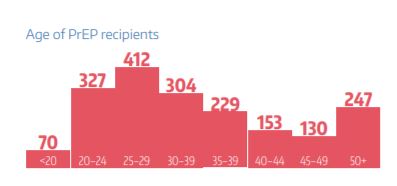
PrEP was introduced free of charge in Scotland in July 2017 to those at the very highest risk of acquiring HIV and almost 1900 people were prescribed PrEP during the course of the first year. 99% of recipients were men who have sex with men.
Available within every health board, PrEP is mostly accessed by patients through sexual health services.
The report says ‘about a fifth of those receiving PrEP had never been to a Scottish sexual health clinic before; this demonstrates that the provision of PrEP has increased the opportunities to engage with people who are at a high risk of exposure to HIV - who otherwise would not have engaged with such services’.
However the report states ‘it is too early to draw any conclusions about the impact of PrEP on the transmission of HIV and other STIsbecause during the initial year nearly all of those prescribed PrEP
had been on it for less than a year and many had only been on it for less than a few months’.
Chair of the HIV clinical leads in Scotland, Dr Rak Nandwani, said:
“A great deal of work has already been done to prevent HIV transmission in Scotland. This includes condom provision, routine antenatal testing, the provision of injecting equipment and a range of behavioural interventions.
“More recently, evidence has shown that HIV drugs are highly effective in reducing HIV transmission from people who are already living with HIV when the amount of virus present in blood becomes undetectable. PrEP is a further addition to the toolbox to help us stop people being infected with HIV”. |