|
Regulator: Living wage for care staff still too low |
Related newsNew social care minister appointed Health and charity leaders join forces for NHS reform Holyrood passes Care Reform Bill ‘Substantial’ health harms of gambling to be tackled Scotland needs more Carer Positive employers Fixing social care funding must be council “priority” 
|
|
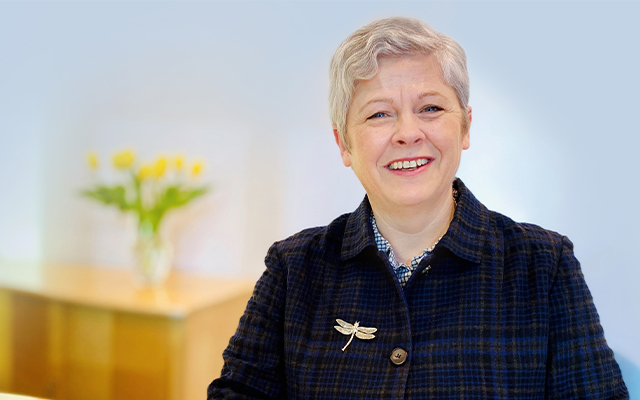
Scottish Social Services Council Chief Executive Lorraine Gray
|
||
|
||
|
The rising profile of social care must not lead to medical models of care replacing the unique services social care provides, says the head of Scotland’s social care workforce regulator.
Chief Executive of the Scottish Social Services Council (SSSC) Lorraine Gray said Scots who use social services like care at home “were not protected and not supported” during the pandemic.
But there is a silver lining to be found in the attention now being paid to the realities of care.
Speaking yesterday at the Scotland Policy Conferences seminar on next steps for adult social care in Scotland, Ms Gray said: “We received so many calls about this – [staff and service users] did feel forgotten.
“We all understood it was important we protect the NHS during the pandemic but it should have been important to protect social care too.”
“It needs to be recognised for its professionalism and importance. We are working to raise the profile of the sector and we can’t miss this opportunity to do that.
“At SSSC we have been publishing our inspiring care stories about what care staff have done in last six months to ensure people have good quality of life.
“Some of it so inspirational – including staff leaving their own homes and staying in care homes to protect their residents.”
But as social care is increasingly spoken about in the same breath as health, the SSSC Chief Executive emphasises it is important to fully understand the differences between the two.
“It’s important to have a social care model and not a medical model,” Ms Gray said.
“Last year I was in hospital for three days for a big operation and I had amazing care, all the nurses and doctors were very kind and I was well looked after but once I left that was the end of that relationship.
“I have an older brother with learning disabilities, and he lives in flat with lots of support and has done for four or five years.
“The relationships he has with support workers are some of the most important in his life; they look at how to improve his life by going to concerts, going out to the cinema or for a coffee.
“They look at how they can enhance his life and skills.
“Yes, in health and social care we want the same outcomes – a good quality of life – but how that is delivered is very different and the skills are not more important in one area than the other.
“Social care cannot be seen as a supporting actor to the NHS – it’s about how we deliver these valuable, important services to people to improve their lives.”
That many would argue the pay, terms and conditions of social care needs to improve to match the level of skill required to do the job well, is symptomatic of a disparate workforce that doesn’t have a powerful lobby group to represent them, Ms Gray said.
“When you ask what stops people working in social care it is about the emotional cost, pay, and unsociable hours.
“We know workers have been traumatised by what they have gone through during the pandemic,” she added.
“We have career ambassadors and we go out to recruitment fairs, but we are competing with many other sectors.
“Yes, we have the living wage, but we really need to ask if this is how we clearly demonstrate the value of this workforce? It needs to be more than a round of applause – it’s about how they are paid.
“Throughout the exit from the EU, we keep hearing this workforce being called unskilled and that makes me so angry – this is a very highly skilled workforce supporting people with very complex needs – people need to have a qualification to work here.”
And there are disparities in different sectors and public sector staff may well be paid more than those working for private or third sector providers that have to make do with the rate councils are willing to pay.
When it comes to discussions around a national care service, Ms Gray says: “Honestly, I don’t know how that will work. I don’t know how we will put that in place when we think about maintaining choice, Self-Directed Support and so on.
“The social care workforce is now high on the agenda, but it took a pandemic to do that.
“We now need to make sure what happens next fully takes account of the unique services social care provides, of how they improve people’s quality of life and enhance individuals’ opportunities, and giving people choice about how they are provided.”
Bulletin – Sign up for all the latest news and events.
Jobs – Looking for your next career move? Check out our jobs page for the latest health and social care vacancies in Scotland. Tags: Social Care; Staffing & Workforce; Unpaid Carers. |
