|
‘Covid showed ministers should be in charge of care’ |
Related newsCare home fears over rising community infections Chief Medical Officer: ‘Critical connections’ priority New social care minister appointed Health and charity leaders join forces for NHS reform Holyrood passes Care Reform Bill ‘Substantial’ health harms of gambling to be tackled 
|
|
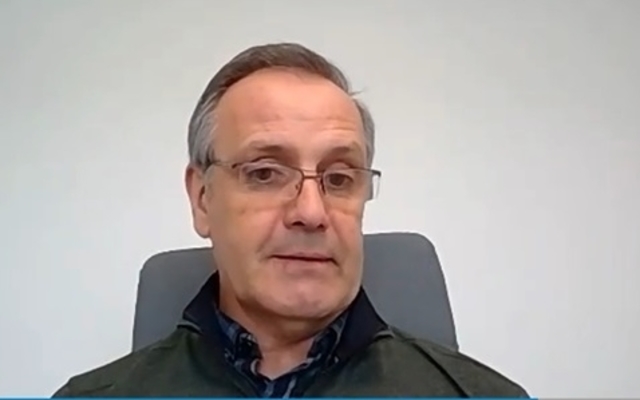
Derek Feeley
|
||
|
||
|
The pandemic has shown the public “quite legitimately” wants ministers to be in charge of social care, the author of the Independent Review of Adult Social Care has said.
Derek Feeley said proposals to create a national care service answerable to the Scottish government were “an acceptance of reality” but cautioned that it could take until 2026 to implement all the changes.
The former NHS Scotland CEO, who was speaking at the Alliance’s digital gathering, also revealed that his review was not asked by the Scottish government to look at care home deaths.
“It wasn’t central to our terms of reference and indeed most of the issues that we were invited to look at pre-dated the pandemic,” he said.
This was despite a chorus of calls for an inquiry into what happened in Scotland’s care homes during the first wave of the pandemic so ‘lessons could be learned’ for any future outbreaks.
Mr Feeley’s report recommended a series of wide-ranging reforms to adult social care, including setting up a national care service ‘on an equal footing” to the NHS and making care free at the point of need.
The recommendations, which come with a £660m price tag, have already been backed by MSPs.
However Mr Feeley argued a national care service was only part of the solution and urged future governments not to “cherrypick” themes from the review.
“It’s really important…that we keep the report intact,” he said.
“If all we do is create a national care service and we don’t close the implementation gap, we’ll reinvent variation in a different way in a different place.
“If we don’t do those things together and really shift our narrative about social care and what it’s for we’ll invest in the wrong things, and we won’t take a rights-based approach that everybody believes we ought to take.”
Controversially, the review suggested that councils should be stripped of their power to commission care and that this be handed to newly-empowered Integration Joint Boards (IJBs) answering to a national care service.
These proposals are roundly opposed by council leaders, who say they would undermine local care delivery.
Asked whether this was another example of the Scottish government centralising power, Mr Feeley said:
“One of the things people said to us loud and clear was for social care to be given parity with the NHS. That putting social care on an equal footing with the NHS was part of our motivation for recommending a national care service.
“The second thing was just really an acceptance of reality. I think the pandemic has magnified this – that people expect Scottish ministers to be accountable for social care; we’ve seen that through the course of the pandemic.
“Questions have I think quite legitimately and appropriately been put to ministers about ‘what are you going to do about this?’.
“If ministers are going to be held accountable you need to give them the levers that they need to meet those accountabilities.
“Again that was what was in our mind as we proposed a national care service, not centralisation itself, just an expression of the reality of the situation.”
Also covered was the contentious area of profits made by private care operators.
Mr Feeley said that most care homes were not making excessive profits but argued the public “has the right to know” where they are. He is backing giving the Care Inspectorate a “financial oversight” function.
But he shied away from capping higher profits, instead suggesting the government should set out what it expects in return for public money.
“That I think is about transparency, it is about ethical issues around fair pay and fair work, and engaging in improvement activities.
“I think it’s just a new ask on the care home sector. My sense is that the vast majority of care home providers will be able to reply, will want to comply, will want greater transparency”.
Before moving to the Massachusetts-based Institute for Healthcare Improvement in 2013, Mr Feeley had served as NHS Scotland CEO and head of health and social care at the Scottish government.
Discussing the role of IJBs in the new system, he admitted that aspects of the integration agenda had not progressed as evenly as first hoped.
“Some of them, [are] really up and running, fully meeting all the expectations, some [are] not quite there yet.
“Everybody is going to have to be brought up to the level of the best, in terms of engagement with local communities, that giving effect to integration of health and social care.”
Sign up to our bulletin for key health & social care updates straight to your inbox. |
