|
NHS ‘significant contributor’ to climate emergency |
Related newsScotland at the table with UN healthy air commission Pharmacy’s road to stigma-free drug dependency care NHS Scotland net zero efforts expanded ‘Whole-system shift’ needed on ADHD and autism support Scotland’s NHS and social care app timeline unveiled Doctors: ‘Shocking’ A&E figures require action 
|
|
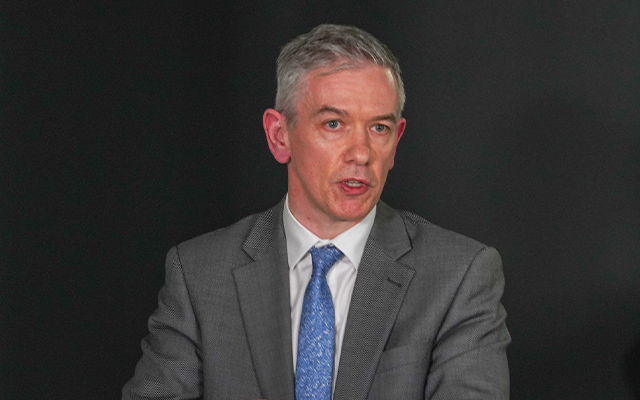
© Scottish government
Chief Medical Officer Dr Gregor Smith
|
||
|
||
|
Scotland’s Chief Medical Officer has challenged the NHS to meet its ‘moral obligation’ to tackle the ‘greatest threat to human health’ – climate change.
In his first annual report, Dr Gregor Smith says ‘unprecedented’ change is needed if NHS Scotland is to meet its 2019 commitment to being a net-zero greenhouse gas emitter by 2045.
The Organisation for Economic Cooperation and Development (OECD) estimates up to a fifth of healthcare spending across member countries including the UK is wasted, often through things like unused medicines and unnecessary treatments.
Against the backdrop of global temperatures rising faster than predicted, Dr Smith argues the health service should not be exempt from efforts to fight climate change.
‘We know that all healthcare has potential to cause harm - exposure to radiation from imaging, risks from procedures, and side effects from medication,’ the report states.
‘Over investigation and overtreatment may not only cause harm to the people we care for, but they also waste our precious healthcare resources, consume our natural resources and contribute to environmental degradation.
‘…If the global healthcare sector were a country, it would be the fifth-largest greenhouse gas emitter on the planet.
‘NHS Scotland is a significant contributor to the climate emergency. It emits a large amount of greenhouse gases, consumes huge amounts of resources and produces copious amounts of waste. We have a moral obligation to help tackle the greatest threat to human health, by reducing our impact on the environment. Responsibility rests with us all.’
Dr Smith’s predecessor Dr Catherine Calderwood was Chief Medical Officer for five years and an advocate of the realistic medicine agenda.
This sought to remedy situations where modern medicine had become too quick to look for a pill for every ill, rather than personalise care by finding out not only what was the matter with a patient, but what mattered to them as well.
Dr Smith says this fits “naturally” with environmental sustainability.
When it comes to the benefits of spending time outdoors, seeing the environment as a means to improve people’s health will be key, Dr Smith states:
‘Our health is intimately linked to the sustainability of ecosystems within which we live our lives. Improving access to, and encouraging us to use our natural environments, could play a key role in delivering Scotland’s public health priorities.’
Initiatives like the Our Natural Health Service Programme are showcased, including the NHS Greenspace Demonstration Project that has working with health boards to look at how the greenspaces owned by the NHS can be used to improve outcomes for human health, nature and the climate.
Thus far, 87 hectares of NHS greenspace have been created or improved to benefit staff, patient and local communities.
‘Over investigation and overtreatment may not only cause harm to the people we care for, but they also waste our precious healthcare resources, consume our natural resources and contribute to environmental degradation.’
The covid crisis has brought about immense changes in many areas; the increase in use of PPE is one change that led to raised concerns about the impact on the environment.
But some positive changes have been brought forward, particularly when it comes to remote appointments.
Around 20,000 remote consultations now take place each week in Scotland, saving an estimated 28 million miles of travel a year.
As for pharmaceuticals, the prescription of a medicine is the most common intervention in healthcare and the impact each one has on the environment needs to be considered.
Whether it is the amount of medication entering wastewater systems (30 to 100% of every oral dose of medicine leaves the body unchanged or as metabolites), or that half of those who are prescribed four or more medicines do not take them as prescribed, action is needed to ensure people are not over-treated and use only the precise amount of medicine they need, the report states.
In July 2020, three health boards representing island, mainland and national health services were chosen to be part of a pilot scheme that would explore possible routes for the NHS to achieve net zero by 2045.
Read more: IT must improve to sustain virtual appointment surge; Health Secretary pledges social prescribing expansion; Norway visit explores realistic medicine approach; Briefing: A realistic legacy?
Sign up to our bulletin for key health & social care updates straight to your inbox. |
