|
Insight: The discovery of hindsight in social care |
Related newsCOVID findings must be ‘mandate for lasting change’ NHS Scotland chief named as battle lines emerge Sceptical response to government’s care proposals Donald Macaskill: Where is Scotland going? Briefing: The 5-year plan for NHS, care and science One precedent, inconsistently applied 
|
|
|
||
|
||
|
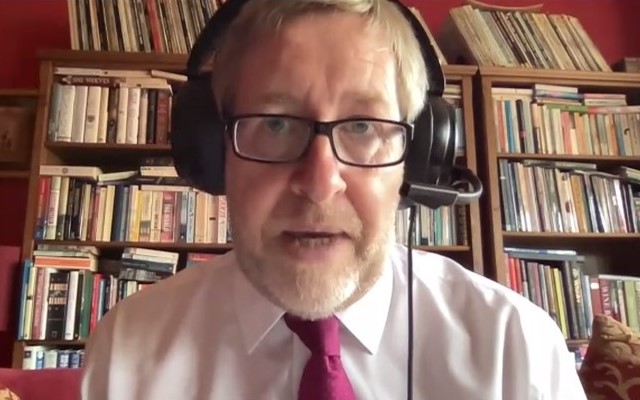
The chief executive of Scotland’s care providers’ organisation says he is concerned that the lessons of the past are not being remembered as the nation designs a care service for the future.
Dr Donald Macaskill of Scottish Care was speaking at a Scotland Policy Conferences seminar looking at ‘next steps for adult social care in Scotland’, where he likened the current turmoil for adult social care as being like a waterfall – and suggested radical change will be needed if the sector is to return to calmer waters.
This is what he said:
I have five minutes to try to describe the experience of the care sector during the pandemic, now and potentially into the future.
I have chosen the images of a river and of a waterfall because I think it is important that we don’t delude ourselves into thinking that the challenges facing social care today were not known of in 2018, 2019 and 2020 – before the pandemic.
The integration of health and social care was not really effective and working well, because it fell to self-interest and defensiveness.
The failure to properly embed real choice in some of the most progressive social care legislation in the world meant that, in February 2020, less than 5% of older people in Scotland were exercising control and choice over their social care package.
The failure to properly invest the tens of millions of pounds which were required to enable the quality provision of services.
The failure to reform commissioning, as was suggested by the Fair Work Commission on Social Care on which I sat, so that we could move from a time and task, from electronically monitoring our front-line workers, to a position of regarding relationship as primary, giving autonomy to frontline workers and bestowing trust on those who are specialists and experts in the delivery of care.
And, in February 2020, we had vacancy levels of 28% of the social care nurses; 67% of those who started a job in social care, in home care, left their job within six months; and you could, as I said to the Scottish Parliament in early March 2020, get paid more for walking a dog in Edinburgh than you could for working in delivering social care as a senior carer.
During the pandemic and afterwards we discovered hindsight.
But actually, true leadership, whether it is in health social care or politically, is about foresight. It is about not using present circumstance as an Elastoplast to excuse an activity and to excuse an action.
That is all before.
During the pandemic what did we see?
Well of course we saw the lack of engagement and involvement of social care which meant that the early response was inadequate.
We saw the prioritisation of the NHS with politicians standing in front of placards saying ‘defend the NHS’, ‘protect the NHS’ – and yet we also saw on our television screens from Spain Italy and France, social care, and elderly care facilities in particular, disintegrating and failing and falling.
We saw the prioritisation of NHS staff so that social care staff couldn’t get priority treatment in Tesco or many other stores.
It was a ‘clear the decks’ approach to protect the NHS which may have seeded harm in so many other quarters.
Packages of care and support were withdrawn.
Workers were unable to access PPE because it was prioritised for the NHS – even to the extent that requisitions were taking place at Heathrow airport for PPE destined for social care provision.
And then the blame game started, as a recent government report accepted: the need to search for blame.
It was the front-line workers; it was managers; it was providers who weren’t following the right IPC guidance, who weren’t engaged in appropriate activity to protect. And all that they were doing, in many instances, was protecting the dignity of individuals and maintaining relationships – rather than turning care homes into insipid acute sector infection control units.
And what we have now?
We have staff who are exhausted, managers stressed and leaving in bunches.
Workforce burnout.
Covid Grief Syndrome and mental health distress.
It is, in other words, like a waterfall – crashing against rocks, uncertain of foot, constantly moving and turmoil, sometimes finding quiet and rest before the next wave carries you onwards
The future will only be calm if we make radical change.
Our forward movement into a river will have to value front-line workers as the experts, autonomous, recognised, rewarded and valued – professionally trained but collectively valued and appreciated.
It will have to make sure that we protect the front-line mental health and wellbeing of our workforce.
It will have to ringfence funding for learning and career development.
It will have to grow up and get serious about a financial allocation to social care that treats it as equivalent, the sister of health rather than the forgotten child.
The promise of the future is there.
But if we build that promise on fragmented memory and on a failure to invest properly, then we don’t just build a future but we repeat the mistakes of the past.
Read More: Scots covid enquiry to examine care home deaths; Survey: unprecedented anxiety of older Scots; New care service could and social work ‘disconnect’; Social care “crucial pillar” of green recovery.
Sign up to our bulletin for key health & social care updates straight to your inbox Tags: Social Care. |
