|
Watchdog: We must set skills requirements in NCS |
Related newsBriefing: Changes to sponsoring staff from abroad Collective bargaining promised for social care Care pay reform must come with stability not strain Care can be valued, visible, viable and visionary National developments for social work Care homes urged to act early on improvement 
|
|
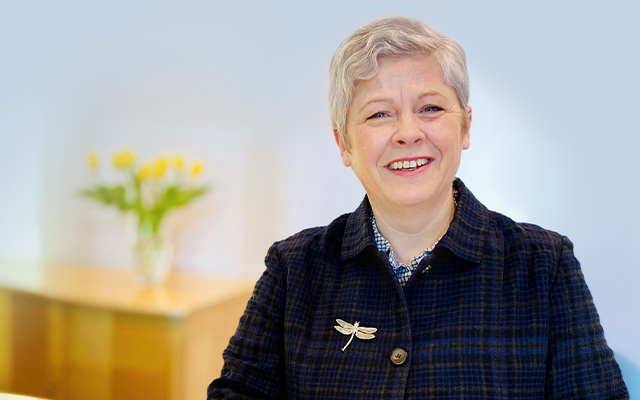
Lorraine Gray, Scottish Social Services Council Chief Executive
|
||
|
||
|
Scotland’s independent social care workforce regulator has spoken out against proposals by the Scottish government to strip it of its role in deciding what qualifications are needed to work in social care or social work.
The Scottish Social Services Council fears the proposals could make Scotland an outlier in the UK when it comes to who decides what qualifications are needed to work in the sector.
A government consultation on a National Care Service for Scotland proposes a new national organisation to oversee social work, with responsibility for ensuring there are enough qualified social workers.
The Scottish government is proposing that the national social work agency – which would answer to ministers – would provide ‘national oversight and leadership over social work qualifications, workforce planning, improvement, training, continuous professional development and pay and grading within a national framework’.
In addition, the consultation proposes changes for people in social care roles, stating:
‘To ensure that there is appropriate and relevant training and development, the National Care Service will set training and development requirements that support both entry to the workforce and continuous professional development.’
The Scottish Social Services Council (SSSC), an independent regulator set up under 2001 legislation, currently registers both social workers and most people delivering social care.
The organisation’s chief executive says it is “really important” who sets qualifications and standards for the workforce – and it should be an independent regulator rather than a government agency.
Lorraine Gray says the recently published blueprint for Scotland’s future National Care Service puts forward a new model of regulation and leaves many questions unanswered about how the changes proposed might be implemented.
Speaking at the Scottish Policy Conferences seminar on the next steps for adult social care in Scotland, she told delegates that setting the qualifications necessary to be on the register has to be done by an independent regulator:
“It is about setting qualifications and standards for the workforce.
“The consultation puts forward that the proposed new social work agency would set the qualification requirements for social workers and the National Care Service would set the qualification requirements for care workers.
“As the regulator, our role is to set those requirements and in 2012 there was a Law Commission report for Northern Ireland, England and Scotland that very clearly stated that the role of the regulator is to set the qualifications.
“The reason for this, it goes again back to our independence, is that we decide what is the right qualification for this person to come on the register.
“Now, I could see how the Scottish government could write the legislation in such a way that we would need to accept the qualifications as decided by other groups.
“But we work very closely with our sister regulators in Northern Ireland, Wales and England. What we ensure is that, whatever qualification we accept, that we work closely so that it is accepted across the other countries.”
Ms Gray says the SSSC will be seeking to persuade ministers to revisit the proposals because, if enacted, it would make the SSSC the only workforce regulator that did not set the qualifications and standards for the workforce they regulated.
The government says there are around 10,000 registered social workers in Scotland, of whom around 6,000 work in frontline services.
In total, SSSC has 166,000 individuals on its register. As well as social workers, it also registers people who work in early years and residential child care, adult day care, residential care, care at home and housing support services.
The consultation also proposes that personal assistants should, for the first time, be ‘registered centrally’.
Read More: Details of National Care Service revealed; Shortfall in mental health staff as workload rises; Regulator: Living wage for care staff still too low.
Sign up to our bulletin for key health & social care updates straight to your inbox. Tags: Social Care; Staffing & Workforce. |
