|
Insight: Recovery is about workforce and wellbeing |
Related news‘Missed opportunities’ in Tayside mental health Medics voice doubts over NHS catch-up pledge Respiratory care vision unveiled Nurse home visits help ease pressure on GPs Thousands wait over six months for treatment CAMHS transformation needed for young Scots 
|
|
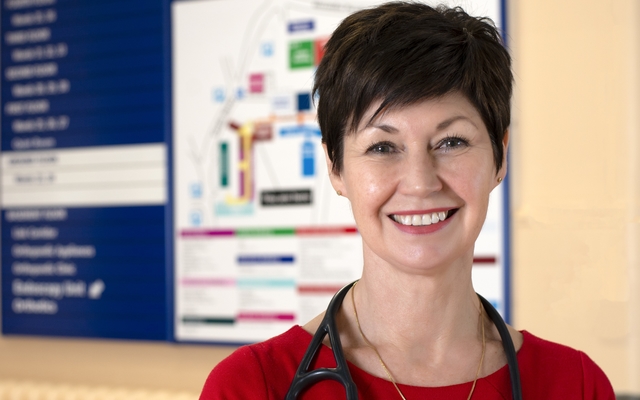
Image: Professor Jackie Taylor
|
||
|
||
|
The president of one of Scotland’s medical royal colleges says the key to the NHS recovery will be how well it adapts the way it employs and manages its own people: to support their wellbeing, help them use their skills effectively – and stop them leaving because their jobs are too stressful.
The Scottish government has set a target in the recently announced NHS Recovery Plan of increasing overall NHS activity by 10% compared with pre-pandemic levels within the coming five years through a mix of recruitment, opening new dedicated centres and embedding new, more efficient patient pathways.
The Royal College of Physicians and Surgeons of Glasgow was one of several organisations that welcomed the commitments to investing in staff wellbeing and support.
However, several organisations have said the plan missed an opportunity to match commitments to increasing training and overseas recruitment, as well publishing a detailed plan to stop experienced, but exhausted, NHS employees from quitting
The president of the Royal College of Physicians and Surgeons of Glasgow, Professor Jackie Taylor, says it is clear that the Scottish government has listened to much of what the different professional bodies have said – not least that the process cannot be achieved in just one year.
But the fundamental problem, she says, is that there are not enough people to deliver health and social care to meet the needs of Scotland:
“The difficulty with the plan is it relies on sufficient workforce. We already had significant problems before the pandemic, and I think covid has really exacerbated and highlighted the workforce shortages that we have across the different professions within health and social care.”
Professor Taylor says additional medical training places, for instance, are very welcome but is a 15 year solution; currently facing “massive unrelenting” pressure, staff are unclear how best to deliver 10% more within the five year target:
She says: “We were very worried about the winter of 2021-22 and felt that it was likely to be hugely challenging. The difficulty is that winter is here now. Winter started in July.
“I think clinicians always want to do the very best they can. But, of course, they are all aware of the difficulties that we have with workforce. So, while no one overtly is saying you are going to have to work harder and deliver 10% more, clinicians who are aware of the fact that there are workforce shortages are puzzling over how are we going to deliver this.
“How do we build capacity rapidly? That is the real nub of the issue here. And one of the ways you do that is that you try and keep the people you have. So retention of experienced nurses and physios and doctors and everyone else is a really important piece for me and I think there wasn’t a great deal of emphasis on retention of staff.
“I believe that that is a really important short-term piece of work that must be done to try and keep staff by doing all the things that we know they are looking for: more flexibility, the ability to work in different patterns, to have a different emphasis of work.
“People towards the end of their careers, like me, might think hard about doing more weekends on call because they are tough. But they would be fantastically good at helping with triaging of cases and prioritising of work. So, it is about using the skills of the people that we have in the most effective and imaginative way to get the best value from them and keep them, their wisdom and their skills and their experience.”
Professor Taylor says she is a strong believer in redesign, streamlining patient pathways to make them easier for everyone involved, questioning the ways things have always been – and then checking that your proposed changes won’t leave some patients, perhaps older and less digitally active people, behind.
Professor Taylor believes the pandemic created a new model of joint working between the royal colleges, the health professions, BMA, NHS and Scottish government. Whathad sometimes felt like tick box exercise before became “a true partnership” – because the problems were simply beyond anything that one group could do on its own.
She says that every effort has to be made to continue with that approach:
“I really do believe that this recovery plan will take the wit of everyone – the professions, the colleges, NHS Education for Scotland, the health boards, the BMA and the GMC. It requires us to put our heads together to make it happen.
“There is a great deal of experience and wisdom and a great – absolute – commitment to do the very best that we can and I think having those opportunities to work together will stand us in good stead.”
Read More: Emergency medics “very open” to new A&E target; ‘Many worrying gaps’ in NHS recover plan; London GP group to provide NHS staff support service;
Sign up to our bulletin for key health & social care updates straight to your inbox. |
