|
Citizens should be the curators of their health data |
Related newsChildhood adversity health impacts felt at 50 revealed ‘Major’ update to One Health AMR register Ten-year low in Scots healthy life expectancy How data insights will help deliver NHS reform Charter update for health data researchers Scotland in EU digital health ecosystem 
|
|
© Digital Health and Innovation Centre
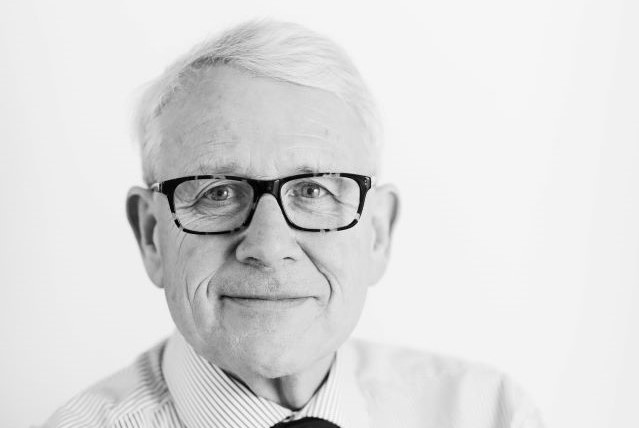
Image: Professor George Crooks
|
||
|
||
|
There are few health and care professionals in Scotland unfamiliar with the mantra of ‘shifting the balance of care’ – one that conjures up thoughts of projects like the hospital at home initiative and home health monitoring.
But for Professor George Crooks, a shift in the balance of patient data – from the health and care professionals into the hands of citizens – is just as important.
In an address to a Scotland Policy Conference seminar on priorities for health policy in Scotland this week, the Chief Executive of Scotland’s Digital Health & Care Innovation Centre (DHI) said the future of care in Scotland is not about hospitals as bricks and mortar:
“Our hospitals in the future in Scotland are going to be hospitals without walls, where more care is delivered at home, in our own communities by you and me, ourselves as citizens delivering our care rather than being reliant on health and care professionals.”
When it comes to the social determinants that impact our health and wellbeing, Professor Crooks explained around 20% of what helps or hinders us relates to the actions of our health service; 30% is linked to our own behaviour – such as smoking or how much exercise we take – and 10% by housing; with the remaining 40% linked to social, environmental and other factors.
One of the most important areas of the DHI’s work has been to match the data points collected on individuals in Scoltand against the social determinants impacting our health.
A former Medical Director for NHS 24 and Director of the Scottish Centre for Telehealth & Telecare, Professor Crooks explained: “What we found is we are making life and death decisions in Scotland today based on about 16% of the available data we have on you, and that’s because the NHS only uses the data it trusts and the reality is that the data it trusts is the data it generates itself.
“We need to make some of these data points available to health and care professionals and to others, but in a fully consent driven way under our control as citizens.
“By blending citizen generated data with formal health and care data we can better understand the lived experience of you and I and therefore make better planning and healthcare delivery decisions.”
“We need to think about how data is going to flow through our system in Scotland, safely, securely and effectively and under citizens control”
The pandemic has, in Professor Crooks eyes, made us realise we all have an individual responsibility, and he hopes this will feed through into how we want our data to be handled as society looks to recover.
He says a reliance on the old ways of managing demand and capacity challenges across health and care systems, by making the system work harder by putting on extra evening clinics and operating on weekends, are “really not available to us today” in the context of covid.
“We use the phrase, put the patient at the heart of everything you do, regularly but do we really do that? And in digital thinking, what if the citizen became the point of digital integration in Scotland?
“What if we didn’t simply invest millions of pounds building AI and machine learning systems to serve the needs of our public sector and large businesses in Scotland, or to support people working in the NHS, but we put these technologies in the hands of our citizens to allow you and I to make better informed wellbeing choices, to allow us to access services on our own terms.
“To allow us to own and truly curate our own data for the benefit of our own health and wellbeing. That will be an interesting way of taking things forward.”
But, Professor Crooks added, an “enabling architecture” is integral to making that happen, as well as a change in mindset.
“For me, we need to understand what next generation health and care services look like, and that’s not looking to me and others like me who work in the system and saying what should be best for us? It’s actually engaging with our citizens and asking them what is important to you for the future? How do you want your healthcare system to look?
“We have done a lot of work asking the citizens of Scotland what they want as far as digital tools and services are concerned, and there are two things they say:
“Firstly, we want to be able to use these technologies to help us when we interact with health and care system to tell our story once. We don’t want to tell our story to the nurse when we go into A&E, then the junior doctor, then the senior doctor then to another nurse and on and on.
“But also, we want to access services in our own terms.
“In the past we have always looked at the consultation as the mainstay of services, but that is simply putting a doctor or a senior nurse and a patient in a room together expecting the blood test results or the x-ray results all to be in the same place at the same time.
“Digital tools allow us to have these interactions a-synchronously, not at one point in time, but dynamically over a period of time and actually shortening the time to access to care…We need to be thinking about digital at scale, not as an add on luxury but integral to how we work in the future.”
Professor Crooks said that for systems to change, the answer lies in top-down commissioning that listens to the needs and aspirations of the people using services in Scotland, but also those delivering them too.
“We need to think about how data is going to flow through our system in Scotland, safely, securely and effectively and under citizens control.
“And we are on that journey and DHI is working with colleagues in NHS Scotland and in government to build next generation ICT systems, ones that will serve us all and not just the privileged few.”
Read more: ‘Many worrying gaps’ in NHS recovery plan; NHS Scotland builds new traceability system; App makes ‘fantastic contribution’ to patient care; GP MSP: ‘Patient pathways are broken’
Sign up to our bulletin for key health & social care updates straight to your inbox. |
