|
Delayed discharges return to pre-pandemic levels |
Related newsIJB costs driving councils’ unsustainable funding gap Scotland commits to change the dementia story GP assurance over support for care home residents Fundamental change ahead for Scotland’s pharmacies Scots honoured across health and care 
|
|
|
||
|
||
|
The number of people who are being kept in hospital when they are medically ready to be discharged has returned to pre-pandemic levels, new figures show.
A total of 1,461 patients were unable to be discharged in August of this year, the last month for which figures are available.
This was the highest level of people remaining in hospital inappropriately since the first months of the pandemic and the same as that seen in ‘normal’ times in August 2019.
It means progress to reduce unnecessary delays faced by patients since the start of the pandemic has unravelled.
Health Secretary Humza Yousaf said the government was “rapidly” working with councils to try to discharge patients.
He said: “With the measures we have announced today, we hope to see a significant reduction in delayed discharge over the course of the winter, which will free up bed capacity, which will help us with these winter pressures.”
Today’s Public Health Scotland figures, which come after several successive months of steep rises, show delays have returned to what would have been expected before the pandemic.
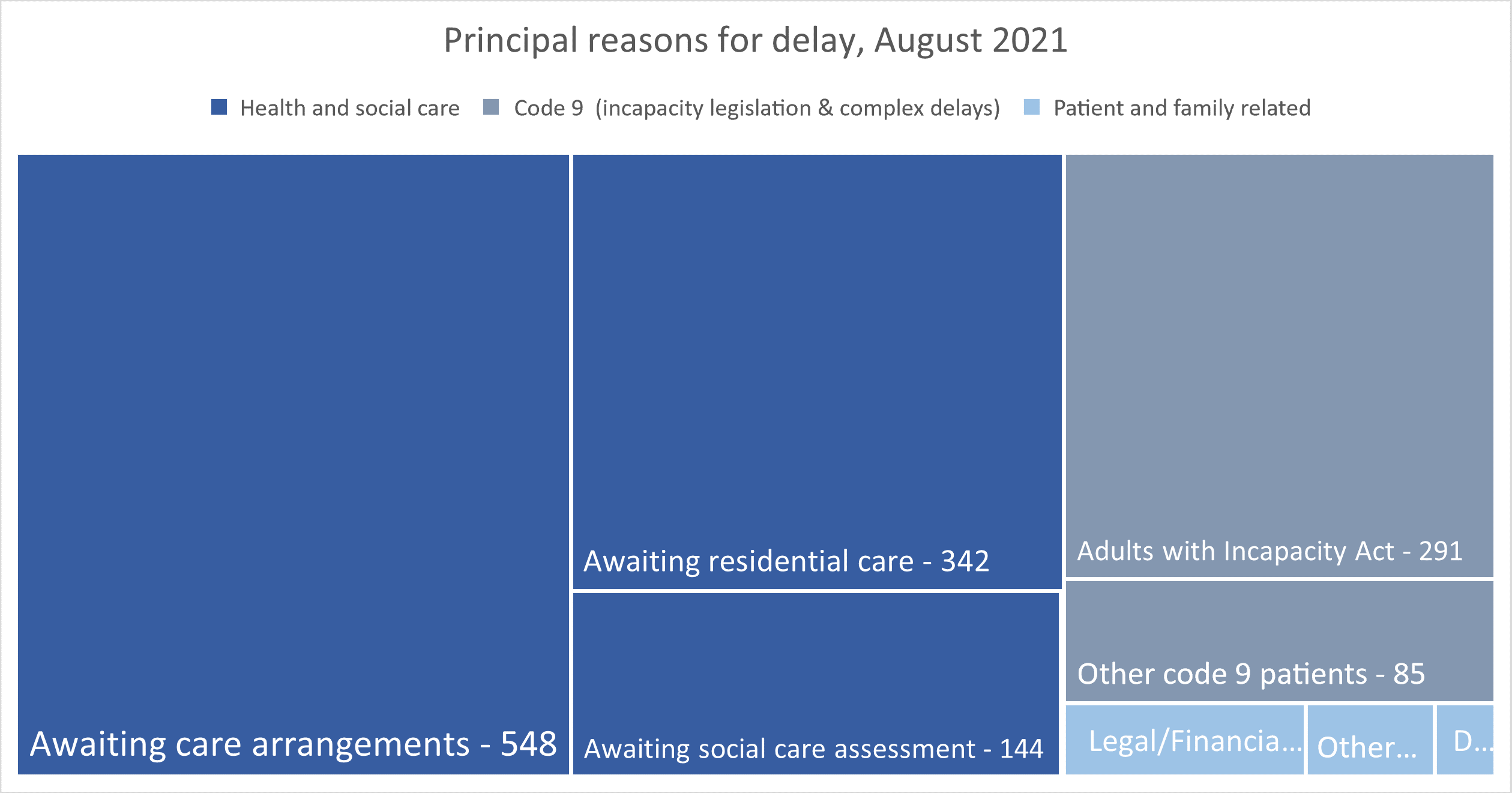
Around two-thirds of the 1,500 delays are down to ‘health and social care reasons’, which relate to assessments, care packages and care home places.
‘Non-availability’ of care at home support is the single biggest factor, cited in more than 450 cases.
Waits for a place in a care home or other residential care facility accounted for another 350.
Delays relating to processes that must be followed for adults with dementia or severe learning disabilities under mental health legislation were the principal cause of nearly 300 people’s waits.
Just 50 delays were down to reasons such as patient disagreements, family disputes and other legal issues.
The figures come as winter support measures are announced for the health and social care sector.
Humza Yousaf pledged £40m for ‘step-down’ care for patients leaving hospital, £60m to increase capacity in care at home and another £20m to fund social work assessments.
“Measures I have announced today will help patients whose discharge has been delayed waiting for care and help get them out of hospital and on to the next stage in their care,” he said.
“This helps the individual by getting them the right care, and helps the wider system by ensuring the hospital capacity is being used by those who need that specialist level of clinical care.”
When the pandemic hit in early 2020, the Director General of Health & Social Care at the Scottish government told all health and care partnerships to reduce delays by a total of 900 by the end of April.
Local partnerships had different reactions to the target to accelerate discharges, with some describing them as an “unnecessary additional pressure” and saying it would not have been safe to reduce delayed discharges any further.
The push to move people meant the number of patients whose discharge was being delayed plummeted from 1,627 in February 2020 to just 604 by April 2020.
Earlier this year a watchdog said it had found “endemic” examples of poor practice during discharges where people did not have the capacity to consent themselves.
The Mental Welfare Commission said the law had been broken in some instances.
Read more: Watchdog: Law broken in some hospital discharges; New push to help patients "lost in system"; Government review admits care home ‘search for blame’; Power of attorney take up is "equality issue"
Sign up to our bulletin for key health & social care updates straight to your inbox.
Tags: GP & Community; Older People; Social Care. |