|
All but one council ‘underpaying’ for homecare |
Related newsCOVID findings must be ‘mandate for lasting change’ NHS Scotland chief named as battle lines emerge Sceptical response to government’s care proposals Donald Macaskill: Where is Scotland going? Briefing: The 5-year plan for NHS, care and science One precedent, inconsistently applied Awards to spotlight Scotland’s link worker teams Peer support ‘crucial’ in suicide prevention Autistic people: time to refocus research Microwaves offer less invasive cervical cancer therapy Fuel crisis support needed for hospices Forth Valley unveils learning partnership 
|
|
© Daisy Daisy
|
||
|
||
|
Just one council in Scotland is paying homecare agencies enough to cover costs such as travel time and higher wages for care workers, an analysis of rates across the UK has found.
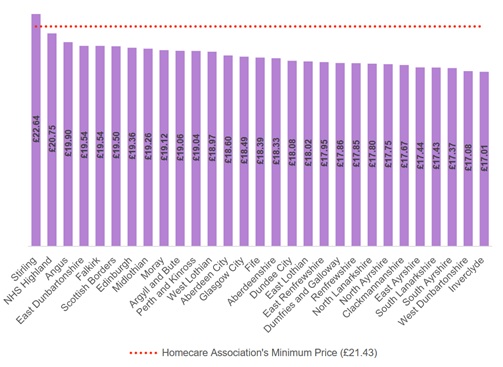
The Homecare Association calculates that an hourly rate of £21.43 is needed to cover wages and management and other business overheads.
But the average price paid by Scottish councils for an hour of support for over-65s in a sample week during April 2021 was found to be £18.62.
Only Stirling paid above this level, with an average hourly rate of £22.64.
South Ayrshire, West Dunbartonshire and Inverclyde had some of the lowest fee levels.
The Homecare Association submitted freedom of information requests to 340 bodies commissioning care across the UK to compile the figures.
CEO Dr Jane Townson said: “At least 70% of homecare is purchased by the state, so central government funding of councils for social care has a direct impact on the fee rates they are able to pay for homecare.
“In turn, these fee rates and the way homecare is commissioned and purchased determines pay, terms and conditions of employment of the care workforce.
“Scandalously low fee rates for homecare are paid by some public organisations, particularly in areas of highest deprivation, which do not enable compliance with employment or care regulations, never mind allow fair reward for the skills and experience of care workers.”
She added: “It makes little sense to neglect people at home, wait until they reach crisis point, then admit them to the most expensive setting of care in an acute hospital. Here they may lose further function and require even higher levels of support and care when they are discharged back home, or to a care home.”
Nicola Sturgeon has pledged to bring in national bargaining for pay in the social care sector as part of a National Care Service (NCS).
The new organisation would also be tasked with reforming commissioning processes for care, with minimum standards to include pay and conditions for staff.
A government consultation says the NCS could “take the lead” in drawing up workforce standard but it does not contain any specific pay levels.
Under the SNP-Green co-operation agreement, care workers in Scotland received a pay rise to £10.02 an hour, which is the same rate as band 2 health service staff.
But the Homecare Association is warning wages in the care sector are being outstripped by retail and hospitality, and a higher wage is needed to attract and retain staff.
It is calling for care workers to get the same pay as band three healthcare assistants in the NHS with more than two years’ experience.
At £11.14 an hour, or an annual salary of just under £22,000, this would cost the Scottish government £238m a year.
The Association also says providers should be paid in advance on planned hours of care, not by the minute.
The average rate paid for homecare in England was calculated to be £18.66 an hour, around the same level as Scotland, with the figure higher for Wales (£19.30) and lowest in Northern Ireland (£15.76).
The Association calculates £21.43 per hour is the ‘absolute minimum’ needed to cover pay, regulatory requirements and other operating costs.
These include management, training and a surplus for profit or investment.
Read more: Details of National Care Service revealed; Insight: Care procurement criticism ‘not full picture’; Care workers paid ‘by the minute’ in savings push
Sign up to our bulletin for key health & social care updates straight to your inbox. Tags: Social Care. |