|
Pharmacy promised workforce ‘vision’ |
Related newsCall to rethink rollout of walk-in GP services National Pharmaceutical Agency remains on hold Pharmacy’s road to stigma-free drug dependency care Pharmacists urge leaders to act for the profession Health and charity leaders join forces for NHS reform New steps for pharmacists to access patient records 
|
|
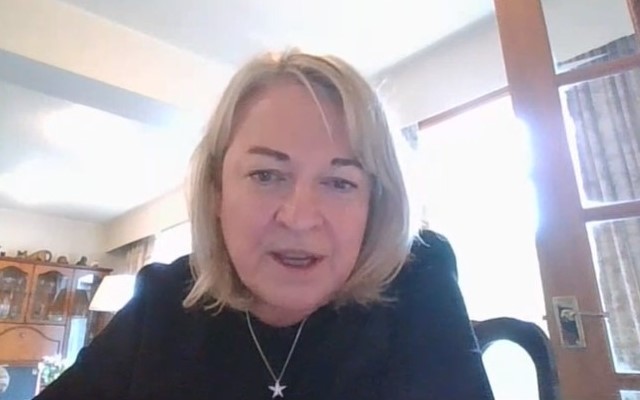
Professor Alison Strath
|
||
|
||
|
The Scottish government’s Chief Pharmaceutical Officer is to develop a multi-year workforce ‘vision’ for the pharmacy profession, revealing that high street pharmacists have now become the first port of call for thousands of people needing to speak to a clinician.
Professor Alison Strath was taking part in the first session of the inaugural Future Pharmacist conference being run by the online professional training and support organisation Pharmacy in Practice with virtual events every evening over the next two weeks.
She told her audience that Pharmacy First, a programme that encourages people to consult their high street pharmacist for minor illnesses rather than always trying to seek an appointment with their GP, was beginning to take pressure off other clinicians:
“I look at Pharmacy First that came in just over a year ago in the middle of the pandemic. There have been over two million consultations that have taken place and more than 90% of those have been dealt with at the point of contact with a member of the pharmacy team. So that is pretty impressive – and only 4% have required a referral to another healthcare professional.
“If we think about some of the pressures that primary care is under, then that has to be making a difference.”
Professor Strath also revealed a further 200,000 consultations took place under arrangements rolled into the Pharmacy First programme that encourage pharmacists to treat a series of common clinical conditions, including shingles, urinary tract infections and skin conditions.
In the summer, the body representing Scotland’s community pharmacists called for a pause to the recruitment of pharmacists into GP practices.
Community Pharmacy Scotland said there had been a ‘workforce drain’ of some 600 professionals who had made the move from working in high street pharmacies.
Professor Strath was asked by conference host, Pharmacy in Practice founder Johnathan Laird, himself a pharmacist, what could be done to attract and retain community pharmacists.
“There are a number of factors,” she told her audience. “But if community pharmacy offers a promising clinical career, because that is what I think pharmacists want pharmacy to do, then I think they will absolutely follow.”
Professor Strath, who was confirmed as the government’s lead adviser on pharmacy and medicines in the summer, said she was not going to rush into burdening the profession with new policies or initiatives when so many were exhausted after a relentless pandemic with the challenges of winter still ahead.
She said a priority to is support pharmacists, pharmacy technicians and support staff:
“My plan is to set up a workforce forum and I want to involve all sectors of the pharmacy profession in that, to coproduce a vision for workforce that sets out what good looks like in 12 months, in three years, five years and 10 years.
“Now, 10 and five years are quite difficult to predict so it’s going to have to be a bit iterative and there will have to be some scenario planning.
“But we can probably do quite a lot around what 12 months and three years looks like, and what we need to do is not just think about how pharmacy operates at the moment but look at some of the emerging roles that are coming along.
“We need to think about younger pharmacists who are coming on who are more interested in a portfolio career - maybe not being tied to one particular area, but being able to move about settings and bring that knowledge and expertise to the different places that they are seeing patients.
“And we also need to think about things like service redesign transformation work that is taking place – how do we use technology and artificial intelligence, for example? What do we need to do to respond to some of the more disruptive treatments – the precision medicines – that are coming along?"
Johnathan Laird asked why there was never a pharmacist represented at the Scottish government’s daily coronavirus briefings when medicines and vaccines had played such a central role in tackling the pandemic.
Professor Strath said decisions on who stood on the podium were taken by ministers, but revealed she had been called in to do technical “behind-the-scenes” vaccines briefings for journalists.
She said the pharmacy profession’s contribution over the past 18 months and in future was widely recognised both inside and outside government:
“We were not ignored. We were acknowledged for where we contributed and we contributed in the places where we could make the most difference.
“Do I think that standing on a platform being on the television every day would have been the best use of my time?
“I had more than enough work to be doing to make sure that we could support pharmacy teams on the frontline to deliver the vaccination programme and deliver all the other things they had to.
“I sleep easy in my bed knowing that pharmacists at the top level of government right across the NHS and right down to the coalface made a difference and that is good enough for me.”
Read more: GP contract causing pharmacist "workforce drain"; Joint warning over GP contract progress; Ministers publish ambitions for women’s health.
Sign up to our bulletin for key health & social care updates straight to your inbox. |
