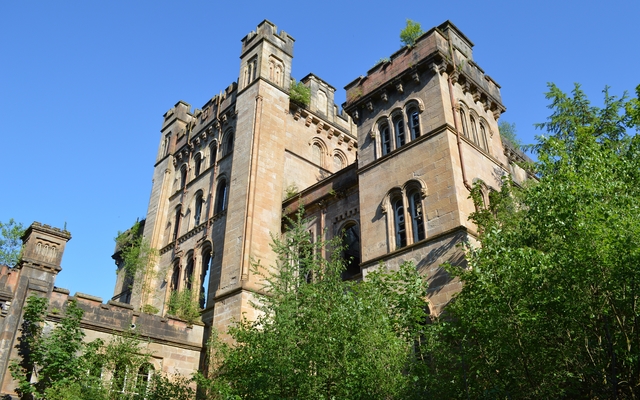
This month, journalist and campaigner Michael McEwan reports for healthandcare.scot on the progress made in learning disabilities care in Scotland, and the role played by institutions until just a few decades ago.
It is often important to reflect and consider how far society has developed.
Part of this development has been the long phasing out of institutions for people with a disability.
Next June is the 20th anniversary of the closure of one of those institutions in Glasgow: Lennox Castle.
The castle itself was built in the 1830s but in the early 20th century the space was converted into what would later become a truly infamous psychiatric hospital.
When the hospital was opened it was hailed as being way ahead of its time. It was the largest hospital in the UK.
The hospital cost £1m to build, with 20 separate dormitories for male and female patients, each one holding around 60 people.
The patients had access to communal dining halls (with seating for 600 people in each), a central assembly hall, which housed a stage equipped for cinema shows, and recreational facilities.
The men and women sections also had their own canteens, kitchen and workshop.
There was also an administration block and forty houses provided accommodation for married staff on site.
Despite a promising start, conditions at the castle soon begin to deteriorate. The hospital was vastly overcrowded, understaffed, and underfunded. Vulnerable patients were left to fend for themselves in large wards.
A study by the British Medical Journal in 1989 found that a quarter of patients at the castle were dangerously underweight and malnourished. Some claim there was more than neglect going on at the castle.
Dr Sam Smith, who was on the commission team that helped close down the castle and move people out, said: "We forget it is hard for people to imagine that in our recent history, people thought it appropriate for sections of the population to be kept in isolation, away from their communities and loved ones, with no choice on how their lives should be run."
In 2001 Dr Smith founded C-Change which advocates for everyone being entitled to help, to allow people with learning disabilities to live in their own home.
Dr Smith added: "Lennox castle was a community but not as we understand it. This community was built on power and control, adversity and strength, weakness and loss of self.
"The same people are now mothers, fathers and workers who are part of the community and have so much to contribute. I saw them being transformed in a short space of time, just by being allowed to live in their own homes"
Lennox Castle would have been in no way a nice place, and we must look back at what it was like for people with a disability - we have come a long way but there is always room to make it better.
Sam was right in saying people should not be shut away; just because you have a disability does not mean that you are in any way different to the next person.
Society of the past were not given choices in self-directed support like today, which enables people to stay in their own homes with support from family, friends or support workers.
I can't imagine what it was like in an institution like this – to see the same people every day and do the same routine. I was encouraged from very young to be independent, and to have self-worth and self-confidence.
Disability does not define who you are, only society's perception does.
Michael McEwan is a freelance journalist: www.michaelmcewanmedia.webs.com
Sign up to our bulletin for key health & social care updates straight to your inbox.