|
Call for ‘revolution’ in social care commissioning |
Related newsSceptical response to government’s care proposals Party health and care leads are named Briefing: Social care in the manifestos Collective bargaining promised for social care Bid to block IJB voting rights extension Councils warn of social care cuts ahead 
|
|
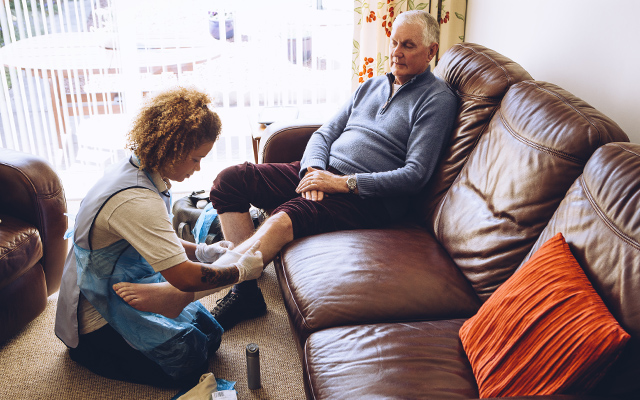
© dglimages __
|
||
|
||
|
A lack of trust within the social care system, that has seen home carers ‘tagged’ and led to restricted support choices for recipients of care and their unpaid carers, must be tackled, a panel of experts have told a parliamentary committee.
Witnesses to today’s Scottish parliament Health and Social Care Committee’s hearing on social care called for an immediate end to ‘unethical’ competitive commissioning that treats care workers as ‘distrustful teenagers’.
Donald Macaskill, chief executive of care providers’ organisation Scottish Care, told the committee electronic call monitoring systems used by many care providers are “the equivalent of electronically tagging our workers”.
“I cannot imagine a nurse in the community tolerating that degree of lack of trust, lack of respect and lack of individual autonomy.”
In his review of adult social care, Derek Feeley recommended that people with lived experience, unpaid carers and providers should be ‘routinely involved’ in the co-design of the commissioning system, in which decisions should shift away from a sole focus on budget limitations ‘at pace’.
But Annie Gunner Logan from the Coalition of Care and Support Providers in Scotland told the committee the government’s proposals for a national care service have not gone far enough to encourage collaboration between providers.
She called for an immediate pause on competitive tendering within social care, which she says is fundamentally unethical.
“The independent review [of adult social care] recommended a revolution in commissioning but the national care service proposals that came out in the consultation didn’t follow through with that.
“I would go so far as to say that competitive tendering for social care is, in itself, unethical and no amount of tinkering around the edges is going to change that.
“I worry that ethical commissioning is being interpreted as a way of ensuring providers behave ethically but it has to start at the beginning with a commissioning mindset that is in itself ethical and that would rule out any kind of procurement that didn’t involve the individual choosing their own support.”
She added: “Ethical procurement, that recognises fair work and exploration of more collaborative approaches, would be hugely welcome.”
Following the publication of Audit Scotland’s briefing on current issues facing Scotland’s social care system in January, the Auditor General called for ‘action at speed’ to rectify workforce pressures, financial challenges and the lack of service users’ voice.
Mr Macaskill told the committee current commissioning and purchasing arrangements are negatively affecting those that arrange their own social care support, where the current system is “driving care standards down”.
“Choice is only possible if you have the ability to have a ‘market’ that enabled people to choose between different providers,” he told the committee.
“In its current form, the system is driving organisations out of the sector, regardless of their business mode. We need to move toward a model for alliance, cooperative ethical commissioning in which we are not all about price but we’re about quality.”
The pandemic saw many day services withdrawn and staff shortages have seen many remaining unopened or at risk of permanent closure, leaving many unable to continue with the support arrangements they had in place prior to covid-19.
The Scottish government issued guidance that people in receipt of self-directed support should be given more flexibility during the pandemic to allow them to purchase alternative support.
However a survey of 210 recipients of self-directed support and their unpaid carers found just one in three had been able to use their budgets more flexibility during the pandemic.
A quarter of those unable to do make flexible arrangements said they had been told by council workers it was not allowed, with many carers and supported people citing the administrative burden as an additional barrier - a long-reported issue within the system.
Ms Gunner Logan said her organisation’s research showed how “fundamental misunderstandings” of the legislation are still holding back implementation a decade later.
“We still seem to be looking for the silver bullet to be able to solve social care, but this parliament legislated for it nearly 10 years ago now,” Ms Gunnar Logan told the Health and Care committee this morning.
“If we did self-directed support properly, I think we would not be facing some of the problems we currently are.”
Fiona Collie of Carers Scotland today told MSPs that trusting people who receive social care is key to improvements.
“There’s something about really removing the bureaucracy around it and really saying to individuals and their carers: ‘You know what is best suited to your needs. You know what will make a difference to your lives and we trust you to either use a direct payment, to purchase from an individual provider and we aren’t going to ask for reems and reems of paperwork , and we’re not going to ask for loads and loads of receipts , we’re going to say to you we trust you.’
“And we’re still a way from that.”
Read more: Watchdogs: Care can’t wait five years for action; NCS commissioning reforms 'do not go far enough'; NCS must not fail minority communities
Tags: Scottish Parliament; Social Care. |
