|
Fear it is "too little too late" for social care |
Related newsSceptical response to government’s care proposals Briefing: Social care in the manifestos Scotland’s IJBs becoming "financially unsustainable" Bid to block IJB voting rights extension Users to get voting rights at IJB meetings Care can be valued, visible, viable and visionary 
|
|
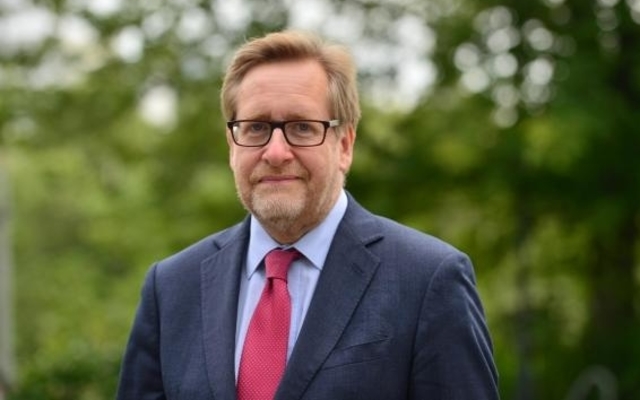
Dr Donald Macaskill, Chief Executive of Scottish Care
|
||
|
||
|
The head of Scottish Care says real change in the recognition of social care cannot come from St Andrew’s House, as he warns the sector in much of Scotland is likely closer to collapse now than even at the peak of the pandemic.
Dr Donald Macaskill told attendees at a health and social care network meeting held by the Glasgow Council for the Voluntary Sector (GCVS) that policymakers are still failing to see past the NHS in discussions of social care and are not listening to people from the sector.
A social covenant steering group was set up by the Scottish government to inform the establishment of a national care service – however, according to one session contributor, this in practice operates as a ‘side-line’ and that much of the discussion around how the service will be set up has taken place behind closed doors.
Dr Macaskill said organisations working at the front line should develop their own parallel group to drive change:
“I don’t think government can chair or nurture a social care covenant. It’s not a group. It’s not a committee. It’s something which has to have an energy of its own.
“I think it’s maybe up to the sector to say “right, let’s create our own covenant group, not in opposition, not in competition, with the government”
“This is too important to be left to the politicians and the policymakers, because it’s not their life or their livelihood."
He added that such a grassroots movement could help protect the vision of the Feeley review and “put some salt back into the National Care Service”.
The Feeley review recommended the establishment of a social covenant, with representation from government and those from the social care sector, to collectively guide service improvement, especially within commissioning and procurement, and build trust in support.
Initial membership of the group includes unpaid carers, disability rights activists, a care home resident and people involved in the delivery of social care services.
However, Dr Macaskill says that discussions of social care services remain centred around the NHS, leaving social care relegated to the role of “always the bridesmaid”.
“It is perceived that we do have a seat at the table. But nobody’s listening because they have one focus in mind.
“We have politicians of all kinds who can only see the world when they’re wearing NHS glasses. But if social care collapses, and it is probably closer to collapse in parts of Scotland than I have ever experienced, including during the really dark days of the pandemic, then the NHS in those areas will collapse within a month.
“Social care has its own value, its own needs, its own priority: not as the plaything of the NHS, not as something which will help delayed discharge but as a set of services and supports – as a way of enabling our society to function which is distinctive and special.”
At a conference earlier this year, the Chief Executive of the Scottish Social Services Council (SSSC) said social care is often lost in discussions about health and care because the NHS is so powerful.
Maintaining the distinctiveness of social care, she said, should be of paramount importance as the two sectors continue to work closely together.
One way to achieve this, according to Dr Macaskill, is to redefine the right to health, and to incorporate social care as part of a new Scottish Human Rights Act.
He told attendees that Scotland has the opportunity to be the first nation to explicitly say the right to health includes the right to social care, as the country moves to incorporate the International Covenant on Economic, Social and Cultural Rights into Scots Law.
“We need to redefine the right to health as being more than the right to wellbeing, physiological or even psychological health. We need to see that social care is more than just emergency clinical health intervention: that social care stands alone as a human right to be preserved and protected and defended.”
However, the Scottish Care boss added that these changes on paper will make little difference alone and must be followed by action on the ground:
“Scotland has the most fantastic legislation, whether it’s the Carers Act, the Self-Directed Support Act, or the Mental Health Care and Treatment legislation. I have absolute confidence that whoever develops the Human Rights Act in Scotland will get us a humdinger piece of legislation
“But as we know well, simply having human rights legislation on its own, doesn't make an iota or a jot, of difference. It is the empowering of people to be human rights advocates and fighters that makes the difference.”
Issues in capacity and funding continue to plague the social care sector, and many contributors in last week’s conference said the current situation has left the sector on its knees, with individuals unable to engage.
Dr Macaskill says the only way forward is to “convince by conversation”, but that exhaustion in the sector has meant incremental improvements in social care, enabled by individual conversations held by activists, has now slowed.
“As more and more care organisations are at a point of crisis, and as more informal family carers are going to be really challenged over the autumn-winter, there’s a danger that we focus on the fact that we’re saving ourselves from drowning rather than on the change that’s happening around us.
“And my worry is that it will be too little too late.”
Read more: National Outcome on Care campaign gains momentum; The right to have needs met by the NCS; MSPs seek views on National Care Service Bill
Sign up to receive our bulletin for key health & social care updates straight to your inbox. Tags: National Care Service; Social Care. |
