|
Desperately seeking COVID sense |
Related newsLong COVID putting Scots at risk of poverty More ambitions than pharmacists National Pharmaceutical Agency remains on hold North cancer setup to remain but formulary in doubt Scottish life sciences to be £25bn sector Scotland at the table with UN healthy air commission 
|
|
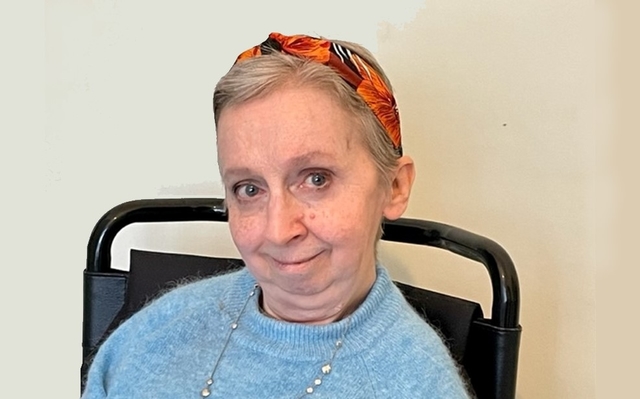
Dr Sally Witcher
|
||
|
||
|
Dr Sally Witcher, a freelance consultant with a career in equalities and inclusion spanning senior roles in third and public sectors, writes in a personal capacity as a disabled person with high clinical risk from COVID-19, calling for urgent and meaningful dialogue with government to make sense of the incomprehensible mismatch between lived experience of terrible harms and goverment abandonment of ways to prevent them.
At a time when the COVID pandemic seems to have been successfully wiped from most people’s minds, those who don’t have the luxury of denial look on in stunned disbelief. We marvel at the scale of mismatch between robustly evidenced reality and government in action and wonder what became of the fundamental principle of healthcare: first do no harm. We ask in vain for answers to obvious questions. Not to understand why harm is being done to you is itself harmful. Furthermore, as government has offloaded responsibility onto us all for protecting ourselves and each other, we need up-to-date, accurate information so we can gauge and mitigate risk. “Do no harm”, “Explain why you are harming us”, “Make it possible for us to do no harm”: they seem to go together. We see failure on all three fronts.
While we remain in lockdown, others carry on as if COVID-19 was but a long-forgotten nightmare. Mark Oakley, co-founder of Evusheld for the UK, a patients’ group for immunocompromised people, sums up how it feels:
“To continue living a restricted life when you know you’re at such a high risk, and to see others around you returning to normal; to see the effects on both your own and loved ones’ lives, is heart breaking. It’s difficult to describe the mental anguish it causes after over 900 days of living like this, especially knowing others have the power to change this situation for so many – but won’t.”
His words will resonate with many for whom the COVID nightmare is still a daily reality. They include others with high underlying clinical risk, the ever-swelling ranks of people newly disabled by Long COVID and unpaid carers. Together with scientists and front-line service providers who see avoidable harm done every day we shout unheard warnings to the maskless masses and plead with governments to show what to us is obvious COVID sense.
But could it be us who have misunderstood? Are we self-harming by isolating when we could safely be out masklessly partying? Perhaps, as Minister Maree Todd put it “We find that people are struggling a little to recover from that feeling of vulnerability, which is perfectly understandable". Maybe, as people formerly on the Highest Risk List are told, all we need is a bit of support to rebuild our confidence, our social networks and our mental health resilience. As she also observed, “it is hard to remind ourselves that the situation today is very different from the situation that we faced in March 2020”. She is right that it is very different. We now know much more about the enemy virus and have many weapons with which to combat it. The question is whether it is us or Scottish government who need reminding.
War of the worlds
Either the pandemic is no longer here and we can all just get on with our lives as before, or it is and we need to use every tool in our toolbox to safely maximise everyone’s freedom. How can both simultaneously be true? Somehow it seems that they are.
In our world, news of the pandemic’s demise has been greatly exaggerated. In Scotland in the week to 6th October, compared to the previous week, there were percentage increases in cases, deaths (total 45) and hospitalisations. There were 204,000 people suffering from Long COVID, roughly the population of Aberdeen[4] (2.3 million people in the UK) and growing reports of highly immunity-evading new variants (e.g. BQ.1.1, BA.2.75.2 and XBB). Meanwhile, an ever-growing body of research shows each COVID infection can lead to cardiovascular diseases, diabetes, renal disease, neuro-cognitive disease and cause the immune system to malfunction. Coupled with large increases in reinfections this must surely lay to rest the dangerous myth of herd immunity. The detrimental consequences, not just for individuals but for the labour market, education and the NHS are plain to see yet inexplicably unseen by the inhabitants of the apparently co-existing world
Surely this demonstrates the urgent need for government action to give everyone the information they need to understand their risk and the means to mitigate it. Instead they issue vague encouragement, unchanged since the early days, to wear masks, open windows, wash hands and wipe surfaces. It doesn’t appear to have occurred to them to promote the merits of FFP3 masks and how to fit them, HEPA air filtration systems and DIY Corsi-Rosenthal boxes, or explain that handwashing and surface-wiping, while important, are not terribly effective against a virus we now know is airborne, largely spread by aerosols inhaled like smoke, not heavier droplets that fall. The profound implications of appropriate preventative action are still widely misunderstood.
In full knowledge that infected people can be asymptomatic, one of the most ill-advised things a government could surely do is discourage people from masking, testing and isolating if infected, particularly if likely to be in contact with clinically at-risk people. Yet, that is precisely what Scottish government did when in September it no longer recommended social care workers and visitors wear masks, then abandoned requirements for weekly testing by asymptomatic health and social care workers. The reason given was the success of the vaccination programme, despite evidence that vaccine protection wanes and that it imperfectly protects against new variants. Yet governments persist in seeing vaccination not as the game-changer it is but the all-out winner. Despite the evidence on long-term impacts of infection, the strategic focus remains firmly, if inadequately, on building clinical resilience to acute illness, while measures to reduce infection spread are deprioritised and abandoned.
What of the people with pre-existing significant clinical damage to the areas COVID-19 is known to attack? They are no longer deemed to be at greater risk than anyone else and were consequently ineligible for Spring boosters and Autumn boosters unless via other criteria. Bizarrely, the only people who cannot produce protective antibodies in response to vaccination are targeted for vaccination boosters but deprived of prophylactic drug Evusheld that would give them those antibodies. Data on Evusheld’s efficacy is good enough for 32 countries and the National Clinical Expert Group of 150 clinicians across 4 nations and 17 medical specialities, but not for the UK or Scottish governments to make it available. Instead, for weeks, further clinical trials have been under consideration to allay apparently lingering doubts on its efficacy against Omicron. Of course, by the time they ever get round to it, new variants may render findings out-of-date, requiring more clinical trials, in an endless Groundhog Day.
Reconnecting realities
What caused realities to divide? Did it start with the false belief that COVID spreads via droplets not aerosols? Is it rooted in a political ideology that seeks to roll back the frontiers of the state into oblivion, dumping responsibility onto individuals unequipped to assume it, all in the guise of freedom? Or are the barriers practical: lack of funding, inadequate supplies of PPE, procurement and distribution challenges, and the need to ensure safety and efficacy of new drugs in the face of rapidly moving, multiplying targets? Maybe that’s why the Scottish government surrendered devolved power to throw in its lot with the UK Government. As Healthcare Improvement Scotland confirmed:
“Since the start of the pandemic the Scottish Medicines Consortium has been part of the UK-side multiagency initiative, RAPID C-19, aimed at getting effective treatments for COVID-19 to NHS patients quickly and safely. Questions related to purchasing and availability across the NHS in the UK are currently determined by advice provided by RAPID C-19”
Or could it be that the only way to keep the health service sufficiently staffed to function requires anyone not too unwell to show up? As suggested in the Herald: “Ultimately it comes down to a balance of risks and, for now, policymakers favour increased capacity.” Maybe the only way to first do no harm is secondly to do more! If so, the continuing pandemic and us with it are an inconvenient truth to be concealed and ignored. Maybe we’ve misunderstood again. ‘First do no harm’ never did apply to people but to the continuance of the economy and services.
The only way we will ever make COVID sense of what’s going on is through frank, detailed dialogue with government. I know we’re up for it. But are they?
A Scottish government spokesperson said:
"We understand the worry that some people have about COVID-19 and that is why immunocompromised individuals are prioritised for COVID-19 treatments, including antivirals and monoclonal antibodies, and given access to free tests and vaccination.
"Evusheld® was developed and tested before the emergence of the Omicron variant and the MHRA’s conditional marketing authorisation outlined some remaining questions, including how effective it is against Omicron and the duration of its effect against current circulating variants. A number of other countries’ regulatory agencies, including the European Medicines Agency (EMA), have noted similar concerns.
"We continue to closely monitor the outcome of further research to ensure that any decisions to make Evusheld® available to eligible individuals in Scotland in the future are based on the best available evidence.
"In order to gain further evidence, consideration is being given to establishing a clinical trial as a route to answering outstanding questions on the link between in vitro tests and clinical outcomes for current and future variants.”
Read more from Dr Sally Witcher: Welcome to the new normal?; An inclusive new normal
Email: Witcher.Work@outlook.com Twitter: @SalWitcher #InclusiveNewNormal
Sign up to our bulletin for key health & social care updates straight to your inbox. Tags: Covid-19; Medicines; Scottish Government. |