|
Call for preventative healthcare targets |
Related newsVision for NHS reform in coming weeks Pharmacy’s road to stigma-free drug dependency care Scots kidney disease patients urge politicians to act COVID jags end for staff and chronically ill Deprivation gap in cancer “unacceptable” says charity Doctors say GP funding boost “just the start” 
|
|
Professor Sir Gregor Smith
|
||
|
||
|
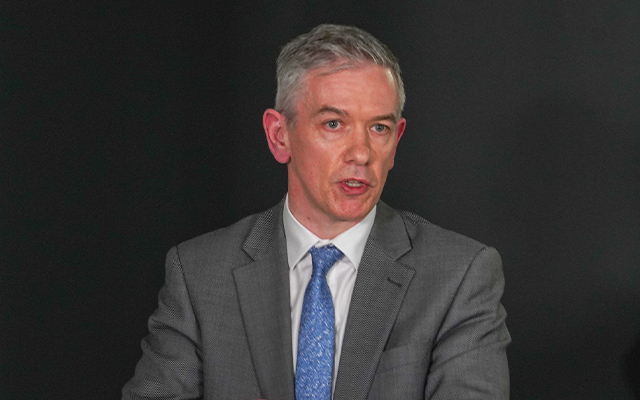
Scotland’s Chief Medical Officer says the way the NHS in Scotland measures its success should focus more on its efforts to prevent ill health, as he called for healthcare services to shed its industrialised approach and instead embody compassionate and personalised care.
At the NHS Scotland Event, CMO Professor Sir Gregor Smith told NHS staff that he was worried about the increasingly industrialised and transactional nature of care being delivered in Scotland.
He told event attendees that healthcare professionals must ‘reconnect’ to their purpose and return to delivering careful and kind care, with patients at the centre of decision-making.
In his annual report, this year titled Doing the right thing, the CMO says it is key that a scientific approach to care is better balanced with a biographical approach, while ensuring wasteful and harmful treatment is avoided.
One part of this, he argues, must be using measurements that improve quality rather than solely drive activity – including better monitoring of preventative efforts that stop people becoming unwell in the first place:
“We manage what we measure. If we measure things that lead us to a transactional approach to care, then that’s what we deliver. We need to make that a measurement framework reflects the type of care we want to provide. I would love us to have a proportionate approach to measurement with improvement theory at its heart.”
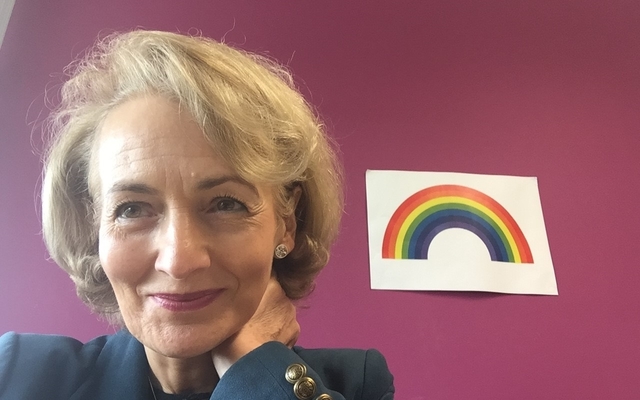
Speaking as part of a panel exploring ‘an NHS fit for 2043’ alongside the CMO last Monday, the Chair of Public Health Scotland, Angiolina Foster, said introducing targets will be key to tackling pervasive health inequalities – another focus of the CMO’s annual report:
“One of the moments of opportunity now is to recognise, just as we have – quite properly – created accountability frameworks for delivery of units of healthcare, like length of waiting times in A&E, we now need to reflect on, and design, agreed goals and targets for effective preventative work and also work to reduce our – frankly shameful and growing – health inequalities.
“It would be wonderful if the system held us to account on this due and overdue focus.”
Reducing the ill health workload
Survey results from the doctors regulator, the General Medical Council, have found more doctors are dissatisfied, at higher risk of burnout, and are considering leaving UK practice than before the pandemic.
Among doctors who said they were likely to leave the UK profession, around 14% had applied for jobs overseas; four in five said this was due to perceived better treatment of doctors abroad.
Ms Foster explained that a reduction in healthcare demand would have a knock-on effect on the
workforce crisis:
“We cannot try to train more and more clinicians and professionals without dialling down demand. If we don’t put that plug in, by which I mean address the health of the nation with as much vigour and determination as we address the healthcare of the nation – in other words, prevention, then the future is scary for those students.
“Let’s put our absolute effort into prevention, dial down demand and then we can begin to paint a picture for those colleagues coming through of a system in balance, rather than heading toward tipping over.”
Looking at every part of the system
Caroline Lamb, the Chief Executive of NHS Scotland, told the meeting a lack of data in key areas of prevention means it is important that ‘crude measures’ aren’t introduced that will do little to actually improve the way the system operates.
Only around 10% of a population’s health is thought to be attributable to health care delivery, highlighting the need for a multi-dimensional approach to eradicate health inequalities.
The Scottish government has established a Care and Wellbeing Portfolio to bring together work within health and care, communities, fair work, income and early years with the aim of reducing health inequalities and improving population health.
Ms Lamb says any attempt to track ill-health prevention must take into account changes right across Scotland’s policy landscape:
“I think there has to be a point about needing to look at Health Impact Assessments of other policies and to be really clear about what these are actually doing in terms of improving health and wellbeing, because this isn’t something that can be done by just sitting within health.”
The Progressive Policy Think Tank (IPPR) Scotland estimates health boards will spend £2.3bn on the costs of poverty in 2023/24.
A further £350m a year from the Scottish government is thought to be directed at health inequality-related spend within mental health, drugs and alcohol.
Angiolina Foster told NHS Scotland Event attendees that the way the health service medicalises poverty costs is expensive and that much of the work to prevent ill-health will need to be done by people other than healthcare professionals:
“We can afford to put pauses into the system and get to the root of peoples’ problems. Let’s not medicalise poverty or other issues – we have to connect.
“A lot of the primary prevention isn’t within our remit. We will need to reach out to partners who are the ones with the solutions and pass on the baton.”
Read more: Scotland’s Health Secretary: "Things will get better"; Austerity blamed for Scotland's health inequalities
Sign up to our bulletin for key health & social care updates straight to your inbox and you can follow healthandcare.scot on Google News.
|