|
Realistic Medicine agenda moves forward |
Related newsScotland at the table with UN healthy air commission Pharmacy’s road to stigma-free drug dependency care NHS Scotland net zero efforts expanded ‘Whole-system shift’ needed on ADHD and autism support Scotland’s NHS and social care app timeline unveiled Doctors: ‘Shocking’ A&E figures require action 
|
|
© godfather
|
||
|
||
|
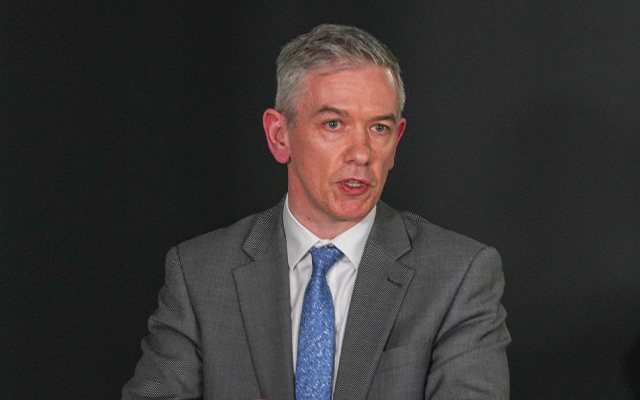
Scotland’s Chief Medical Officer (CMO) has laid out 13 steps for Scotland to ‘accelerate’ its efforts to transform its health and social care system into one where sustainability, evidence-based practice, and kindness is at its core by 2030.
Fundamental to this, Professor Sir Gregor Smith says, will be the delivery of Value-Based Health and Care – a model to deliver ‘better outcomes and experiences for people through the equitable, sustainable, appropriate and transparent use of available resources’.
In a comprehensive action plan, the Scottish government commits to strengthen patients’ voices in decisions about their care and throughout service re-design by developing a new measure to capture health and care experiences at a national level.
It also commits to put high quality evidence and knowledge into the hands of health professionals and the public, to enable shared decision-making and reduce unwarranted variation.
CMO Professor Sir Gregor Smith, in his foreword to the plan, says he believes practicing Realistic Medicine – which places patients at the centre, to reduce harm, waste and unwarranted variation whilst championing innovation and improvement – will be pivotal:
“There remain concerns about finding the time to have meaningful conversations with the people we care for. Teams across Scotland are however, already leading the way, finding opportunities to practise differently. Working collaboratively across traditional health and social care boundaries, utilising the skills and expertise of multidisciplinary professional groups will help us to deliver Value Based Health and Care centred on what matters to the people in our care.”
Estimates from the Organisation for Economic Co-operation and Development suggest that as much as 20% of healthcare spend does not actually result in health improvement.
Professor Sir Gregor says reducing ‘low-value interventions’, from inappropriate testing to treatments and care, will also be a key focus for government over at least the next seven years.
Medicine harms, through both over- and under-prescribing, currently result in almost 11% of all hospital admissions according to the CMO. The plan lays out the government’s intention to develop a unified dashboard for sharing improvements and data within prescribing, in attempt to reduce harms and waste.
Health inequalities
Scotland currently tracks geographical variation in the provision of health services and outcomes in a range of conditions, including cardiovascular disease, mental health and colorectal cancer.
The development of the Scottish Atlas of Healthcare Variation was slowed due to the pandemic, but the action plan says this ‘important tool to support Realistic Medicine’ will now be rolled out and publicised across Scotland.
By understanding variation in treatment, diagnostic testing and service provision and what contributes to these, the Chief Medical Officer believes staff can strive to reduce these in their day-to-day practice.
Racialised inequalities in health and care is also a focus of the plan, with priorities set in maternal and neonatal care, mental health, type 2 diabetes and cardiovascular disease detection and prevention.
An increased focus on the ways people can boost their health and prevent illness is also committed to in the plan.
The Scottish government says it will work with professional bodies representing doctors, nurses and allied health professionals to promote a ‘culture of prevention’ in every health care contact.
Public and staff engagement
A key aim of this programme of work is for, by 2030, the people of Scotland to be empowered to make informed choices about their treatment and care based on what matters to them most.
Chief Medical Officer Professor Sir Gregor told attendees of the NHS Scotland event back in June that he was concerned about the increasingly industrialised and transactional nature of care.
To fight against this, he is continuing calls for a better balance to be struck between the biomedical approach and the biographical approach which focuses on the uniqueness of patients and empathetic and careful care.
Part of this will be to engage the public and those with lived experience in the improvement of health and social care services.
The first step will be a public engagement exercise, supported by Healthcare Improvement Scotland, to understand the current level of public understanding of Realistic Medicine and Value-Based Health and Care.
New training modules will also be developed this year for health care professionals, to ensure staff are confident in their abilities to deliver and can become future stewards of this new way of thinking.
Professor Sir Gregor, in the action plan, calls for those working in the system to share the responsibility for system change and says the government will support them every step of the way:
“I would ask everyone, no matter your role, to do what you can to deliver better value care and help secure the sustainable health and care system for Scotland that we all wish to see.”
Read more: Call for preventative healthcare targets; Realistic medicine to help the climate; Inside Scotland’s widening health inequalities; Austerity blamed for Scotland's health inequalities; Analysis: Why people are left behind
Sign up to our bulletin for key health & social care updates straight to your inbox and you can follow healthandcare.scot on Google News. |