|
Coming Home: Not a pipe dream |
Related news‘Leaps’ needed to secure change for disabled people Government ‘lacks urgency’ on care reforms Charity care staff set to strike over pay Providers: children’s service cuts ‘devastating’ Review: More social care staff should be regulated FM candidates asked if they care about care 
|
|
|
||
|
||
|
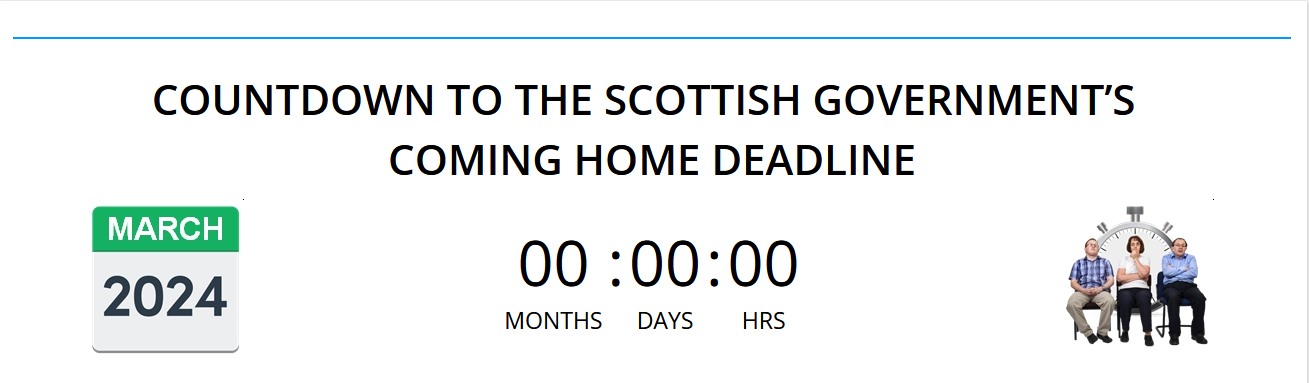
Despite commitments from the Scottish government in 2022 to ‘significantly reduce’ long hospital stays and out-of-area residential placements for people with learning disabilities by March 2024, hundreds of people remain in care far from home.
healthandcare.scot recently sat down with Rosie Smith, Glasgow Director for People First Scotland, Rob Gowans from the ALLIANCE and Sam Smith, Director of C-Change, to talk about the need for a reframing of human rights in Scotland and the enduring fight to secure it.
As of September 2023, 130 learning disabled and/or autistic people were living in inappropriate out-of-area placements, with a further 171 stuck in hospital.
Taking part in the most recent conversation for the Equally Valued podcast, Rosie Smith explained that even those who have been discharged are still not necessarily living in places that best meet their human rights:
“Some people have been discharged but not enough. And we are concerned that although some people are being moved from hospital into the community, they are still living in mini-institutions or group homes. People have to live with the same people they lived with an hospital, sometimes also with similar restrictions placed on them.”
A key commitment in the Coming Home report, Dynamic Support Registers were set up to enable local areas to identify people at risk of inappropriate admission and set up local placements.
While these registers have given people a better understanding of problems with out-of-area or unsuitable placements, their introduction does not in itself change the fundamental practices that result in people living far from home or in hospital.
In fact, Sam Smith says these registers reinforce a narrow idea of what progress looks like – and, using any measure other than whether or not people can live a good life, means the government will inevitably fall short of expectations:
“That is a systems idea of systems success, but I'm not sure that counts for much for the families and for the individuals whose rights are violated.”
She explained that the Coming Home report uses a medical model of disability, thinly veiled by a “dusting of human rights language”, which is where the problem lies.
She argued that this is reflected in the lack of support given to people and their families during times of serious pressure – like after the death of a loved one, or when they reach adolescence – which often leads to people spending a long time in places wholly unsuitable for them:
“When these difficulties arise, and we don't go in and work out with families what would help: we tell them what we can do. And it's often not what would help.
“And then people end up in institutions because it will be a ‘Friday afternoon crisis’ that has been brewing for years. Someone will get slotted into something and express their distress and then that's who that person is.
“And then it becomes very difficult to think about who that person could be other than, because then you're in a clinical setting and people are responding to your distress and then whatever support you need needs to be able to deal with that distress.”
Rosie said the way things are set up now fails to take into account the full person, instead prioritising what professionals and society say is right:
“It really feels like it’s not person centred. It’s not looking at an individual’s needs; it’s not looking at their loved ones; it’s not looking at things around about them. It’s all about what’s on the paperwork, what’s written. It’s all tick box, it’s not really about the individual themselves.”
Who designs services?
Scotland’s Minister for Social Care, Maree Todd MSP, said in November 2023 that local areas are seeing ‘significant service redesign… which will bring benefits for people with complex care needs well beyond March 2024’.
Sam Smith says this shows the dearth in understanding of what good truly looks like:
“Who designs your home? Who designs your life?
“’Significant service design happening in an area’ sounds like system speak. ‘And then we will move people into that idea of better.’ The thing that the system does, you polish the superficial things, you don't address the fundamental things about ‘who do I live with? ‘Can people who love me spend time with me?’
“And unless we realise that they are the fundamentals of human rights, and they are the things that need to be respected and protected and upheld, then we will continue to wonder why people, who are very discerning about how they need to be supported will, through their behaviour, express that we are not doing it well enough.”
The costs of specialist out of areas placements are known to be extremely high, with each estimated in the hundreds of thousands of pounds each year.
Sam Smith says this is “misery money”, wasted on doing the wrong thing rather than listening to people and doing what is right.
Rob Gowans explained that work to fix some of the things that underpin this – like in recruitment of care staff, competitive tendering and commissioning – has also been very slow.
Routes to human rights realisation
The government is currently working on a Learning Disability, Autism and Neurodiversity Bill, which promises to better protect, respect and champion rights.
Rosie Smith explained that People First Scotland believe the Bill is unlikely to go far enough to bring about the change they want to see in all areas of life.
While the ALLIANCE welcomes many of the Bill’s proposals, Rob Gowans said its success relies on the involvement of those with lived experience.
Rob also pointed to work on the Human Rights Bill, but explained that the Convention on the Rights of Disabled People must also be incorporated to ensure people can ‘name and claim’ their rights when they are breached:
“In particular, the Human Rights Bill I think is really significant. To get those rights incorporated into Scot’s Law could be could be transformational.
“I do agree with Rosie that it should go further, and particularly around the convention on rights of persons with disabilities, and we're pushing for that to be incorporated and to make sure that people's rights in law are as strong as they are possibly can be.”
Reason for optimism?
Rosie said she will feel optimistic when much needed legislation change happens, especially with the removal of learning disabilities from mental health law.
Rob pointed out that it’s easy to get caught up in funding challenges and stalling in progress, but the success of campaigners so far cannot be ignored:
Sam closed with an appeal to professionals to follow the experts:
“I have the great pleasure of working with individuals and families. And I see the difference it makes when we stop doing to people and start listening and being led by people.
“To some extent, it doesn't matter what I say. You listen to a family member or you listen to Rosie or someone whose life has changed, and you will realise that it's not a pipe dream, it's entirely possible and we can do better. And it doesn't have to cost a huge amount more.
“We have to, as professionals, have greater humility, be a bit more humble, be less certain and be willing to be better at what we do.”
Read more: Call for changes to long distance care placements; Landmark moment for Coming Home campaign; New push to help patients "lost in system"; Go ahead for vulnerable teenagers’ inpatient unit;
Sign up to our bulletin for key health & social care updates straight to your inbox and you can follow healthandcare.scot on Google News.
|