|
‘Unprecedented’ crisis in community health and care |
Related newsHealth and charity leaders join forces for NHS reform Highland to end unique health and care model All public bodies must focus on health, urges charity Chief Medical Officer: ‘Critical connections’ priority Holyrood passes Care Reform Bill First Minster pledges people will see GP sooner 
|
|

Image Credit: © Monkey Business_
|
||
|
||
|
Scotland’s public sector watchdog says that rising unmet need has created a crisis in community health and social care which has been compounded by decreased funding for Integration Joint Boards (IJBs) across Scotland.
The latest report from the Accounts Commission reveals that the systems within which IJBs operate make planning and decision-making difficult, while the level of cost-cutting required of them is ‘unsustainable’.
Created in 2016 to plan and commission many vital community-based health and care services for people across Scotland, the report details deepening difficulties for IJBs in both funding and sustaining a workforce.
The Scottish government has introduced legislation to the Scottish parliament to transform the IJBs into care boards as part of the creation of a National Care Service.
It says a “record” amount has been invested in health and social care for 2024/25, including dedicated funding for integration.
A spokesperson says this will deliver on the government’s commitment to increase spend on social care and integration ahead of schedule.
According to the Accounts Commission, overall funding for IJBs in 2022/23 decreased by £1.1bn – with the total reserves they held almost halved as they used up or returned of money paid to them during the COVID pandemic.
The report suggests the funding gap, between what IJBs receive in their allocations from NHS and councils and what they needed to spend, almost tripled in 2023/24 compared with the previous year.
While the report recognises examples of innovation, it states that IJBs are increasingly having to make ‘unsustainable’ savings – and says the data collected is of too poor quality to allow them to know how badly this is impacting people’s quality of life.
Savings include not filling staff vacancies and relying upon their remaining financial reserves – with difficulties filling posts also leaving vacancies at a record high.
Nearly half of services report vacancies, while a quarter of staff leave jobs within their first three months and there is continued turnover in senior leadership.
Accounts Commission member, Angela Leitch, said:
“The pressures facing social care and community healthcare are complex, with health inequalities widening. These issues can’t easily be resolved, and the situation is getting worse.
“We’re already at the point of increasing levels of unmet need and tightening eligibility to access services. This could be impacting people’s quality of life but data quality is insufficient to fully assess this.
“Integration Joint Boards can’t tackle these challenges alone – they need the support of councils, health boards, Scottish government and other partners to help them make the urgent changes that are needed now.”
Community care sidelined
The Accounts Commission says that coping with the funding and recruitment crisis is taking priority over the IJBs’ role in prevention due to the multiple pressures facing the bodies providing community health and care services.
Alongside funding pressures, the report outlines that against a narrative of preventative and personalised care to be delivered within the community, Scotland has struggled to meet needs at a local level, the report stating:
‘We have not seen significant evidence of the shift in the balance of care from hospitals to the community intended by the creation of IJBs.
‘Uncertainty around the direction of the plans for a National Care Service and continued instability of leadership in IJBs have also contributed to the difficult context for planning and delivering effective services.’
It says that despite a ‘driven and committed workforce’, the challenges and financial uncertainties facing Scotland’s IJBs are worsening, with unpaid carers ‘increasingly relied upon’.
The pressures on IJBs mean that the current delivery and funding of services is unsustainable, says the Commission, calling for system change across a range of vital public services.
Deep and unsustainable crisis
Scottish Care, the representative body for the independent care sector has welcomed the report, stating that it rightly calls into question the current systems of procurement and commissioning.
This follows Scottish Care’s own report that the care services are at risk of closure from thousands in delayed payments from local authorities.
Scottish Care’s CEO, Dr Donald Macaskill said the report shows the social care sector is in a “deep and unsustainable crisis” and lays bare the challenges facing the sector and “why we are falling short” of meeting them in Scotland:
“It is clear that significant investment rather than cost savings are needed to give women and men the services and supports they need. We all know how we can make things work better. We need to get on and do it.
“It is also clear that it is possible to work in new ways which make integrated working and services successful.
“This can only happen when all involved in the delivery of health and social care are around the same table and working together. It will not happen – as occurs in many parts of Scotland – where providers who deliver most of the care and support, namely the independent and third sectors, are kept at arm’s length.”
Commenting on the report, Royal College of Nursing (RCN) Scotland Director Colin Poolman said:
“This damning report sets out the challenges facing community health and social care services. Too often the focus is on the crisis in acute hospitals, but hospital overcrowding is a symptom of the lack of investment and prioritisation of community services.
“The whole system is at breaking point.
“While the Accounts Commission acknowledges that Scotland’s health and social care partnerships have a committed and driven workforce, the complex governance structures and lack of investment mean staff are operating with their hands tied behind their backs, and patients and communities are suffering as a result.”
Record spending and a perfect storm
A Scottish government spokesperson told healthandcare.scot:
“We have invested a record £19.5bn in health and social care in 2024/25. This includes an allocation of over £2bn for social care and integration to deliver on our commitment to increase spending in this area by 25% - two years ahead of target.
“Our funding supports the work delivered by Integration Joint Boards, but budgets and overall funding allocations are agreed by local authorities and health boards, not the Scottish government.
“We understand the recruitment challenges within health and social care and offer funding to advertise vacancies. We remain committed to supporting the delivery of improved, sustainable health and social services across Scotland.”
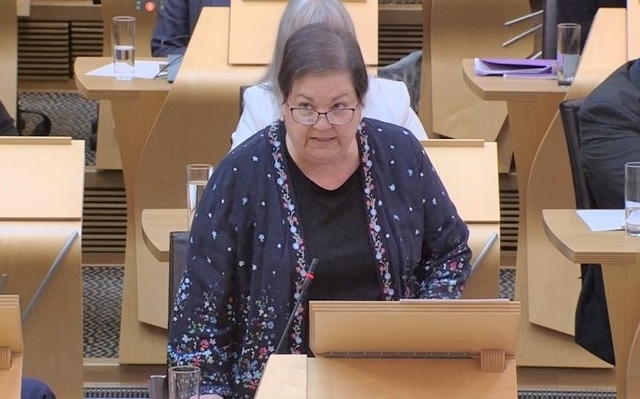
However, Scottish Labour health spokesperson Jackie Baillie has warned that this “perfect storm” has led to a social care system on the brink of collapse:
“A perfect storm of funding cuts, staffing shortages and growing demand has left social care and community health in Scotland at breaking point.”
She said if the government does not address the “mounting pressure on IJBs, it will have “devastating consequences” for people who rely on these services and the entire healthcare system, adding:
“The SNP must work with IJBs, councils and health boards to diffuse this ticking time bomb and ensure they can deliver the services we need.”
Accounts Commission member, Angela Leitch added that without this collaborative approach, the pressures facing IJBs “will only get worse.”
Read more: Social inequalities worsen health for LGBT+; Psychiatrists in ‘disbelief' over cut funding; Dementia care services need urgent reform; Role of Mental Health Officers ‘critical’; Care services at risk from delayed payments; NCS still an opportunity for transformation; Uncovering the hidden role of carers; A question of action; Smashing stigma to save lives
|