|
Link workers stop people “falling through the cracks” |
Related newsAll public bodies must focus on health, urges charity Dementia campaign success to inform government actions New social care minister appointed Health and charity leaders join forces for NHS reform ‘Substantial’ health harms of gambling to be tackled Watchdog criticises homelessness health service cuts 
|
|
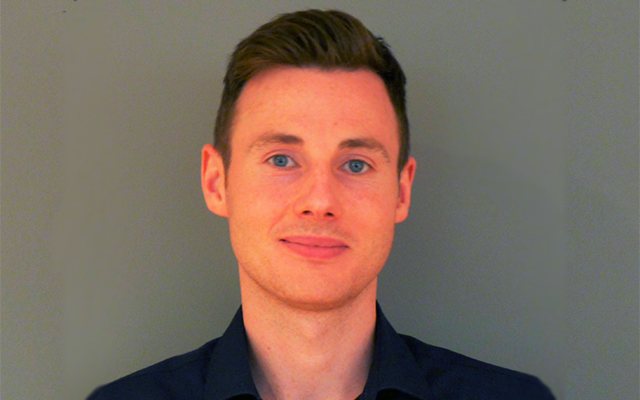
Community links worker Neil Girvan
|
||
|
||
|
A links worker who connects vulnerable people attending GP surgeries with support available in the community says his job is to stop people “falling through the cracks” between services.
Neil Girvan, a community links practitioner (CLP) employed by the Health and Social Care Alliance Scotland and based at Govanhill Health Centre, spends most of his time helping patients having problems with their housing, benefits or going through mental health issues.
The aim of the CLP programme is to help people who are presenting at GP practices but might need non-medical help.
After a referral from a doctor the worker can refer individuals on to a network of support groups and charities.
“There might be an issue in regard to housing benefits, then you’ve also got associated mental health issues and then you might realise as the conversation goes on that this person has relationship issues and employment issues, or recent bereavement,” Mr Girvan says.
“The fact that someone is actually listening and able to link them to the appropriate services, and the fact that the GP has made the referral, gives people confidence in the service.
“You end up being the person who provides that service in the interim period when secondary services have lengthy waiting lists.
“There might be additional needs in terms of hearing impairment, sight loss, learning difficulties or being non-English speakers.”
Usual ways of working were upended by the pandemic, which exposed new problems.
One area was a lack of clear communication with people who most at-risk from the virus, including some on the shielding list.
“We were able to still be on hand to support people who should have been on the shielding list but weren’t registered,” Mr Girvan says.
“But also, to help people who were on the shielding list but due to various issues – this was the first thing I noticed – were being left in the dark a wee bit.”
“People with additional communication needs [were] being left in the dark, people with additional support needs [were] being left behind.”
While the community response was “second to none”, Mr Girvan is less positive about the Department of Work & Pensions.
“We are seeing a lot of cases where benefits had been stopped, looking at the reasons why that was and just the impact that had on individuals and families.
“It is certainly a process that creates stress and anxiety for people and often increases mental health issues.
“I expect to see more in the near future in regard to the furlough scheme coming to an end and people not being kept on.”
healthandcare.scot has reported on the experiences of link workers who found themselves supporting patients – who were often vulnerable or shielding – who found out that their benefits were being stopped during the pandemic.
Another area of concern was sudden – in some cases overnight – reductions in the social care and support people received.
It emerged in March that social care in Glasgow was being cut back to “life and limb” levels.
Mr Girvan says many CLPs filled a gap in emotional support as some people who were getting two or three daily visits were “left with nothing” and mental health and other services were suspended.
“That’s all indicative of a system that was already on the ropes in terms of the pressure and strain, but certainly when the crisis hit it indicates that these systems were not in a position to be able to adapt,” he adds.
The Scottish Government is currently consulting on its aim to deliver all medical appointments with online video platforms where appropriate, after use of the NHS Near Me software rocketed during the pandemic.
“We start to close down healthcare to an extent when that happens,” says Mr Girvan. “I think it’s key that it’s when it’s appropriate – and it isn’t always appropriate.
“Certainly in the community I’m working when there’s about 50 different languages spoken, doing things online through video can disadvantage people, because lots of people aren’t able to access it and it just creates a further barrier to people accessing healthcare.
“That’s exactly why we’re in these positions, to ensure that doesn’t happen…Often we think we find the people who have fallen through the cracks and that’s why they end up in contact with a link worker.”
Sign up to our bulletin sent twice a week so you don’t miss out on the latest jobs and health and social care news. |
