|
How technology can transform the future of care |
Related newsNew service to bolster Scotland’s health research Digital health: This is the moment Accelerating digital innovation in social care Scots honoured in health, care and sciences Childhood adversity health impacts felt at 50 revealed 
|
|
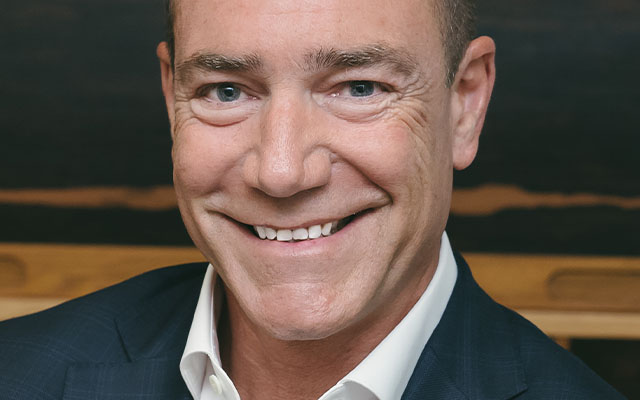
© Charlotte Knee Photography
Paul Cuatrecasas
|
||
|
||
|
Ever increasing financial pressures and a rapidly ageing population have long raised concerns about the sustainability of health services in the future.
But this is failing to take account of a revolution in technology which will change how we care in the next decade, according to an expert.
The use of robots as companions for the elderly, flying taxis to transport patients and wearable devices that predict common illnesses will become common in the near future.
Paul Cuatrecasas, CEO of tech investment firm Aquaa Partners and the author of ‘Go Tech or Go Extinct’, argues while concerns over the NHS should not be dismissed, this means there can be a more positive vision of how we will live and age in the years to come.
One of the key transformational developments will be the introduction of 5G which will enable the use of applications such as holograms and augmented reality, while the cost of technology will come down.
“When it comes to care homes and caring for the elderly, all of this technology can make a massive difference,” Mr Cuatrecasas says.
“It may not be one giant leap in one tool or application – it might be little by little over time that this technology unfolds to frankly solve a lot of the challenges we are having today.”
Millions of pounds are currently being ploughed into start-up companies around the globe, including companies based in Silicon Valley, to focus on technology relating to ageing – such as robots which provide social interaction as well as help older people to communicate easily with family and friends.
Mr Cuatrecasas says: “There are other companies that are using connected devices for prediction.
“One company which I think is interesting called Care Predict has a smart wearable, a little bit like an Apple Watch, which they claim is able to detect a urinary tract infection four days before a clinical diagnosis.
“This really is the future – the smart wearable devices that an elderly person would hardly notice and can detect all types of potential cardiac problems or urinary or any internal medicine problems far ahead of when we may be able to diagnose it in the lab or clinically.”
To help elderly people live independently for longer, there could also be remote monitoring through cameras and sensors.
Drones could also be used to deliver medicines to homes, while automated flying taxis could be used to transport patients for operations instead of having to rely on ambulances.
“A lot of this technology is about prevention. And that's what we're all headed,” Mr Cuatrecasas says.
“We're headed to a place where we live longer, we live better. It's not 20 years out – this is within a short period of time.”
But he believes it will not mean the end of services such as care homes entirely.
“I think they will still exist in the same way that horses and carts still exist in certain parts of the world and fax machines still exists for certain legal and medical professions in certain niche areas and countries,” he says.
“Things tend not to go away completely. And so care homes will not go away completely. Things change. But instead of changing slowly, they're going to change pretty radically.”
It might sound futuristic. But Mr Cuatrecasas points to the example of Dr Peter Scott-Morgan, a scientist dubbed the ‘human cyborg’ who is already using technological interventions such as a brain implant and voice synthesiser to help overcome the effects of motor neurone disease.
“I think this is a fascinating case, an example of what's possible for all elderly people,” he says.
“He's got a deteriorating body. So he's rebuilding his body with a high tech exoskeleton. He's built a mind reading computer using AI. He's now tested his robotic voice. It's working.
“He's already replumbed his stomach, because he used to need a nurse to come in, help him eat and help him go to the bathroom. And he's been able to redesign the stomach so that that's no longer necessary.
“In a way, you could argue that every problem that the elderly have today can be can be solved and is being solved through technology.”
One major question over all of this is how readily people will accept having such technology in their lives.
Mr Cuatrecasas argues that while the covid-19 crisis has presented many major difficulties – including attention being diverted away from many research activities - it has also brought an acceptance of more use of technology in everyday life.
“The pandemic has forced Zoom and Teams and Skype on all of us,” he says. “And it’s amazing how we adapt. Humans are incredibly adaptable.
“Most of us don’t want to be a cyborg yet, but in maybe five or 10 years if we start seeing people are much smarter because they have a chip in their brain, we will be saying I don’t want to be slower.
“We will be saying I want to have what they have. That is the way it works – we humans are wired that way.”
Supporters – If you can help support our reporting for Scotland's health and social care community, please head to our donations page.
Bulletin – Sign up for all the latest news and events.
|
