|
SDS: still in the foothills, but tentatively hopeful |
Related newsPA support charity suspends operations SDS errors go unchallenged in ‘opaque’ system Praise for charity CEO who turned down MBE Politicians told: “Carers cannot wait” The case for a Highland weighting All public bodies must focus on health, urges charity 
|
|
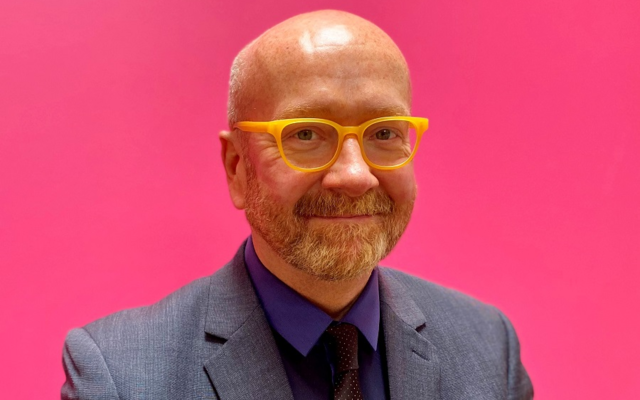
Donald Macleod of Self-Directed Support Scotland
|
||
|
||
|
The Self-directed Support Act has allowed individuals greater choice and control over how they receive social care support in Scotland since April 2014.
Hailed as an ambitious policy that could make a real difference to the lives of disabled people, campaigners say delivery has been held back by chronic underfunding, excessive bureaucracy, tightening eligibility criteria, regional inequalities in access, and growing waiting times.
Donald Macleod, Chief Executive of Self-Directed Support Scotland talks to healthandcare.scot about how a "groundswell in interest" catalysed by the pandemic and a proposed National Care Service can foster positive change in the system.
Below is the full transcript of our conversation.
healthandcare.scot (hacs): Almost exactly a year ago to the day, healthandcare.scot held an online seminar about the future of self-directed support. Leading experts in the sector shared their thoughts on what to do to improve the delivery of SDS, in light of the findings of ‘My Support, My Choice’ research that found persisting problems with budget cuts, tightening eligibility criteria and growing waiting times.
Donald Macleod (DM): It’s probably not changed in any positive significant way. I think the pandemic has been devastating for people with disabilities and those directing their own support. We’ve had some local intelligence – family members having to really increase the amount of support they provide. There was a piece in the news last night about a mother caring for her son with learning disabilities: they didn’t feel safe about services coming in during the pandemic. And there’s been a great deal of inflexibility about how direct payments can be used over the past year. So no it’s not changed in a greatly positive way.
"There’s been a far greater willingness to work between public and third sector, that I’ve seen"
What we have seen a major change in is there has been a groundswell in interest in SDS with those engaged in its delivery and there’s a real impetus to take a whole system approach to its improvement, to improve choice and control for people with a willingness to work together across sectors that has been catalysed by necessity through the pandemic and the challenges of the past year. We had PAs getting involved in distributing PPE, we had things like that. But there’s been a far greater willingness to work between public and third sector, that I’ve seen.
We’ve had a focus on the lived experience of people experiencing SDS support through the review of adult social care over the past year. The criticism that has been levelled at the NCS consultation document is that Derek Feeley really listened to people but the value of lived experience is absent from the consultation. It’s important that people respond in very significant numbers to ensure their voice is valued. I think, until we change our focus from service users to people being employers, and from support to people having independent living, we are looking at a deficit model of people directing their own support. And I suppose that goes back to your article a year ago. When I say that, I mean people who might not be vulnerable but they need support in order to live their life independently and to contribute to society.
There have been some initial significant strategic moves to improve the standards of future SDS delivery. Social Work Scotland have been developing their suite of standards which focus on public sector delivery. The Scottish government have galvanised the independent support organisations to ensure the delivery of the £500 bonus payment to personal assistants, who are often treated as poor relations in social care. And the initial difficulty was just identifying personal assistants. We’ve now got a programme board focused on this group to consolidate their development, employment, and support needs. But we’ve still to hear the voice of this group emerge and make sure its valued and recognised in line with the rest of the social care workforce. But I think we’re on the right track.
So no significant, positive changes yet but yes, I definitely see a lot of change in the planning and the good will.
hacs: Third sector leaders have suggested a total paradigm shift is needed in the way we approach social care.
DM: I think SDS is key to this. I think the total paradigm shift is one that requires an about turn to focus on the spirit of the legislation that we have to support social care, moving away from a medicalised model that’s focused on daily living tasks towards one based on social needs, which is the support people require to attain independence, to live their lives not defined by vulnerability.
Services have been designed around deficit and they are about crisis rather than citizenship. So that shift in power and resources toward people who need to make use of these resources is still required 10 years on.
So there’s no blank cheque behind that and it goes back to that effective conversation that social workers have initially with people, but there requires a significant system change. And I’m glad to see that people in various departments are looking at changes in the system that are required to address that. But we are currently looking at things the wrong way up if you like.
"Services have been designed around deficit and they are about crisis rather than citizenship."
hacs: In their survey of unpaid carers, the Fraser of Allander Institute found families with people with learning difficulties who have made use of the direct payments option reported a lack of options to spend the SDS budget on.
DM: That report estimates the contribution of unpaid carers of people with learning disabilities, when it’s financially quantified, was around £114,000 per year, based on an 8–16-hour day. We begin to get an idea of the inequity in the care system for this demographic. Over half the group living below or around the poverty line. And that situation will have undoubtedly worsened during the pandemic and it’s not sustainable as we move into a new social care system.
The infrastructure that supports people lacks funding and capacity with social work, independent support, brokerage, and advocacy critically underfunded and under significant strain. I think that infrastructure requires significant investment with the same national accountability as the NHS has if we are to sustain and improve support for the most vulnerable and poor in our society.
I’m delighted that the recommendations made in the research report that we published with the ALLIANCE, ‘My Support, My Choice’, have been absorbed within Social Work Scotland’s suite of standards. But when you look at some of the thematic reports that we focused on, whether it was homelessness, learning disability, BAME communities, the access to support can be more challenging where resources are more restricted and often other needs supersede people’s social care needs.
So there’s a long way to go.
hacs: How do the National Care Service proposals fit in with this?
DM: I think, in terms of accountability, I do believe it is a positive proposal to make ministers accountable for social care, where at the moment they are, in some respects, powerless. I think the role of supporting people in the new CHSCB which will take the place of IJBs, it’s important. Who will be representing people? How can they do this in practice? What support is available to them? So, will that position be paid? I know the intention is that people will have full voting rights but it’s important that these roles are all on an equal status.
Paying non-salaried people on the PA programme board for example, which we’re doing. If you’re really going to value people and their contribution of lived experience, treat them with equity and value everyone’s time in the same way. If we’re going to take a loan of somebody’s life experience, treat it with due merit.
There are issues around data collection and service planning. I think it’s the CHSCBs that will be responsible for commissioning, procurement and service planning: how will people’s lived experience influence this planning? I think if boards are there to improve people’s personal outcomes, how will they measure this? We’ve got the research to refer to as an easy to do this, but that’s almost 2 years old now so how will that data be collected?
In terms of commissioning, paying employers or commissioners of social care services, what support will be available to them in this role and to support more innovative ways to increase and develop the social care workforce? So the role of independent support organisations who provide that end to end support need a greater profile and supported as an integral part of the new infrastructure, and that’s what I’d hope to see in a NCS in relation to SDS. They’re funded on a shoestring, with absolutely no spare capacity. We saw that during the huge willingness and effort there was to support the administration in the £500 covid bonus payment for PAs. There’s a role for brokerage in this, for community brokers who are skilled and of their community, planning and implementing support based, not just on outcomes but on human rights. And that was highlighted in the Feeley report and in the ‘My Support, My Choice’ research and I hope that it features in the new National Care Service, with its associated professional qualification of community practice, bringing the credibility that’s needed to SDS and to the PA workforce, to elevate the profile of it and increase the usage.
"[Independent support organisations] are funded on a shoestring, with absolutely no spare capacity...they need a greater profile and supported as an integral part of the new infrastructure"
And that brings me to equality across the SDS options. One example is how agencies are funded under options 2 or 3, including local authorities, who will have access to a HR department and legal advice and representation when needs. PA employers are generally not funded to enable them to access that level of support, but are required to do it.
People’s lived experiences should influence how the equality across the SDS options will be delivered. The availability of the range of options is to a great extent determined by geography. There was a report that was published this week form Scotland excel and it highlighted that if you live in a rural area you might have an option 1 arrangement by necessity rather than choice; if you live in an urban area, you might be influenced into taking an option 2 or 3 arrangements, because of the level of commitment the HSCPs have to care provider organisations.
So I hope that, as we elevate the profile of SDS and provide info and support, people can access all the options, I think supporting social workers to be able to action plans based on the excellent work they do about the current financial restrictions and limiting eligibility criteria will be possible.
And when I say limiting eligibility criteria, there’s a proposal within the criteria that eligibility criteria will be removed. I think the current eligibility criteria being removed is no bad thing, but we need something. We need some kind of guidance, otherwise it’ll creep under the back door, and we’ll have at least 32 different ways of applying eligibility with people with a wider range of different rules. So it’s important there’s some kind of guidance in terms of limitations that is less restrictive and prohibitive than it is currently.
"I think the current eligibility criteria being removed is no bad thing, but we need...some kind of guidance"
When it comes to social care staff and social work training, I think there’s an opportunity to involve people in the design and delivery of training, including PAs if they’re‘re to be registered which is proposed and required to be undertaken in certain areas.
It is one of the recommendations in our research related to the training of social work students who currently don’t receive training on SDS: it’s something they learn on the job. So, the pandemic, with the lack of a better potential for placements and so on, allowed Caledonian University – we worked with them and trained 90 students. Engaging people with lived experience from our membership and that’s been evaluated and they’re looking at that with the SSSC to see how that could be embedded at a national level.
I think the Scottish Association of Social Workers are also looking at how to support social workers who always end up unjustly being the baddies to do the job they’re trained to do. So similarly I hope the framework for SDS standards at SWS is developing leads, grappling with the application of a perfectly good piece of legislation on the ground every day.
I think measuring the impact is important – that relates to understanding the actual lived experience, to access and actually make use of SDS. So how do we know if the NCS delivers what it’s actually intended to?
So our research is almost two years old now, though the pandemic stalled its publication. The way in which the impact is measured based on people’s experience of SDS is critical to the success of the National Care Service. I hope that, as the research represented the lives of over 600 people accessing SDS, it managed to influence the review of adult social care. 66 recommendations have been adopted by Social Work Scotland which will influence delivery within the NCS. I think, lastly, in the delivery of independent SDS support and information there are still clear gaps on the provision of independent support. Coming toward the end of a strategy, what is needed is more information about SDS. Local people’s experience still needs to be reflected in the level and type of support available to them. They can help inform future provision and delivery. Though there are Support in the Right Direction funded organisations in 31 areas, we need end to end support including advocacy and brokerage, in all areas.
We’re still in the foothills, but there’s a consensus to improve SDS delivery and return to the spirit of the statute, alongside the independent living movement. Now that’s a significant change. I’m tentatively hopeful we all play our part well and value that lived experience as a new social care system, or new independent living infrastructure, develops.
Read more: Where is lived experience in NCS consultation?; Sector reforms "must put social back in social care"; SDS is ‘for people with mental illness too’
Sign up to our bulletin for key health & social care updates straight to your inbox. |
