|
Trauma and the miracle heart baby |
Related newsHealth and charity leaders join forces for NHS reform Childhood adversity health impacts felt at 50 revealed Charting Scotland’s future health and hospital demand Watchdog criticises homelessness health service cuts Community support ‘vital’ to asylum-seeking families Youth mental health pilot looks to the future 
|
|
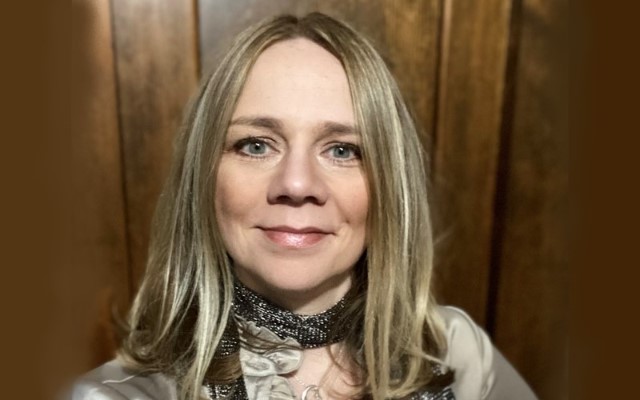
Dr Liza Morton
|
||
|
||
|
One in around 125 children born in Scotland has congenital heart disease – the most commonly diagnosed disorder amongst newborns. As these babies go through childhood and transition into adulthood, alongside medical monitoring and procedures they can face hidden barriers – often living with the trauma of knowing that their condition may deline, coupled with a sense of being different and apart from their peers.
It was her own experience that led Dr Liza Morton to follow a career as a counselling psychologist, combining research and clinical practice with campaigning for improved standards of care, she is now lecturing in applied psychology at Glasgow Caledonian University.
On January 10, Liza and co-author, clinical social worker Tracy Livecchi – who also lives with congenital heart disease (CHD) – will publish Healing Hearts and Minds: A Holistic Approach to Coping Well with Congenital Heart Disease, to address a lack of accessible psychological help for people with CHD, their loved ones and healthcare providers.
In the first of two articles, Liza has been telling healthandcare.scot about how the experience convinced her that she had to do something for the silent community of people with CHD.
Liza Morton was born in 1978 with complete heart block. The normal electrical impulses that make the heart beat were absent. She was transferred from Bellshill Hospital to the Yorkhill children’s hospital – blue and about to die.
At four days old, she was fitted with an external pacemaker, wires going to her heart from a box by her bed.
In her forthcoming book Liza thanks Dr ‘Bill’ Doig who she calls her first hospital dad for his gentle approach.
“When they switched on the pacemaker, I went from blue to pink. So for the first time they thought maybe something can be done here,” says Liza. “Though no baby in the world as small as me had been fitted with a pacemaker at that point, Dr Doig and the team decided to give it a go. I was a lost cause anyway. So they fitted a cardiac pacemaker. I was eleven days old.”
In 1978, pacemakers placed inside the chest wall were big – outsized for a tiny baby – and set to beat at a fixed rate. The first failed. Liza had a stroke and doctors feared she would be paralysed. A second device was implanted and worked better. Liza’s mother took her home aged six weeks.
“My mum tells me the first time she held me, I was already had two scars from thoracotomies – they have to break the ribs to put the device right on the heart. So it's quite major surgery for a baby.
“My childhood was spent in and out of Yorkhill back then. The pacemakers were quite unreliable. The leads broke often and, because I'm 100% dependent on it, as soon as that happened, I very quickly went downhill. I can remember just starting to vomit and turning, blue and being wrapped up in a big towel and rushed into Yorkhill.
“Everyone then and since has been lovely. We had Dr Doig’s home phone number. He was as nervous about it all as my mum. Nobody was following a manual. Back then, cardiac care of infants and children was about having a go.”
Liza’s case was reported across the clinical community in Scotland and worldwide. She recalls academics learning from her life-saving device:
“I remember a physics professor, Mr Brewster, used to come from the University of Glasgow and use me to teach colleagues how to use these new pacemakers and to change the heart rate. He used a big magnet to put the rate up and down. I would be lying there for hours, feeling quite dizzy, as they all had a shot.”
Back into surgery
By seven Liza had had five thoracotomies. At the age of 12, they found Liza had a hole in her heart requiring open heart surgery. Her teenage years saw a series of different kinds of surgeries – but also her first adult pacemaker, which could have its rate varied to allow her to be more active:
“Growing up, I wasn't able to do things other girls were doing. I was desperate to go to dance lessons but just wasn't allowed to. So, although I looked normal, I would go back to school after each of many absences and people would think I was okay, and I would wear a mask that it was ‘all okay’ to fit in. But, because you're hiding it, you're not accessing the support you need. There was also this kind of sense of being a bit of an imposter.
Liza says there was little understanding of trauma or adverse childhood experience, and no provision of psychological and emotional support for children and teenagers like her – or her parents or brother, all of whom she says suffered because of what they went through as a family. In her late teens, she developed chronic fatigue and eventually diagnosed with PTSD – not that the diagnosis helped as there was no treatment available.
In adulthood, Liza studied then practiced as a psychologist try to understand the impact of chronic conditions on people’s wellbeing.
After a traumatic visit to A&E, now as a parent of a young child, when her pacemaker broke at a weekend and nobody seemed willing to believe her, she petitioned the Scottish parliament for the introduction of CHD healthcare standards. Her advocacy for patients includes volunteering on the management board of the CHD advocacy charity, The Somerville Heart Foundation.
A hidden population
Liza is on her 11th pacemaker. Far from things getting easier with advances in cardiac sciences, because she has so many left over leads and hardware in her body, the surgery to fit the latest device was complex and could only be done when all the right specialists could be in the room together.
“While there's been a lot of pioneering innovation in medical care, we still haven't necessarily thought about the impact psychologically and emotionally of living dependent on that care lifelong. That part has fallen behind.
“I hope this book helps give voice to our community. I hope it helps to provide hope and connection for our community, access to all of the psychological information and resources that are now out there. But I also hope it serves to act – in itself – as an advocate for us, to inform the medical community, healthcare providers, policymakers, and people that hold the purse strings.
“In the 1940s and 50s, 80% of us would not survive to adulthood. Whereas now, 80% will. So now, we have this growing adult population living with congenital heart disease – a hidden population, around half of whom will experience anxiety, depression or PTSD.
“We know so much more now than we did when I was growing up. And I just wanted to make that information available and accessible. To help people coming through. Because I often think back to kids on the ward with me in Yorkhill and I know that many others followed them.”
Healing Hearts and Minds: A Holistic Approach to Coping Well with Congenital Heart is published by Oxford University Press and will be available from 10 January. Go to their website for more details and to pre-order.
In a second article, Dr Liza Morton will discuss the impact for children and young people of spending prolonged periods in hospital, the importance of access to protective factors like family and peers – and why we should stop telling children to be brave.
Read more: Psychological support after stroke lacking; Adult adoptees call for care records recognition; Call to prioritise psychological therapies
Sign up to our bulletin for key health & social care updates straight to your inbox and you can follow healthandcare.scot on Google News. |
