|
‘We’re told we are lucky to be alive’ |
Related newsScotland’s chance to lead on disability benefit system Students help shape Perth complex needs housing Alcohol pricing policy has cut deaths Scotland commits to change the dementia story The silent victims of brain injury 
|
|
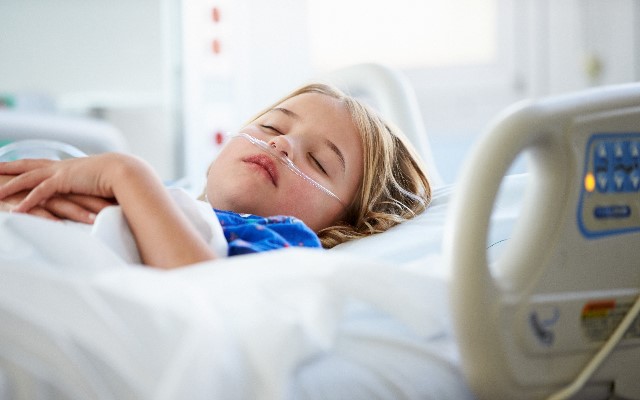
Image: © Monkey Business, Adobe Stock images
|
||
|
||
|
Next week sees the publication of a book by a Scottish psychologist and a clinical social worker, examining the impact on children, young people and then adults of growing up with congenital heart disease (CHD).
Dr Liza Morton is a counselling psychologist and lecturer in applied psychology at Glasgow Caledonian University. Co-author, Tracy Livecchi is a clinical social worker living in the USA and Mental Health Consultant to America’s Adult Congenital Heart Association's Peer Mentorship Program.
Both have CHD, and both wrote Healing Hearts and Minds: A Holistic Approach to Coping Well with Congenital Heart Disease with the experience of being healthcare professionals as well as patients.
In our first article, Liza talked about being a miracle baby and how, as she grew up, she relied on medical innovation to keep her alive – and how, along the way, far less consideration was given to understanding her emotional wellbeing.
In this second instalment, Liza considers the impact on children – and in their later lives – of living with a long term and potentially life-threatening condition.
From the moment she was born and then repeatedly during childhood and her teenage years, Dr Liza Morton was in hospital undergoing procedures to save her life. She was surrounded by other young patients, some of whom did not survive:
“You soon develop this awareness of the fragility of life and just how tough, how hard life can be. I was one of the lucky ones on that cardiac ward in Yorkhill, because I just needed a pacemaker. I could go back to school and function pretty well. Whereas for others - it's just heart-breaking. I suppose in some ways that was my first family.
“A lot of children with a life-threatening illness have had very difficult experiences but I feel most are unlikely to get to a position where they can voice these experiences . So, I suppose I feel a bit of responsibility to do that – to share in the hope of improving our care.”
Liza has become an advocate for people with CHD and, wants to highlight the lack of emotional and psychological support – that provision for mental health services for people with CHD and other long term life threatening conditions has failed to keep pace with the innovation in their medical treatment.
The trauma of treatment
As a so-called miracle baby who underwent pioneering treatment throughout her childhood and adolescent years, she has a particular concern that the seeds for future trauma are being sown in the way we look after even the very youngest children in hospital:
“We know there are protective factors from trauma such as having a secure attachment to your early care provider and, obviously, if you were born very poorly, and you're put in ICU and an incubator, then that protective attachment can be interrupted.”
And the health of the child goes hand-in-hand with that of their mother:
“Maternal mental health – and paternal mental health – can be affected by having a very poorly baby and seeing them in a traumatising circumstances. Rates of PTSD in parents in these circumstances are around 15%. So, you've potentially got parents who are traumatised, you've got a wee baby who's very poorly and who's medically separated from their parents when they need them the most because of being an ICU – everything is starting off on a quite a shaky trajectory.
“On top of that you can may have poor social support – and isolation from wider family – and social support is one of the most protective factors for good mental health.
Liza’s mother spent as much time as she could with her in hospital, but the parents of other children Liza grew up alongside were limited in how often they could come to visit. And historically hospital authorities themselves sought to limit access – a terrible mistake she says that was repeated in some children’s hospitals much more recently:
“Historically the recommendation was for parents to only visit their children once a week in hospital, or it ‘disrupted’ the child. There was some famous work by James and Joyce Robertson that went on in the 50s and the 60s, which led to the Platt Report that recommended unlimited access of parents. However, even by the 1980s parents this had not been fully implemented
“But during COVID, parents are sometimes stopped from visiting their children and hospital which really upset me. And psychologists had make the case forcefully that parents are not visitors, they are parents, and they should be there with their children because the protective presence of a parent is essential for a child’s development.
Liza says the mistake is to think that a child goes home from hospital well if their medical treatment has been successful:
“Usually when we go through adversities as adults, we have peers who have been in a similar situation – for instance if you are having a relationship breakup. But the experiences of CHD can be unique and there for isolating. For example, as a child at school, I was going through a pretty major surgery. And then I was back at school a few weeks later, and I couldn't talk to my friends about it in the playground, because I would have scared them, they would have been terrified, there was no common language. And I didn't have the language to talk about that. So we're isolated.
“I and other children were traumatised medically – and often it’s not recognised because there's also messaging from when we’re very young, we're taught to be brave. We're told we're miracles babies, we're lucky to be alive. We're told to hold still for medical procedures, to be quiet. And while much of this may be the case the normal kind of emotional expression to pain, to hurt, can be suppressed if we are not given the opportunity to express this. This can impact emotional regulation and feelings of psychological safety lifelong.”
Feeling different
Then then there is the impact of being different from your peers, says Liza:
“Schooling can be interrupted. We know from the literature that the educational and financial prospects of children with congenital heart conditions , are much less, because of the impact on schooling, education and neurocognitive development. We can face ableism, discrimination which can impact on your identity. For many there is a sense of feeling different, lesser and feeling marginalised.
“Then there is the impact of feeling ill, perhaps being in pain, and fearing for the future. I've lived with a cardiac device all my life and I know, if it breaks, I need it to be fixed urgently. This is scary when I have experienced difficulty accessing the healthcare that I depend on. .
Liza says that there is a further stress of navigating, sometimes fighting, through the healthcare system. In the 1990s she passed a point where she was no longer a child and was moved to adult services – except there was no adult service.
“So, I was suddenly on a ward at Stobhill hospital with people in their 80s. I went from being miracle baby to being ‘just another pacemaker patient’.”
Liza adds that everybody involved in health care provision needs to be aware of this and should be trained to understand the emotional and psychological trauma that children may bring back with them from hospital – to be equipped with the skills and compassion to reduce the risks:
“There are a lot of the things that could be protective that must not be compromised, such as the presence of the main care provider and social support. What's said to you when you're at your most vulnerable, really can impact on things like trauma, so training in compassionate communication is important for all healthcare providers. I think there's a lot of disempowering aspects of medical care, such as the backless hospital gown and waiting, which could be addressed as well, in addition to making hospitals more healing environments to help improve mental health.”
Healing Hearts and Minds: A Holistic Approach to Coping Well with Congenital Heart is published by Oxford University Press and will be available from 10 January. Go to their website for more details and to pre-order.
Read more: Trauma and the miracle baby; Psychological support after stroke lacking; Adult adoptees call for care records recognition; Call to prioritise psychological therapies
Sign up to our bulletin for key health & social care updates straight to your inbox and you can follow healthandcare.scot on Google News. |
