|
Kerley: Don’t talk about a postcode lottery |
Related newsFM candidates asked if they care about care Call for windfall tax on care agency profits Holyrood passes Care Reform Bill Care worker visa changes ‘inhumane’ and risks services Carers rights not yet a reality Campaign launched to boost social care workforce 
|
|
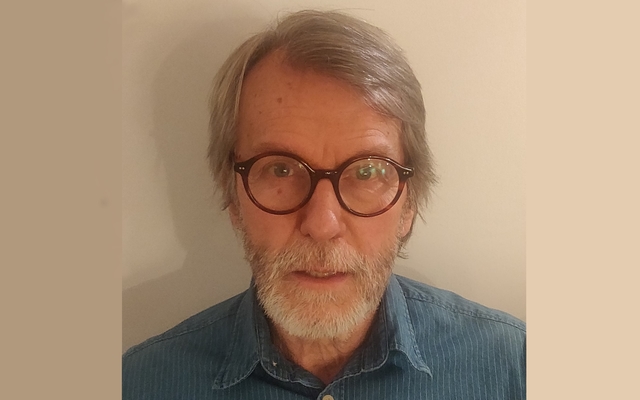
Professor Richard Kerley
|
||
|
||
|
One of Scotland's leading analysts of public sector administration says proposals for a National Care Service are based on a fundamentally flawed premise of ending a so-called “postcode lottery” in care – and ministers must recognise that they have universally failed to gain support from the organisations they will need to deliver the service on the ground.
In a second article looking ahead to the challenges in health and social care for the year ahead, Professor Richard Kerley, Emeritus Professor of Management at Queen Margaret University, has been telling healthandcare.scot that ministers must address the funding gap in social care, whatever the additional cost, if they want the system to start working properly.
A year ago, Professor Richard Kerley warned that ministers seemed set on moving too quickly to create the new structures of a National Care Service, risking a repeat of mistakes of the past and legislating for a new model that is unlikely to work significantly better than that created with the integration of health and social care in 2016.
Catching up with healthandcare.scot this month, Professor Kerley says the situation remains remarkably similar compared with the start of 2022:
"Over the holidays, we watched the film Groundhog Day. I also read what I had said a year ago. We are exactly where we were. But, in the meantime, the external environment is considerably worse."
Richard Kerley argues that the central explanation of why what ministers say is the ‘most ambitious reform of public services since the creation of the NHS’ is needed is deeply questionable:
“Government officials constantly reiterate that we are doing this to ensure the removal of the postcode lottery in care.
“It's an important matter of principle that people shouldn't lose out based on where they are. But appropriate provision on Skye or Harris is going to be very different from Lochee or Murrayfield.
“I find it very hard to see how you can reconcile a rights-based emphasis on person-centred care with removing the postcode. What is appropriate for me is not appropriate for my neighbour two doors along in the same postcode. We have to have variation.
“The phrase ‘postcode lottery’ would be one I would obliterate from policy and political discussion if I had the authority to do so.”
Last June, the Scottish government published its National Care Service legislation. Three parliamentary committees have raised questions – on issues including costs, services for children, the impact on the NHS and what the new provisions will do that existing legislation has not – that they say have not been answered.
"I have been doing quite a lot of research in recent days,” says Professor Kerley, “and it seems to me that virtually every organisation involved has told the Scottish government: ‘ slow down’, ‘hold on’, ‘this is not right’”.
“It's not just [the local government organisation] COSLA and trade unions. It's virtually every organised body of opinion. I cannot find any substantive body of opinion that says ‘yes, this is great and let's press on with it’.
“Most notably, Derek Feeley, fundamentally the person who set the ball rolling with his independent review into adult social care, and a well-regarded former chief executive of the health service in Scotland, is saying ‘no, this is not the way to do it. It's not what we intended’.”
Richard Kerley argues that the issues facing social care are too urgent to wait for the creation of a new service and, instead, ministers should intervene now to “stabilise employment” in the sector by ending the divide that has been created between the public sector, the NHS and councils, on the one hand and the third sector and independent providers of care on the other.
"I looked recently at people being recruited as carers into a couple of organisations at, and I hate to use this term, but at very basic grade of entry. They demonstrated commitment and skill and ability, they sought a qualification and then they migrated off to either the local authority or the health service. That’s because, all in all, the terms of employment are simply better – including, in the case of the NHS, no threat of redundancy – outside the independent and third sector.”
In January, at a health committee meeting in the Scottish parliament considering the government's draft budget, Scotland's health secretary Humza Yousaf told MSPs that funding an increase in the minimum wage to £12 an hour would cost “hundreds of millions”, and meeting Labour’s demand for a £15 an hour living wage would cost “well over £1bn”. The First Minister later in the month put the cost at £1.75bn, adding that meeting that demand would not be the act of a responsible government.
On the afternoon of his health committee encounter, Mr Yousaf announced to the parliament that the government was willing to allow NHS boards to pay 25% over the national care home contract fees for interim care home places that allow people to be discharged from hospital before a suitable care package is in place.
In an editorial published at the end of last year, healthandcare.scot made the case for an end to the formal separation of the NHS and social care, which would make it more difficult for policymakers to prioritise one over the other and, as an immediate consequence, move Scotland's care workers onto the NHS's more generous agenda for change pay bands.
Professor Kerley argues that ministers already have the tools they need to close the care funding gap:
“The government should lay down contract conditions for every service local councils let, placing a requirement on employers to meet the same terms and conditions for their staff as are on offer from the NHS and councils themselves. So, for people doing domiciliary care for instance, this would include being paid daily rates rather than for each home they visit and a much higher mileage rate.
“I accept this would add 15 to 20% to contract costs but it would create a more even system. There is an obvious obligation on the government and councils to meet these increased salary costs.”
In an article published earlier this month, Professor Kerley called for a fundamental review of pay differentials across the public sector and reiterated the case for government to cut out NHS boards as intermediaries, given that they are being instructed from the centre already, and to run Scotland’s hospitals directly from Edinburgh.
Richard Kerley is Emeritus Professor of Management at Queen Margaret University. He is a trustee of the Scottish Charitable Incorporated Organisation The Centre for Scottish Public Policy 2021 CSPP21 – Centre for Scottish Public Policy. He was the lead author of a provocation paper by the Centre: Is there a National Health Service for Scotland – or do we have an empty umbrella?
Read more: Ministers launch ‘more to care’ campaign; Social care wage settlement branded ‘derisory’; £153 a week for bread and jam
Sign up to our bulletin for key health & social care updates straight to your inbox and you can follow healthandcare.scot on Google News. |
