|
Briefing: Cabinet Secretary plans for health and care |
Related newsFirst Minster pledges people will see GP sooner Government promises to up NHS activity Workforce and public to inform NHS reform Glasgow link workers protected for three years Winter funding for ambulance services Collective bargaining promised for social care FM commits to £12 an hour for care staff Watchdogs: Scotland’s IJBs face £124m gap Joint pharmacy project cuts adverse events Analysis: Why people are left behind Health and care in programme for government 
|
|

|
||
|
||
|
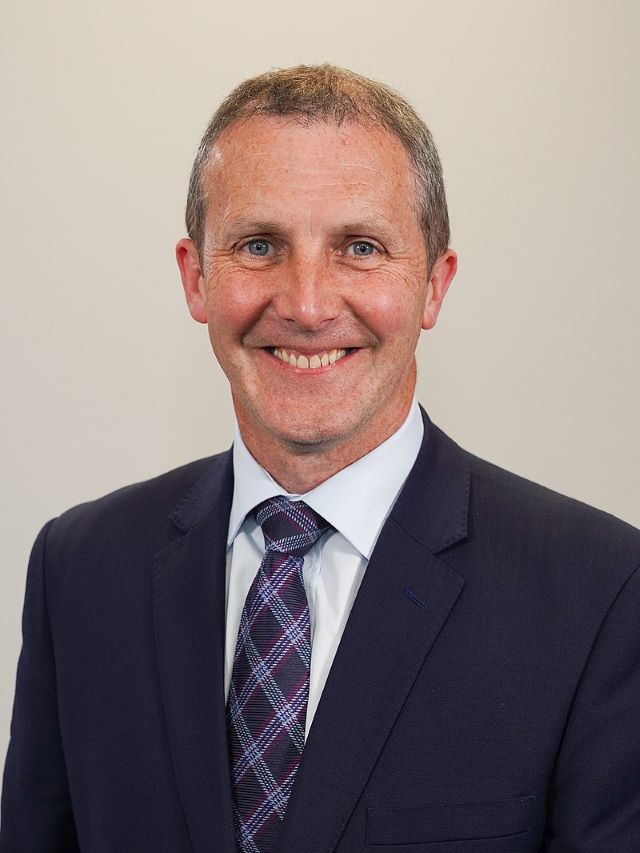
Two weeks into the new role and ahead of next week’s big policy statement from the Scottish government, Scotland’s Cabinet Secretary for NHS Recovery, Health and Social Care, Michael Matheson shares some of his priorities for the health and social care of nation – including NHS reform, supporting social care staff and cross-sectoral working.
Following the election of new First Minister and previous Cabinet Secretary for Health and Social Care, Humza Yousaf by the Scottish parliament, Mr Yousaf unveiled his new cabinet, with Michael Matheson named as the health and care secretary.
With this new position now having broadened scope which specifies NHS recovery alongside health and social care, and healthandcare.scot heard from Mr Matheson on his prioritise going forward:
“NHS investment is at a historically high level and our £1bn NHS Recovery Plan clearly sets out our plans for health and care until the end of this Parliamentary term. We are making tangible progress through significant investment, targeted reform and dedicated innovation.
“We will protect and reform our NHS, social care and other vital services with further details to be announced in the new parliamentary term.”
However, at a conference in Glasgow soon after the new government roles were set out, Chief Executive of Scottish Care, Donald Macaskill suggested social care is still being treated as being of secondary important to hospital medicine:
“I find it is interesting that we have appointed a new Cabinet Secretary for NHS Recovery and Health and Social Care. Because it is not just the NHS that needs to recover. It is the whole health and social care system because we are two sides of the one coin.”
Within the broadened scope, the Cabinet Secretary is responsible for NHS performance, workforce training, planning and pay as well as NHS recovery and remobilisation. This includes not just primary care and GP services, but unscheduled care, acute services and ensuring person-centred care as part of Scotland’s realistic medicine approach.
Since his appointment, the First Minister has named all the health and care ministers, including Maree Todd and Jenni Minto who will work directly with Mr Matheson.
Health and social care challenges
Mr Matheson’s brief is to also work across health and social care bodies to support integrated services and improve centre for excellence for rural and remote medicine and social care. Scotland’s commitment to the integration agenda has been called into question by proposals to create new Care Boards being central to its National Care Service (NCS) Bill, with calls for more co-design opportunities and financial clarity.
The Bill’s progression has been paused and the parliament’s Health and Social Care Committee wrote to Mr Yousaf during his first week as First Minister for information on a further engagement timetable by 17 April.
However, Scots with lived experience of the ‘postcode lottery’ that the NCS seeks to overcome are keen to see the service realised sooner as it offers “hope for meaningful change”. All agree that co-development with lived experience representatives is essential.
Mr Matheson told healthandcare.scot that the government is working with both the people using and delivering care in its design of the National Care Service:
“Our plan for a National Care Service will deliver consistency and quality of care.
“Health and Social Care Partnerships (HSCPs) received an additional £528m for 2022-23 to improve care and increase staff pay and we are working with those who access and provide care to design how the NCS will work.”
Yet, Scotland’s HSCPs rely on commissions for health and social care services from different areas’ integration joint boards (IJBs) which themselves receive variable funding from NHS boards and local councils. The IJBs are currently facing a £124m projected funding gap for 2022/23.
Despite most integration joint boards underspending the money allocated to them in 2021/22, the nation’s watchdogs have called for “significant transformation” to ensure long-term sustainability.
William Moyes, the Chair of the Accounts Commission, which conducted financial analysis on the boards, said change cannot wait for the NCS:
“Action is needed to tackle funding pressures, which are under increasing stress from rising demand and cost pressures. The workforce challenges are considerable, with mounting unmet need.”
Mr Matheson says that both NHS Scotland and social care services are key priorities for this government.
He added in his comments to healthandcare.scot that junior doctors are “vital” to Scotland’s NHS and he will meet this week with BMA Scotland, which represents junior doctors, to discuss pay concerns.
In February, BMA Scotland called Audit Scotland’s annual assessment of the NHS a ‘damning’ report as it joined nursing and physician colleges in urging the government to take action to support its staff.
Life sciences
Beyond NHS pay negotiations and the NCS, Mr Matheson says he is committed to working with those in life sciences – from academics to those in industry and the third sector – to support NHS Scotland and advance innovation.
Around 90% of NHS Scotland staff who took part in a recent survey agree innovation is essential to improving NHS Scotland services and tackling pandemic backlogs, according to research commissioned by InnoScot Health.
The Cabinet Secretary told healthandcare.scot:
“We continue to work with the life sciences industry, academia and the third sector to ensure the recovery and growth of the NHS Scotland health research, development and innovation portfolio as we emerge from the COVID-19 pandemic and enable the NHS in its role as a key research and innovation partner.”
A new report from the University of Strathclyde’s economic research group revealed the increasingly ‘significant’ contribution of the pharmaceutical sector to Scotland’s economy – driving innovation and productivity.
However, that research also highlighted concerns around a reduction in clinical trials and gender equality as outstanding challenges for the sector. Mr Matheson said:
“Tackling gender inequality across different areas of the education, learning and research landscape is of fundamental importance to the Scottish government.”
Read more: Emails show haste to publish recovery plan ; RCN: Staff need to see light at the end of the tunnel; Staff shortage concerns in latest MWC reviews; Auditor General: Difficult choices for Scotland’s NHS; Hospice chiefs: “Let's discuss fair funding”
Sign up to our bulletin for key health & social care updates straight to your inbox and you can follow healthandcare.scot on Google News. |