|
NHS dentistry "challenging but not totally broken" |
Related newsEnsuring innovators are in safe hands Digital health: This is the moment Adopting innovation can be ‘Once for Scotland’ Future of genomic medicine report published Health and charity leaders join forces for NHS reform Government boosts health innovation funding 
|
|
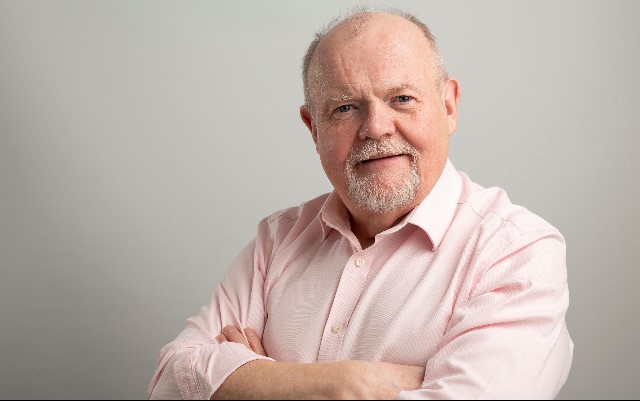
Jim Hall, Founder and CEO of Clyde Munro
|
||
|
||
|
The man behind Scotland's biggest dental group says one of the biggest challenges for NHS dentistry is a shortage of dentists, with many choosing to only provide private treatment because they can offer more advanced treatments, use the latest digital equipment and be better rewarded financially for their skills.
Last month, Clyde Munro Dental Group announced the acquisition of an 80th practice taking the number of NHS patients on its books in Scotland to over 600,000. All but three of its practices offer NHS examinations and treatment to all those registered patients.
Founder and CEO Jim Hall says that, while NHS dentistry faces a series of challenges, he is confident that they can be overcome:
"There has to be a future for NHS dentistry, and we need to work with the government to make sure that there is.
“We are in a far better place than England in terms of how the system here works. Patients in Scotland have a choice. You can opt only to have NHS treatment, you can of course go fully private, and you can be an NHS patient and pay to have additional treatment beyond what the NHS offers.
“So, while registered patients will get an NHS examination a patient will always be offered choice. If a filling is needed the NHS will fund a grey amalgam but the patient can choose a white filling instead and pay independently for that. The NHS will provide what you might call adequate clinical treatment, but not cosmetic.
“And it's really important that we can offer our patients that choice – you should never make assumptions about how people want to spend their money."
Mr Hall explains that the profession and government have taken longer than expected to revise the NHS fee structure, the Statement of Dental Remuneration. He says getting that right will be important to ensuring there are enough dentists motivated to provide services across Scotland:
“In some parts of Scotland, access to a dentist can be difficult. We have lost 160 dentists – we lost a whole year of dentists graduating from Scottish dental schools because their graduation was delayed a year by the pandemic. These are people who would have been coming out of Scottish dental schools into the system. On top of that, many dentists have chosen to retire a bit earlier after COVID or reduce their working hours, which causes capacity issues with demand for NHS dentistry at an all-time high.
“One of the particular challenges for NHS dentistry is a lot of young dentists aspire to do private dentistry because it allows them to get involved in more advanced treatment types than those available in the NHS.
“A benefit of the scale of our group is that both dentists and members of the support team can develop their careers. They can choose to move to a different town or progress to one of our referral centres that offer specialist services to a number of practices – developing their career and skills without having to move to a different dental provider.”
With around 300 dentists and 700 nurses and other support staff, Clyde Munro says one of its continuing priorities is to recruit and retain staff.
It has set up a specialist in-house recruitment agency and training programmes at its Advanced Dentistry & Clinical Skills Centre in Perth, which is now the profession’s largest training facility in Scotland after the nation’s dental schools.
Evolving technology
After people, one of the dental group’s biggest ongoing investments is in equipment. Mr Hall says having the skills and equipment to provide certain services in-house, instead of sending them out to be done by other providers, adds to efficiency and convenience:
“An example would be where we’ve got milling machines where we can mill our own crowns on site – something that is particularly important where you are serving rural communities. By offering that in Orkney and Oban, for instance, we avoid patients having to come back two or three times for the treatment - we can get it right in one visit. That’s important if you're coming off a ferry, taking a couple of days off work to visit your dentist.
“The most important way forward for dentistry is digital, which represents a big investment. We are expanding our digital dentistry – for instance using oral scanners to create an accurate image of your mouth and teeth, rather than taking impressions. That opens the door for us to do precise milling of crowns, 3D printing of dentures and using AI technology to analyse scans and patient x-rays to help our dentists to identify the best course of treatment for our patients.”
Jim Hall adds that, as digital technology has been brought in, dentists have used it for their NHS and private patients alike as it makes each consultation easier and more efficient, and generates more capacity to see more patients.
Clyde Munro’s approach is to allow local dental teams in each of the practices to make decisions about how best to serve their patients locally. Equally, some policies and approaches may be adopted across the whole group.
“We take the impact we're having on the environment incredibly serious,” says Mr Hall.
“If you take as an example our Glencoe practice, that’s the practice run by our environmental champion. If we take forward an idea from there across the network, it can make a big difference.
“For example, we have eliminated plastic cups and reduced our cup usage by 50% overall. If you have 80 practices and we make that decision, it has an impact on the environment immediately. Our scale allows us to actually take the lead on some of these things, and deliver an immediate, significant benefit.”
Read more: Insight: Sustaining standards under pressure; New dental nurse training scheme expanded;
Sign up to our bulletin for key health & social care updates straight to your inbox and you can follow healthandcare.scot on Google News. |
