|
New action plans signal mental health ‘reset’ |
Related newsCall for ‘urgent’ review of ADHD and autism services Holyrood ADHD and autism inquiry launched Health and charity leaders join forces for NHS reform NHS doctors unemployment crisis despite understaffing Clinicians: who will deliver extra appointments? First Minster pledges people will see GP sooner Scientists to help cut NHS medical device waste Edinburgh IJB faces judicial review over cuts Scotland’s new Chief Nurse appointed Urgent plea to safeguard advocacy amid local cuts New gene study offers arthritis treatment insights New Edinburgh hub set to transform global healthcare 
|
|
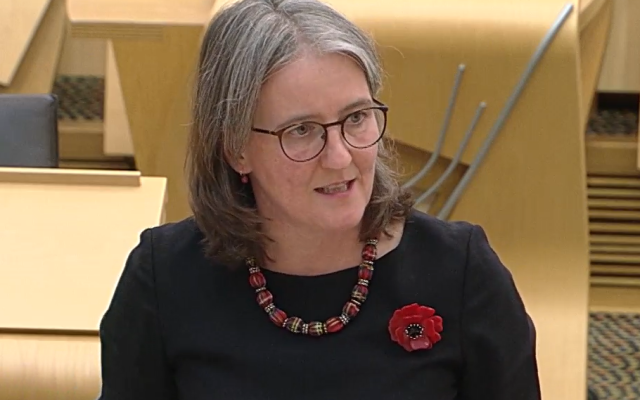
Image Credit: © Scottish parliament
|
||
|
||
|
New plans to drive the Scottish government’s ambitions in mental health focus on supporting services to shift the balance of care to the community and improve monitoring of mental wellbeing outcomes – but ministers have been called on to ensure dedicated funding and workforce support is delivered.
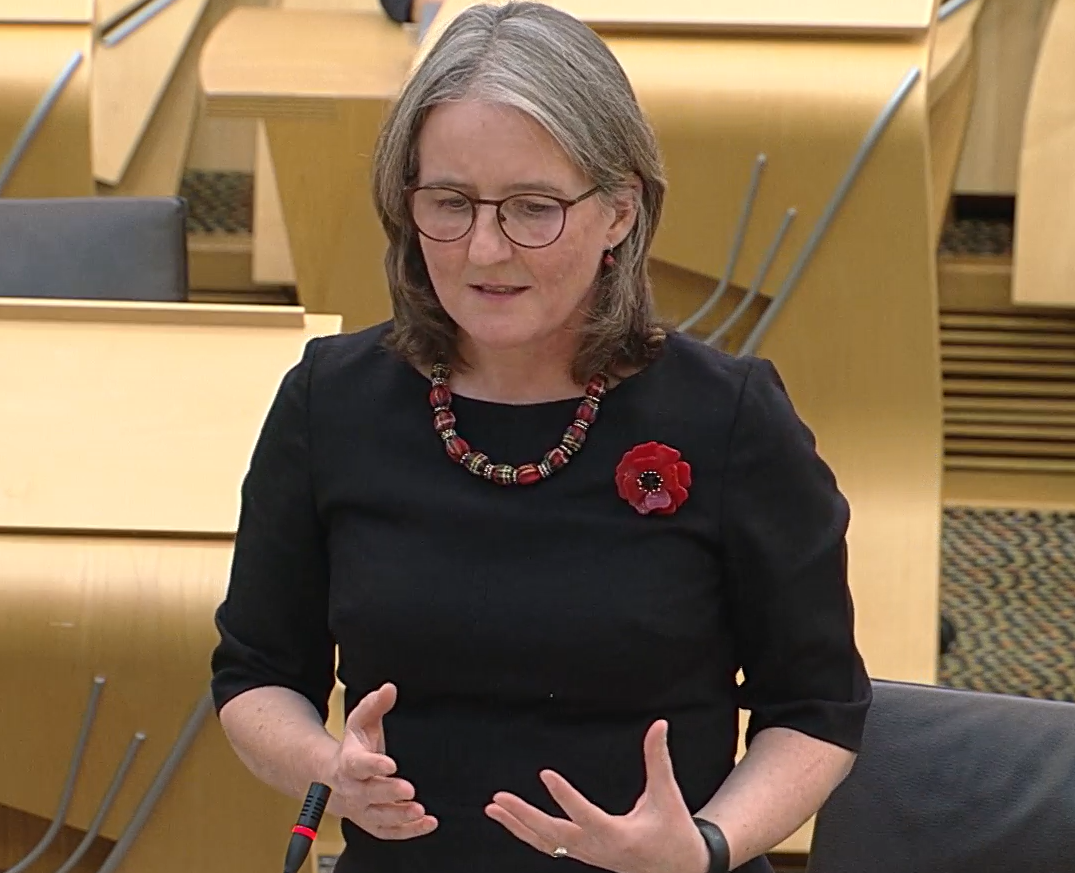
Minister for Social Care, Mental Wellbeing and Sport, Maree Todd said that cross-portfolio working to address the fundamental causes of poor mental health and supporting the workforce are core pillars of the plans.
Addressing parliament today, Ms Todd said these are underpinned by a vision of a Scotland “free from stigma and inequality”.
A 57-page delivery plan details work to actively promote the value of community-based interventions for children and adults, while strengthening primary care teams and the way local and national government works together to tackle mental ill-health.
The plan also prioritises work to create more ‘effective cross-policy action’ to address the wide-ranging factors that impact people’s mental wellbeing and ensure the workforce is diverse, skilled, supported and sustainable.
Collaborative working
Audit Scotland’s recently published review of adult mental health services laid bare mental health inequalities amidst a ‘fragmented’ system, urging government to improve the way it measures progress on mental health.
Ms Todd says the plans recognise Audit Scotland’s report and aims to improve access to mental health support by working collaboratively across services, adding:
“This involves developing multidisciplinary teams and general practice and maximising the role of community mental health teams’ digital provision, and NHS 24 to make access quicker and easier.
“It's crucial that we acknowledge that not everyone wants to or is able to access support in the same way. Ensuring a range of provision and a key role for universal services, including the third sector and peer support is essential to achieving our vision.”
She added that expanding digital therapies and improving access to clinical services including CAHMS and psychological therapies will be central to this.
The Scottish government will invest an additional £50m this year in its Mental Health Outcomes Framework.
The framework lays out the nine key outcomes for mental health and wellbeing included in June’s strategy, including reducing inequalities and better equipping communities to support people’s mental health.
Informed by the Royal College of Psychiatrists (RCPsych) in Scotland, Ms Todd said the government’s newly-created a psychiatry working group will inform work on staff wellbeing and retention across Scotland.
Dr Jane Morris, Chair of the RCPsych in Scotland, told healthandcare.scot that while the College welcomes the new strategy, the government must deliver on its promises:
“Ministers must ensure they meet their funding commitments of 10% which is modest compared to other areas of the UK.
“We’d also urge the Scottish government to take steps to ring-fence that money rather than leave it to individual health boards – otherwise we will continue to see a postcode lottery of care across the country.
“Making sure there is funding and a sufficient workforce in place to deliver services is absolutely critical especially with the up-and-coming Scottish budget, where difficult decisions will have to be made.
“Setting up the psychiatry working group is a hopeful first response to commitment to getting this work up and running.”
Ms Todd told ministers that while challenges remain, “we are on the right trajectory” as she reaffirmed the government’s commitment to its waiting list targets while monitoring broader outcomes on mental wellbeing.
Workforce strain
A focus on improved support for the workforce has been called for across sectors, with the Scottish Social Services Council highlighting that despite improvements, there are too few Mental Health Officers to meet demand.
She said the workforce action plan looks at the whole workforce journey and places “training, wellbeing, job satisfaction and the principles of fair work” at its heart.
Echoing the Cabinet Secretary’s conference speech on tackling health inequalities, she added that recognising the social determinants and inequalities affecting mental health and wellbeing are crucial to delivering the new plans.
Ms Todd added that collective work and more multidisciplinary approaches are needed to meet the “scale of the challenges” facing Scotland, with both local and national leadership.
She said that achieving and sustaining the “ambitious vision” set out in these plans will require time and incremental change dependent on funding and resources.
Unrealistic expectations
A key priority outcome set out in the plan is to increase mental health capacity within general practice and primary care with community-based mental health supports.
Dr Catriona Morton, Deputy Chair of the Royal College of General Practice (RCGP) Scotland, said that while the College supports a whole-system approach, the plans may set an “unrealistic expectation” for the public:
“GPs are overwhelmingly the providers of mental health medical care in the community, caring for people with stress or distress, and almost all those with mild or moderate mental illness, and many with severe and enduring problems too.
“GP practices are for many the first port of call in a crisis. While the prevalence of mental health conditions is rising, the number of whole-time equivalent GPs is falling, and GPs are working well over their limits, and we are not satisfied that these publications recognise nor adequately address this.
“That the promise of 1,000 more mental health specialists for GP practices by 2026 is not going to be met, further compromises capacity.
“We support a whole-systems approach, but we fear the additional workload strain upon general practice that these publications risk is unlikely to result in better services for patients, when the practice landscape is under such intense pressure.”
Ms Todd told parliament that she recognises the “immense strain” facing general practice, but that the government is investing in a diverse primary care workforce.
She highlighted the importance of community link workers, specialist mental health nurses, and wider GP teams in supporting primary care, adding that the workforce action plan seeks to deliver a “resilient and sustainable” workforce.
Developed in partnership with COSLA, the minister said the new plans have also been informed by key stakeholder organisations and people with lived experience.
RCPsych Scotland Chair Dr Morris told healthandcare.scot that tackling mental health stigma will be crucial in growing the “depleted” workforce, adding:
“Focus on prevention must extend to addressing preventable harms in people with severe but treatable mental illness. We do have evidence these patients can be successfully treated but only with investment in excellent intensive high-quality services.
“One thing is for sure; funding and workforce will make or break the Delivery Plan. If pledges cannot be met, then this may influence the longer-term ambitions for the Mental Health Strategy.”
Ms Todd said priority actions will “continue to evolve” over time, and people can expect to see regular refreshes to the delivery plan.
She added that these new action plans represent at “reset and a refocus” on Scotland’s mental health policy until 2025.
Read more: Role of Mental Health Officers ‘critical’; Staff shortage concerns in MWC reviews; Auditor General: Difficult choices for Scotland's NHS; Urgent workforce reforms needed for Scotland's NHS
Sign up to our bulletin for key health & social care updates straight to your inbox and you can follow healthandcare.scot on Google News. |