|
Adoptees: the family void in our medical history |
Related newsHealth Secretary commits to kidney action Women’s Health Champion: progress in primary care Childhood adversity health impacts felt at 50 revealed Charting Scotland’s future health and hospital demand Medics warn pollution is risking children’s health Providers: children’s service cuts ‘devastating’ 
|
|
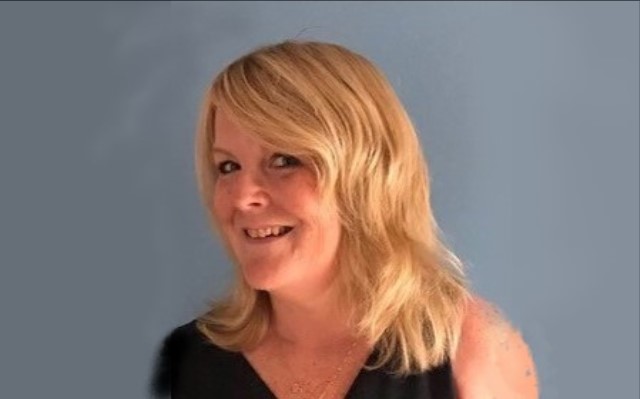
Dawn Maclean
|
||
|
||
|
A woman who was unaware she had a family history of breast cancer because she was adopted says current laws and privacy rules are adding to the trauma for people kept in the dark about their birth families.
At the start of Adoption Week Scotland, Dawn Maclean has been telling healthandcare.scot that people who have been adopted should be entitled to access medical information from their biological family, and how a simple checkbox on medical records indicating that a person was adopted would open the way to addressing a catalogue of problems adoptees face.
Dawn Maclean's mother was one of over 185,000 young women forced to hand over their child to ‘a better family’ because she wasn't married.
Dawn herself was brought up with a narrative of nature over nurture, her parents saying simply: "we couldn't have children, so we adopted you".
She was treated as different and she felt different.
The emotional complexities of being adopted collided with the practical concern of the unknown biological family’s medical history she needed and wanted when she was pregnant with her first child:
"I was living in Edinburgh and at that time you only had a 12 week dating scan. The 20 week detailed scan was not on offer. But I didn't know anything about my family – if I was carrying genetic disorders. I needed that reassurance.
“My consultant was incredibly understanding and arranged for me to have a 20 week scan which made a huge difference to me. With my second child that request was turned down flat.
"When my first child was born, he had to be rushed away to be resuscitated. When they brought him back and I held him, it was the first time I had ever known anybody genetically related to me.”
"When my daughter was born, she too had to be rushed away. For an adoptee that is so traumatic. I didn't have the awareness of the impact of adoption separation at that time. I just knew I was incredibly upset because I wanted to hold my baby.
"If we had something as simple as a checkbox on our medical record then clinicians could deal with us more appropriately.
“I knew in my head that my baby wasn't being taken away from me, but my body was in a complete panic – just as I was taken from my mother at a very young age, I was having my child taken away."
The adult adoptee movement campaigns for a better understanding across the healthcare professions about the practical and emotional disadvantage that people who have been adopted are placed in.
"When you're adopted your medical records are sealed," says Dawn. "You're issued a new NHS number and everything about your birth family is wiped.”
Unknown inherited risk
For Dawn this issue came to a head when she was diagnosed at her first mammogram with breast cancer, and was immediately asked about her family history. At this point, she decided to try to find out for herself:
"I had traced my maternal side, but I had never contacted them because it's a big deal to do that. I couldn't face rejection and I didn't know what the circumstances were. But, I thought I need to know my family, their history, so I made contact with them.
"At the same time as having to deal with a cancer diagnosis, I was navigating the difficulties around reunion. That will be a major milestone in anybody's life as an adoptee. I was having to navigate that without any support or help.
"When I got in touch with my family, there was a great aunt who had had breast cancer, but nothing else was known. I have absolutely no idea if there is a history of breast cancer on my paternal side.
"A year later, my mother died of secondary breast cancer. Her primary breast cancer had not been diagnosed and that really raised a lot of flags for me around whether my treatment plan was being done properly."
As a result of Dawn's intervention, her two half-sisters have been placed on a program of additional surveillance because of their family history.
Yet, Dawn’s treatment plan is based on there being no family history. As she approaches the end of her five-year post cancer surveillance, she says she is now deemed to be at the ‘standard risk’ of the cancer recurring, which does not warrant the additional checks offered to someone with a family history.
Outcomes unknown
Dawn says that including the fact of adoption in medical records would have significant and wide benefits to an adoptee’s access to necessary checks and care.
Currently, despite research suggesting a much higher rate of people who have been adopted die by suicide and suggestions that a number of chronic mental and physical conditions that can be linked to early childhood trauma, there is no system that allows data to be collected for the outcomes of people who have been adopted to be tracked as a separate group.
“Everybody's concerned with patient privacy, and I completely get that. But I should have the right to know what my family medical history is, especially when I was taken away by the state. If that's too difficult to administer, which I don't think it is, then we should have entitlement to go on any screening programme that we feel that we should be on.
"We need to have access to health records and access to genetic testing to put our minds at rest.”
Dawn says simply comparing her husband’s experience and her own can exemplify the inequality faced by adoptees:
"My husband is eligible for a glaucoma testing because he knows his mother had glaucoma. So, when he goes to the opticians, he's able to get that. If I go to the optician, I have to pay extra for the extra check to give me peace of mind and so something that is very simple and easy to treat isn't missed.
"When I am asked about my family history and I say I don't know, [healthcare professionals] say ‘okay, then we'll just move on. And we'll just pretend that you're just standard as the rest the population’, which is wrong."
You can listen to Dawn’s full interview with John Macgill, where she talks about her own deep fears that her own children might be taken from her, the struggle to get additional testing and monitoring for inherited conditions, and the opportunities for policymakers to put things right.
For more information go to The Scottish Adult Adoptee Movement.
Read more: Adult adoptees call for care records recognition; Trauma and the miracle heart baby; When adoption has no happy ending
Sign up to our bulletin for key health & social care updates straight to your inbox and you can follow healthandcare.scot on Google News. |
