|
Every Moment Matters in SMA Screening |
Related newsDelay to newborn screening for SMA “nonsensical” Cancer charity warns of billion-pound research gap Rare condition screening for newborns across Scotland Scotland to work with UK on Physician Associate reform Call for ‘urgent’ review of ADHD and autism services Call to expand Huntington’s specialist care 
|
|
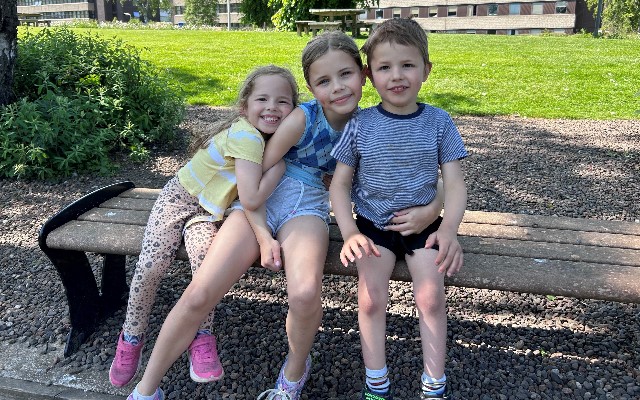
Zara and Finn with their older sister Isla (middle)
|
||
|
||
|
Partner Content: This article and the Every Moment Matters campaign have been initiated and funded by Novartis Pharmaceuticals UK Ltd.
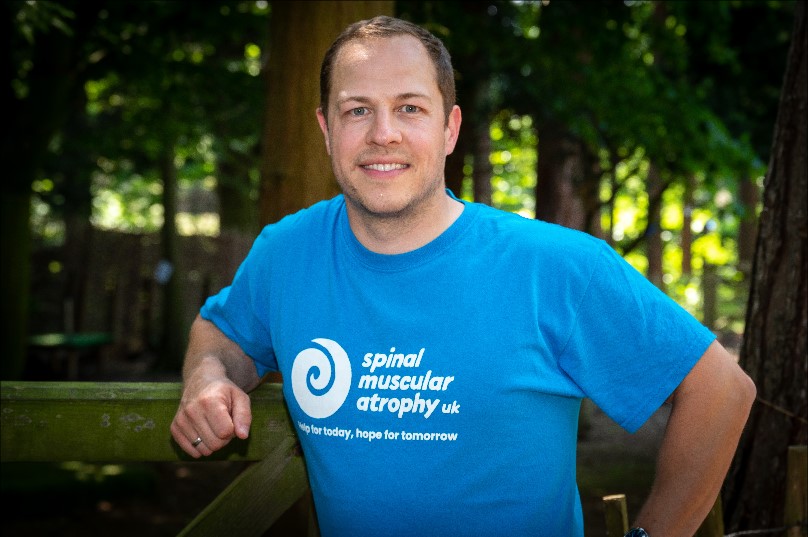
The father of two young children affected by a rare genetic disease is calling on the Scottish government and NHS Scotland to move quickly to introduce a screening blood test for newborn babies that can identify the condition and allow potentially life-changing treatment to begin when it can do the most good.
Spinal muscular atrophy (SMA) is a debilitating genetic condition that damages the motor nerves in the spinal cord leading to progressive muscle degeneration and disability.
Ahead of a meeting with MSPs in Holyrood next week, Giles Lomax, the Chief Executive of the charity SMA UK, has been telling healthandcare.scot that Scotland is falling behind other countries across Europe which already include SMA amongst the conditions screened for as part of newborn blood spot testing.
Here is his story.
“The first time I became aware of spinal muscular atrophy was the 26th of July 2019, the day that my twin son Finn was diagnosed – one of the worst days of my life and the life of my family. We had never heard anything about SMA – its toll, symptoms, or the signs.
Several weeks after Finn was diagnosed, his twin sister Zara was tested and she too was found to have SMA. However, in her case, her symptoms were not as severe as Finn’s. Both were able to receive one of the disease-modifying treatments immediately, which had a huge positive impact of preventing further weakening or damage to their muscles.
When he was 15 months old, it was clear that Finn wasn't able to sit independently; he wasn't able to crawl or cruise or stand at all. Zara wasn’t showing these signs. She could stand, move between things and was taking a few independent steps.
Early intervention is key
“By the time we knew, Finn unfortunately had had quite a lot of atrophy – irreparable and irreplaceable damage to his muscles.
Nearly five years on, although he can stand and take one or two independent steps, he is a full-time wheelchair user.
Zara on the other hand, because she received pre-symptomatic treatment, is able to walk a little bit further, about 10 metres, and she's a lot stronger. She can walk about the house but uneven surfaces, a curb or grass, are still really, really difficult for her.
Treatment has a huge impact on their lives. They go to hospital every four months for a treatment that involves them getting a general anaesthetic and a lumbar puncture to administer the medicine.
At the beginning of February 2024, between them, they reached a milestone of their 40th general anaesthetic since being diagnosed.
So, there is the psychological and emotional impact on the twins themselves, on their big sister and us as their parents. And then there are the practical things – equipment, a big extension to our house, a specialist van to take their wheelchairs, the measures that their school has put in place to ensure they get the best care for their physical needs.
Understanding SMA
“There are different types of SMA based on the extent of the genetic mutations: Types 1, 2, 3 and 4. Some babies with Type 1 SMA – the most extreme form – are symptomatic at birth or within the first couple of weeks of life.1 Others develop their symptoms more slowly – Type 4 only becoming apparent in older children and adults.1
SMA UK supports around 1,500 people across the UK, including close to 100 in Scotland. The statistics suggest 1 in 10,000 babies born has SMA.1 In 2018, our twins were two of five SMA births in Scotland. In any given year across the UK, 70 babies will be affected, on average 42 of those with the most severe SMA type 1.2
The disease-modifying treatments have the biggest impact early on. So, where there is a baby who is tested because their sibling has SMA, and is treated as a soon as possible, it is possible they could go on to have completely normal development. The opportunity to make the biggest difference is where you give disease modifying treatment really, really early on.
Testing for SMA
“SMA can be picked up in a blood spot sample. So, if we could add SMA to the conditions we screen for already when we take a spot of blood from a newborn infant’s heel, we would not only find SMA but also what type of SMA it is.
Clinicians and parents can then discuss which intervention will work best – giving these children the chance of living a normal life, potentially without any atrophy, mobility issues, breathing or swallowing issues.
The data, making the case for newborn screening is not in doubt. But we are not doing it here. In fact, the UK is lagging behind.
Over the last year or so, more and more countries have begun screening. Now 65% of Europe has SMA included in screening programmes.3 In June last year, Ukraine added SMA to its programme despite the war.4 In November last year, the south of Ireland recommended SMA be added to the screening programme. In January this year, Slovakia and Luxemburg, and now every state in the USA has added SMA to their newborn screening programmes.3,5
The UK’s National Screening Committee has commissioned an ‘in service evaluation’, essentially a pilot.6 But, at the moment, we're not quite sure if that covers all areas of the UK or if it is just England, and we have no timelines in place to when that will physically start.
It’s really important that the UK adds SMA to the newborn screening programme as quickly as possible. We can’t delay this.”
Giles Lomas is Chief Executive of SMA UK, a charity founded in 1985 which continues to support people with SMA at every stage in their lives and conditions, and their families.
A briefing for MSPs as part of the Every Moment Matters campaign will take place at Holyrood (Tuesday 5th March, 6-7:30pm). For more details about the event please contact: john@healthandcare.scot.
The ‘Guthrie’ methodology for bloodspot screening was perfected and introduced in Scotland in 1964.7
References and Read More:
1 SMA UK. Spinal Muscular Atrophy (SMA) – A Brief Summary. November 2023. Available here. (Accessed February 2024)
2 NHS Digital. National Disease Registration Service : Spinal muscular atrophy type 1. January 2023. Available here. (Accessed February 2024)
3 SMA Newborn Screening Alliance. Status Map. Available here. (Accessed February 2024)
4 SMA News Today. Newborn screening in Ukraine successfully launched amid war. August 2023. Available here. (Accessed February 2024)
5 Cure SMA. States screening and not screening for SMA. January 2024. Available here. (Accessed February 2024)
6 UK National Screening Committee. Transparency data: UK NSC minutes June 2023. Available here. (Accessed February 2024)
7 Downing et al. Newborn bloodspot screening in the UK – past, present and future. 45(1): 11-17. January 2008. Available here. (Accessed February 2024)
February 2024 UK 414320 |