|
Holyrood committee backs abortion clinic buffer zones |
Related newsHolyrood ADHD and autism inquiry launched Call for ‘urgent’ review of ADHD and autism services NHS doctors unemployment crisis despite understaffing Support available for ‘winter blues’, says government Pharmacy’s road to stigma-free drug dependency care ‘Whole-system shift’ needed on ADHD and autism support Treatment-resistant cancer focus of new study Enhancing independent living with robotics Law change needed for Scotland’s drug crisis Libraries offer light lift for low winter mood Medics warn pollution is risking children’s health Peer support ‘crucial’ in suicide prevention 
|
|
Image Credit: © bizoo_n
|
||
|
||
|
Holyrood’s lead committee scrutinising the legislation to introduce safe access zones for people seeking abortion services is ‘united in backing’ the Bill, concluding that it is “necessary” to ensure safe access to healthcare free from harassment.
After carefully considering views from a broad cross-section of stakeholders, the Health, Social Care and Sport Committee agreed to the general principles of the Abortion Services (Safe Access Zones) (Scotland) Bill.
The Committee concluded that safe access zones around abortion services are needed to protect women’s rights so they can ‘access healthcare services without experiencing harassment and undue influence’.
However, the report also recognises the potential impact on those who engage in anti-abortion activity outside abortion services, with some arguing that it may restrict their human rights.
The Committee says it recognises the right to protest and private thought are ‘cornerstones of a free democracy’ but reflects on the balance of the right to access healthcare.
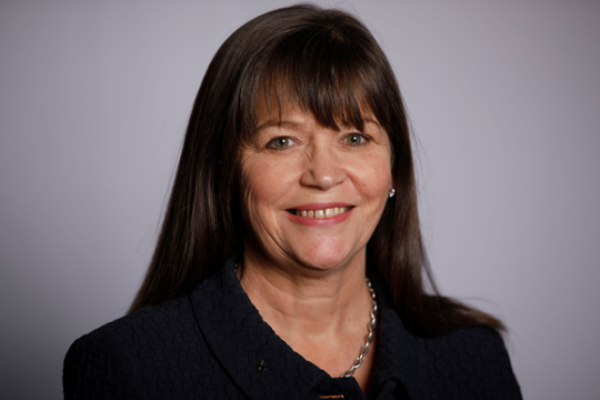
Speaking on the publication of the report, committee convener Clare Haughey MSP said the Bill strikes an appropriate balance:
“Our committee is united in backing the Abortion Services (Safe Access Zones) (Scotland) Bill.
“We recognise the strong views it has generated and that not all are in favour of its introduction. But ultimately we believe the creation of safe access zones around abortion services is necessary to enforce the principle that everyone should be able to access healthcare free from intimidation or harassment.
“We understand there are competing human rights at play, but we have concluded this Bill strikes an appropriate balance.”
Last month, parliament heard from some people against safe access zones, with one speaker disputing people’s experiences with protests, telling the committee there has been “no evidence of harassment or intimidation around abortion centres”, and that the Bill risks criminalising people based on what they think.
Yet, the committee has heard directly from researchers, campaigners and people with experience of protestors who shared the harassment and intimidation faced by those trying to access care.
The Scottish Human Rights Commission’s Policy and International Officer told the Committee:
“I don’t think there’s anything in this legislation that can or should be used to interrogate what someone is thinking.
“It would be the manifestation of how that is presented externally – a slightly different, but important, legal distinction – so I don’t think this legislation is trying to police what people think.”
She added that there’s an important and unique distinction with this Bill, in that the recipient of the protests or “activity” are individuals receiving and providing healthcare – rather than politicians.
Today, the Committee concludes that, due to the very clear and narrowly defined scope of the current Bill, there is no potential for its provisions to be applied more widely to anything other than abortion services.
Silent prayer
The stage 1 report highlights a difference in views amongst the committee on the issue of silent prayer. It says it could be difficult for the police to decide whether a law has been broken by people silently praying and that this issue requires further consideration.
The Bill seeks to address behaviours that may cause harassment, alarm, distress or undue influence over those seeking abortion or other reproductive healthcare services.
While Police Scotland says that existing legislation may cover some currently ‘unlawful’ behaviours, it recognises that engagement with anti-abortion protestors so far has involved providing advice, but police are limited in the actions they can take.
Gerry Corrigan, Superintendent for Police Scotland told the committee that no existing legislation addresses the “preventative element, to create that safe space” for people to access care.
He added that Police Scotland would be concerned about how they could enforce legislation on silent prayer.
Police Scotland says safe access zones will have a small amount of financial implications for specialist training and staff needed to attend sites, noting a case-by-case approach is likely to be taken.
The committee recommends that funds to deliver specialist training around the new offences to be created by the Bill are given to Police Scotland.
The report also stresses that the Bill’s implementation must involve ongoing review and parliament scrutiny processes, adding that it is vital to assess individual cases according to their particular circumstances.
The committee will be returning to the issue of silent prayer at stage 2 scrutiny of the Bill, with members remaining split on how a person’s intent may be clarified.
Gillian Mackay MSP, who introduced this Member’s Bill says that she is “very pleased” the committee have backed its principles and thanked all who gave evidence, adding that she looks forward to the next stages.
Read more: Abortion clinic buffer zones - where are we now?; Deprivation remains key factor in young pregnancies; Holyrood hears evidence on abortion legislation; GPs back abortion protest buffer zones bill; Has progress been made on women's health?
Sign up to our bulletin for key health & social care updates straight to your inbox and you can follow healthandcare.scot on Google News. |