|
Reframing how we value carers |
Related newsFirst Minister urged to rethink social care pay rise All public bodies must focus on health, urges charity New social care minister appointed Scotland needs more Carer Positive employers Fixing social care funding must be council “priority” Employment rights extended to unpaid carers Scientists to help cut NHS medical device waste Edinburgh IJB faces judicial review over cuts Scotland’s new Chief Nurse appointed Urgent plea to safeguard advocacy amid local cuts New gene study offers arthritis treatment insights New Edinburgh hub set to transform global healthcare 
|
|
Image Credit: © Daisy Daisy
|
||
|
||
|
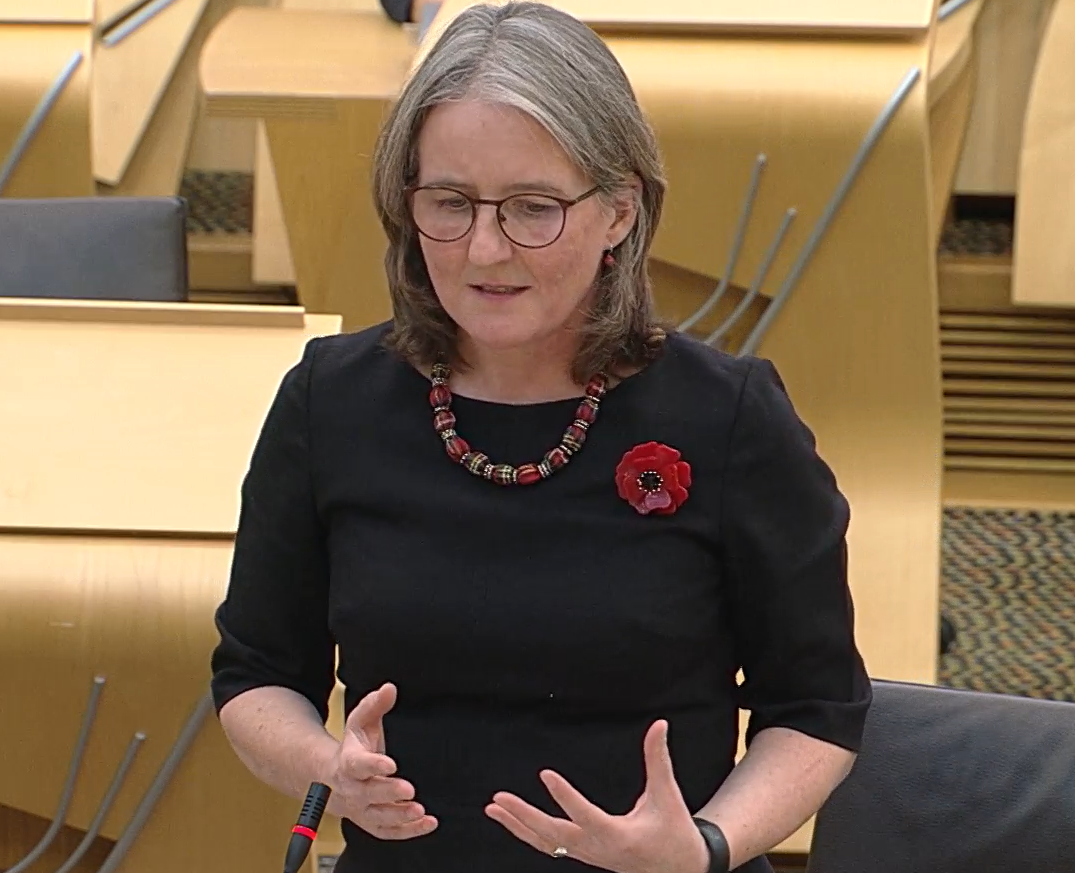
Scotland’s minister for social care is calling for a “shift in the narrative” in how carers are valued in the workforce and beyond. But one delegate at the Carers Scotland conference where the minister spoke says reframing the way we value carers must extend beyond talk to taking actions that make a difference for carers in their everyday lives.
Minister for Social Care and Mental Wellbeing, Maree Todd told the conference enabling unpaid carers into employment is a core part of both the First Minister’s commitment to boost Scotland’s economy and the National Care Service (NCS) aims.
She said through the NCS Bill, the government is keen to see a “change in the status of social care”, both for paid care workers and unpaid carers:
“Care is seriously undervalued. Not just in Scotland, globally care is considered a drain on society rather than an investment.
“We want to shift that narrative to social care being an investment in our citizens.
“We need to invest in our health and social care system – the economic impact and the social impact of investing in social care is a key part of that story. It’s morally and ethically the right thing to do, but it’s also economically right to do.
“£17bn would be generated to the Scottish economy if people who have given up work because of their caring responsibilities were supported into work.
“People who are far better at economics than I am, say to me that investing in social care is the best ‘bang’ for the public purse – and we are a country that wants to care for each other.”
Why employers are key
With two-thirds of people expected to take on a caring role at some point during their lives, Carers Scotland says having a supportive employer is key in enabling them to continue to work alongside caring.
Sue McLintock, Manager of the Carer Positive Awards, Carers Scotland told healthandcare.scot:
“Being supported to enter and remain in employment is not a big ask – carers should have the same opportunities to progress their education and career aspirations as anyone else in society.
“As well as the obvious benefits to carers in terms of financial security, fulfilment and wellbeing, employers, too, gain from creating workplaces which attract and retain a skilled, experienced and more inclusive workforce, where employees are able to effectively balance their working lives and work to their full potential.”
Ms McLintock adds that the “cost to employers” and the economy from not valuing carers is “potentially very damaging”, leading to a pool of lost skills and talent.
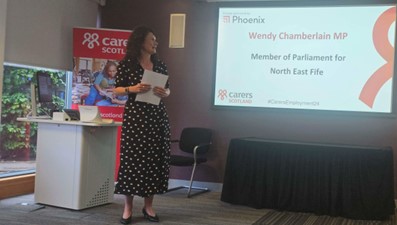
Wendy Chamberlain, the former Fife MP (now a Westminster candidate) who introduced the Carers Leave Act, told the conference she agrees employers have a role to play and said the Act is a step towards paid leave entitlement:
“We know that unpaid carers are vital for our economy, vital for the NHS and vital for our loved ones.
“I do think a big part of this is employers, talking about the benefit of the Act and those already providing paid leave and how it supports the wider workplace.”
She said providing flexible working and paid leave time would help more people feel able to begin or stay in work, reaching those carers facing devastating financial hardship.
Gender care gap
Speaking at the conference, Maree Todd argued that ensuring carers needs are met will also address some of the issues Scotland faces of inequality in the workforce:
“We know that the majority of carers are women – 59% – and particularly throughout their working years, women are more likely to be carers than men.
“Caring roles disproportionately impacts on women’s labour market participation and it’s one of the key reasons for economic inactivity among women.”
Ms Todd referred to research revealing women account for 56.9% of economically inactive people across Scotland and 23% of them stated their reason for being inactive as ‘looking after family and/or home’.
Of the economically inactive men – only 7.3% stated this as their reason for not being in work.
Ms Todd says that while she’s seen how the childcare entitlement in Scotland has contributed to narrowing this gender pay gap, more must be done across sectors:
“Women are also four times more likely to leave their job because of multiple caring responsibilities, more likely to be in low paid, part-time employment because that’s also the only option that will enable them to balance caring and working.”
“It is clear that achieving women’s equality in the labour market is a driver of growth that works for everyone.”
Inconsistent care
When asked about how better provision of support for carers can be seen across Scotland, Ms Todd recognised that there is inconsistency across the country:
“We are working on that and I am very mindful of the need to provide childcare that works for everyone, particularly those with complex needs.
“Because the lifelong impact that living in poverty has on children and families, it is very important that government gets on top of that where we can.
“I can’t promise that it’ll be fixed but we are very well aware and very keen to make sure any provisions benefit those groups most in need first.”
Actions beyond signposts
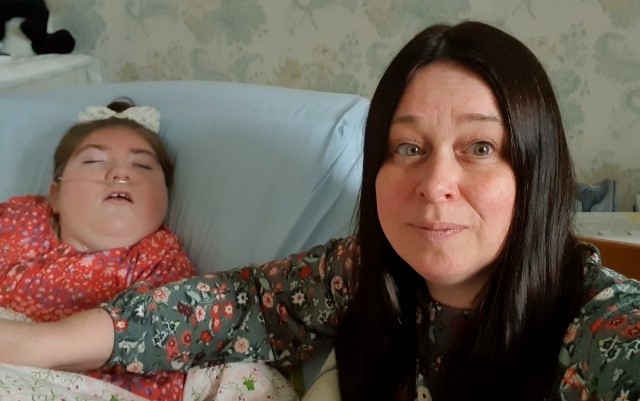
However, Carolynne Hunter, an unpaid carer for her daughter Freya with complex heath needs, says little seems to reach carers like herself:
“What are they actually doing for carers apart from signposting?
“It seems from a carers centre perspective that this is much-needed funding for carers to truly have a break has been cut. Yet, the Scottish government is saying they are putting millions into local authorities to support carers.
“I was offered an afternoon tea with people I don’t know when I requested to apply for creative break funding this year.”
A recent analysis found that millions meant for carers was misspent by councils in 2022/23.
Ms Hunter adds that while unpaid carers leave is a good step, it does not go far enough for those trying to balance responsibilities.
She said the government and employers should be bringing in flexible paid leave soon rather than in the future:
“The government paying towards the leave would provide unpaid carers a sense of feeling valued, not just by their employer but also the government.
“Afterall, we are saving the government millions by providing unpaid care.
“We have a right to be supported to live a meaningful life whilst caring, this is set out in Scotland’s Carers Act 2016, a meaningful life for many is being able to be employed, this should be completely supported.”
Read more: Carers rights not yet a reality; Unpaid carers “spiralling” in cost-of-living crisis; Insight: The health benefits of being able to work; Carers leave a stepping stone, says minister; Uncovering the hidden role of carers in Scotland; Insight: Carers in need as fuel poverty hits
Sign up to our bulletin for key health & social care updates straight to your inbox and you can follow healthandcare.scot on Google News. |