|
MSPs debate new approach to prison alcohol care |
Related newsCollective bargaining promised for social care Health and care in the Scottish budget Rural alcohol and drug rehab centre opens Scotland to work with UK on Physician Associate reform Holyrood ADHD and autism inquiry launched New social care minister appointed 
|
|
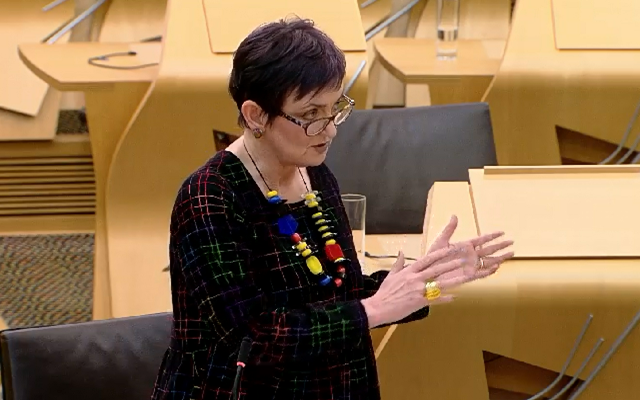
Image Credit: © Scottish parliament
Angela Constance MSP, Cabinet Secretary for Justice and Home Affairs
|
||
|
||
|
Scotland’s Justice Secretary has told MSPs they must come together in a “different debate that seeks different outcomes” to improve care for the two thirds of people in prison with alcohol use disorders.
Angela Constance MSP said that an oversight group on prison healthcare will look into the “nuts and bolts” of how health services in prisons are run to enable standards to be set.
She also told MSPs that arrest referral work, where those whose offences are linked with substance use are referred to support, will expand, and that she is “very supportive” of alcohol and drugs courts, which emphasise rehabilitation in sentencing.
The Justice Secretary also highlighted the growing presence of the recovery movement and mutual aid groups in all of Scotland’s prisons that are better preparing people for liberation.
Her comments closed a parliamentary debate led by former drugs and alcohol policy minister, Elena Whitham MSP, on the findings of Scottish Health Action on Alcohol Problems (SHAAP), that 63% of people in prison have an alcohol use disorder.
The doctors’ group also found that the risk of death from alcohol is three times higher in men and nine times higher for women who have been in prison than for the general population, and that there are gaps in implementation of services and support.
Ms Constance told parliament she believes SHAAP’s findings give a clear “mandate for action” across the government to ensure treatment and rehabilitation support is available to all, whether they are in the community or in custody:
“Accountability is not about blame; accountability is about answers and it’s about actions and it’s about people working together and it’s about proactively seeking to make a difference to prevent crises becoming catastrophes and always seeking to take that preventative approach, as well as respond to when life goes terribly wrong.
“And that’s what I, and I’m sure everyone in this chamber wants to see, is to seek that different debate that has different outcomes.”
SHAAP Steering Group member and public health and justice expert Dr Lesley Graham welcomed today’s debate. She said Scotland “now needs to see national leadership”:
“People with alcohol problems are overrepresented in the justice system and despite all the policies and frameworks in place, it can be difficult for people to get the help they need.
“The Scottish government must publish clear, enforceable standards which set out how people with alcohol problems should be supported at each step of their journey through the criminal justice system, and more importantly must hold themselves, justice partners and alcohol and drugs partnerships to account.”
1,277 alcohol-specific deaths were recorded in Scotland in 2023, a rise of one case from the year before.
Ahead of the debate, chair of the Addictions Faculty at the Royal College of Psychiatrists in Scotland, Professor Susanna Galea-Singer, said Scotland’s high rates of alcohol and drugs death requires brave action across the country:
“What we need is a bold and consistent plan. The Scottish government must look at realistic and carefully considered services to address alcohol-related problems for the health, social care and third sector. These vital services also need to be sustainable over time, with ring-fenced funding.
“There also needs to be better access, choice and support across the country, as well as joined-up services and treatment options for those who so desperately need them.”
While 41% of people in prisons surveyed in 2019 reported that they would be willing to accept help for their alcohol use disorder, just 22% said they had been given an opportunity to receive treatment during their sentence.
Former drugs and alcohol minister, Ms Whitham MSP, told the chamber this afternoon that a lack of clarity around governance and accountability remains a barrier to improvements in the justice system:
“The separation of power and independence of decision-making between the organisations and bodies involved in the justice system can pose a challenge for overall coordination of care and support.
“We need enforceable standards with clear lines of accountability, so these recommendations are actually implemented, and people do not continue to fall through the cracks.”
The Justice Secretary said she will be happy to meet with Ms Whitham, SHAAP and the public health minister to discuss solutions.
Read more: Alcohol support needed in justice system; Anonymous spaces improve mental health and recovery; Occupational therapy in Edinburgh prison
|