|
Carers are on their knees |
Related newsCall for windfall tax on care agency profits Yousaf: No place for tax haven firms in NCS NCS Lived Experience Panel Launched NCS: Time for the powerful to be radical Community care to social care – a retrospective The case for a Highland weighting 
|
|
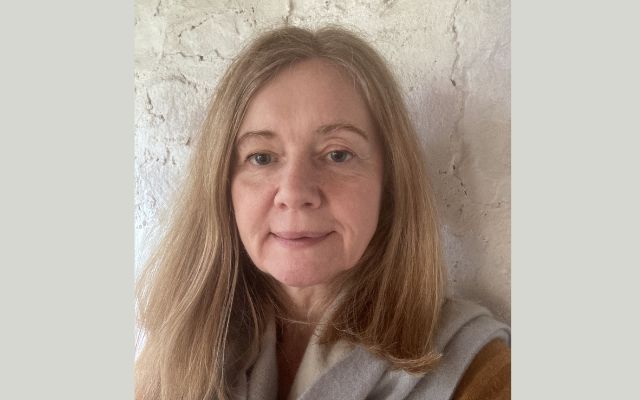
Claire Cairns, Director of the Coalition of Carers in Scotland
|
||
|
||
|
Over the past ten years, the role of carers as a foundation of Scottish society, and the personal impact on those providing care, have slowly been recognised. However, policy changes and funding to make carers’ lives easier are often failing to reach the people they’re meant to help.
Claire Cairns from the Coalition of Carers in Scotland told a meeting at the recent Scottish Green Party Conference that the move to acknowledge the importance of carers is welcome, but has done little to stop the role becoming, sometimes intolerably, more difficult.
This is what Ms Cairns told her audience:
“In the 30 years I've been working in the third sector, we've seen fantastic progress in the recognition of carers.
Going back 30 years, people didn't understand the role they played. You didn't hear about them in the press and on TV.
We have made great progress, but unfortunately we're starting to see things go backwards.
It probably started with the pandemic, with the additional care family members had to take on as services ceased or reduced – and they still haven't gone back to normal.
We were promised from the beginning those services would be fully reinstated, and they just haven't been. Instead, we're seeing another round of cuts now, as we move into this new financial year.
Services that people rely on are being cut.
The knock-on effect is carers having to provide more with less support for themselves.
The ‘state of caring’ survey by Carers Scotland has found that more than half of carers report an impact on their physical health of their caring role. For one in four, it's an impact on their mental health, and nearly three quarters say that they feel socially isolated, which, in turn, has an impact on health further down the line.
For carers, it's the difference between having a life and being able to access basic human rights and not. If a carer is caring for 24 hours and has no access to a break, they just don't have a life outside of caring. And I would even go as far as to say the right to life is being impacted sometimes by people's caring role.
The carers Scotland survey found 14% of carers were not going to their GP. They are putting off having operations. They have not sought medical treatment because they couldn't get the replacement care. The ultimate impact of that decision could be absolutely devastating.
How to begin fixing things
There are several changes that we’d ask for to address the pressures on carers and I want to put forward the four priorities that carers would have at the top of their list.
The first is the right to breaks from caring. This is still part of the Care Reform Bill and still has cross party support, as far as we're aware. But we know that political parties are worried about how it will be paid for and delivered.
I would make the comparison here with the right to holiday leave from employment, which was introduced in 1939.
At the time, there was the same resistance: how are we going to do it? How are we going to replace the workers when they're on holiday? How are we going to pay for it? – exactly the same arguments that are being used for carers having a right to a break from caring.
So I want you to imagine that you are in your 70s looking after your husband, and you have no right to a break and no support to have a break. And then think about the things you enjoy as an employee: weekends and annual leave. Imagine if you didn't have those?
This cannot simply be a matter of cost. It's not just a matter of how you do it. It's the right thing to do. Yet nearly one in four carers are caring for more than 50 hours a week, but only 3% of carers have access to a formal break through statutory services. And remember, many of carers are well past retirement age.
Derek Feeley, in his review of adult social care said of carers: “not only are carers indispensable, they're also human beings and need time off like the rest of us. That's an investment I think we ought to make”.
This is absolutely key. We cannot expect people to keep delivering and delivering without the support that they need.
Who is answerable?
The second priority for carers is accountability and redress.
We actually already have some really good laws in Scotland, including the Carers Act, including Self Directed Support legislation, but I would suggest health and social care partnerships are currently acting unlawfully in many cases, and people aren't being able to access their rights.
This was a key driver of the national care service. It has been fraught with problems, but one of the reasons why it was brought forward was because of that accountability, because the Scottish Government says it is up to local authorities to deliver the duties in legislation as elected representatives. That's true, but when they don't deliver, who's holding them accountable? And the redress that people have through the complaints system, through legal action, is very difficult, and when you're an exhausted carer, they're just not going to go down that road.
So even though the national care service is not going ahead, we need to build accountability into the system. Any service redesign needs to look at that.
I want to share a quote from a carer at one of our engagement events:
“There's no point in allocating respite hours or weeks if the appropriate care cannot be provided. Having a right and having access to care are two completely separate things. But they shouldn't be.”
The third priority is preventative support and the third sector.
These are tough times , with lots of cuts happening, particularly in the third sector at the moment. What we see is the statutory sector looking at themselves first and their budget and then sending the cuts down to the third sector.
And I don't think that should happen. The third sector is flexible, it's innovative, it's good value for money, so I think that's the wrong way around. If you were to ask the people using services very often, they would say, it’s the third sector that we trust.
The cost of cuts
I'm going to give you two examples of why budget cuts shouldn't be passed to the third sector – and why funds passed to the third sector achieve more.
The first is around Adult Carer Support Plans. Through the Carers Act, carers are entitled to an Adult Carer Support Plan. And Edinburgh Council, for the first several years of the Carers Act were undertaking adult care support plans themselves. In the first five years, they undertook 770 adult care support plans.
The work was then devolved to the third sector. In the first seven months, they undertook over 2,000. I think this is because people just tend to trust these organisations. They're on the ground, and they're very flexible.
The second is around how Carers Act funding is spent. Carers Act funding is now £88.4m a year, money that is delivered through health and social care partnerships.
We did a Freedom of Information request in 2023 to see how the funds were spent.
First, £13.5m was retained by local authorities and not passed on to health and social care partnerships. £6 million went to health and social care partnerships but was then allocated to other areas not to do with carer support. £9m was spent on indirect support, things that didn't benefit carers. And even the remaining money was often spent on things like employing people in strategic roles within the health and social care partnerships which, while important, did not directly benefit carers.
So that was £28.5m – a third of the money – sticking to the pipes.
In contrast, in this year’s budget, there's an extra £5m for short breaks, which will go direct through carers centres, so very little will be spent on delivering it. Most of it will go direct to carers for small grants, and it's expected to support about 15,000 carers.
Listening to experience
Finally, and everybody here has mentioned this, I'm just going to say again, treat us as partners. Treat carers as equal partners, and treat everybody with lived experience as equal partners. The Carers Act includes duties around involving carers as partners, but we are not seeing the power shift.
One of the big sticking points for the National Care Service Bill has been that struggle between government and councils, because councils don't want to give up their power.
And neither wants to give up their power to people with lived experience. We need a whole paradigm shift.
Two final thoughts.
One is, we've been using a hashtag for the last few years. It's #carerscantwait.
We can't wait for the election. We can't wait for a new government coming in. These things are happening now, and social care is an absolutely pressing issue, and we need a sense of urgency around this, because carers are on their knees.
And the other is just a very simple quote from a carer – again, something said at one of our engagement events:
“We need rights, not fights”.
It shouldn't be about people having to fight for everything they get. It should be about a shared understanding of what carers need, and delivering that equally.”
Read more: Interim chair for government care advisory board; Carers charities urge greater transparency in reforms; Millions meant for carers misspent; Strategy to build ‘sustainable future’ for carers
Sign up to our bulletin for key health & social care updates straight to your inbox. |
