|
Young men’s deaths of despair overlooked in policy |
Related newsPharmacy’s road to stigma-free drug dependency care Politicians must take ‘bold’ action on child poverty Childhood adversity health impacts felt at 50 revealed New Edinburgh hub set to transform global healthcare Chief Medical Officer: ‘Critical connections’ priority Chronic illness combination may double depression risk 
|
|

© kieferpix
|
||
|
||
|
Men most at risk of dying from drugs, alcohol or suicide in Scotland are a “policy blind spot”, according to health economics researchers.
In its 2025 annual review of health and socio-economic inequality in Scotland, the Scottish Health Equity Research Unit (SHERU) has found persistent and, in some places deepening, structural inequalities continue to drive poor health.
Of particular concern to the researchers are the health impacts of deindustrialisation, privatisation and austerity on a subset of men aged 18 to 44.
Their review suggests this group are at a much higher risk of being in poor quality or precarious work, experiencing homelessness or becoming incarcerated.
However, the team based at Strathclyde University say these men are often hidden in the statistics.
These men are most likely to ‘die by despair’, from drugs, alcohol or suicide, with support from services often coming at times of crises when it could be too late to make a difference.
Co-lead of SHERU, Emma Congreve, said the team think this group are not “getting the attention they need from research and policy around socioeconomic circumstances” and this must change.
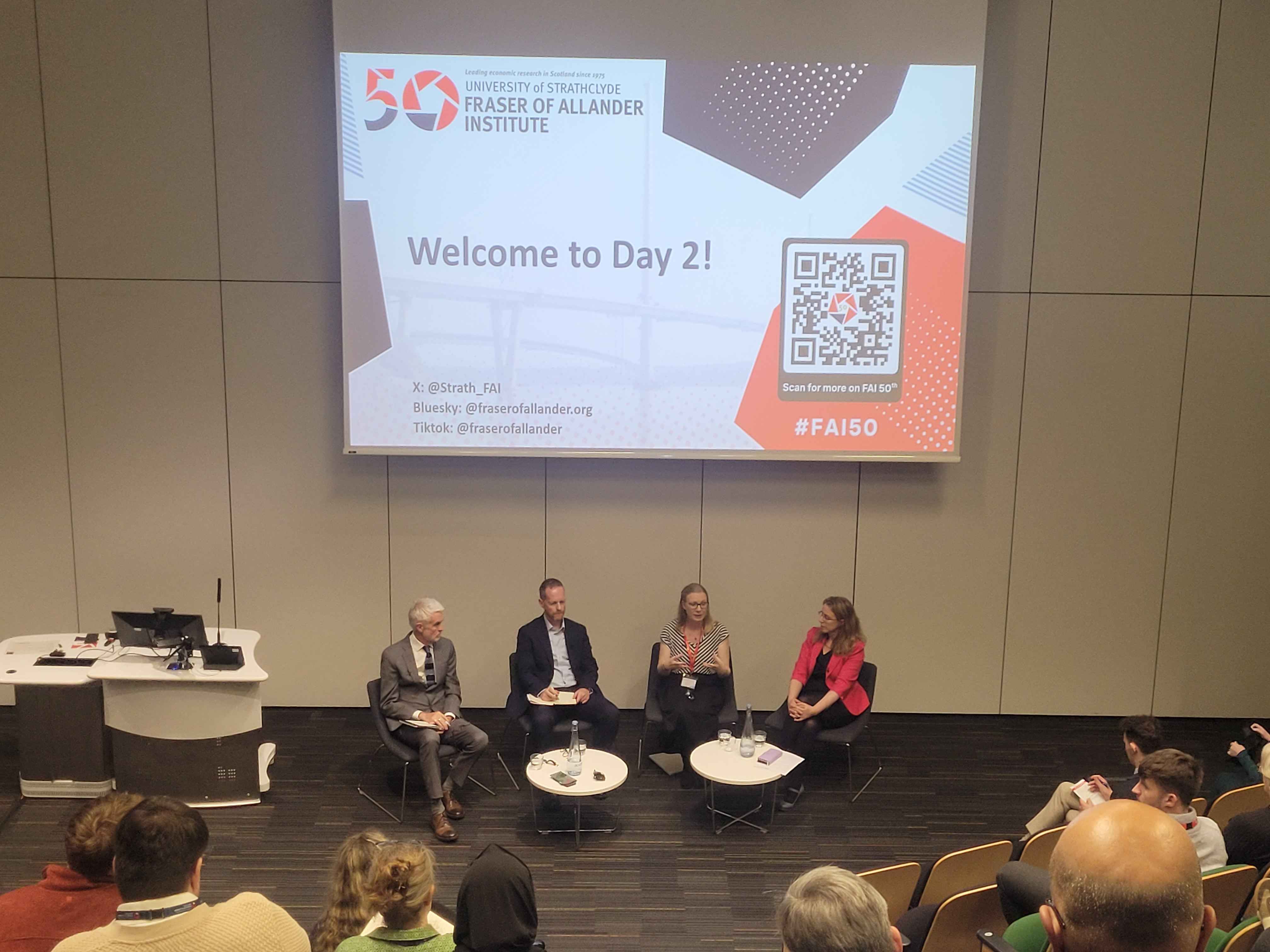
Sharing insights from the report at the University of Strathclyde’s Fraser of Allander Institute 50th anniversary conference in Glasgow, Ms Congreve said:
“Often the average makes it look like men are doing pretty well. You have to really dig down to find this group who are most at risk.
“It's really important for us that we shine a light where we think that there isn't enough attention and men are clearly the most at risk of these deaths.
“The trauma men and their families face from these deaths of despair transmit through generations.
“So it's important both for the population we're talking about, but also for the next generation coming behind that we act.”
However, the researchers say a men’s health plan is not the way forward.
Instead, senior government leaders should work more closely together across all areas to tackle the underlying causes putting the lives of young men at risk.
Ms Congreve’s fellow co-lead at SHERU, Professor Kat Smith, told conference attendees:
“From my perspective, [a men’s health plan] would be just a further example of siloing, having yet another strategy.
“There’s already strategies around drug deaths, around suicides and around alcohol. What we need is much more joined up thinking and strategising, with a focus on implementation.”
The researchers say evidence from Ireland and Iceland, which have successfully reduced rates of suicides and alcohol and drugs harm in young people respectively, shows what is possible when national coordination, data and local delivery align.
Scotland should now follow suit, according to the report, to take advantage of previously “untapped opportunities” to intervene early and support this group to live well.
Professor Smith told the conference:
“You need a clear national government focus on driving and tracking delivery and implementation.
“So it can't be the case that the Scottish government sets the strategies and then leaves it to others to implement. We have to make those connections.
“We need robust data to inform design and monitor the implementation and undertake evaluation.”
Read more: Researchers: Move beyond rhetoric to tackle inequities; Can Scotland make health fairer?;
Sign up to our bulletin for key health & social care updates straight to your inbox. |