|
Turning neurodiversity recognition into action |
Related news20 years of stroke research and recovery at UKSF 2025 Dementia campaign success to inform government actions Action needed to deliver dementia ambitions Government plans risk ‘diluting’ focus on stroke Dementia rise estimate should be “wake up call” Insight: Scotland’s ‘invisible’ patients and carers 
|
|
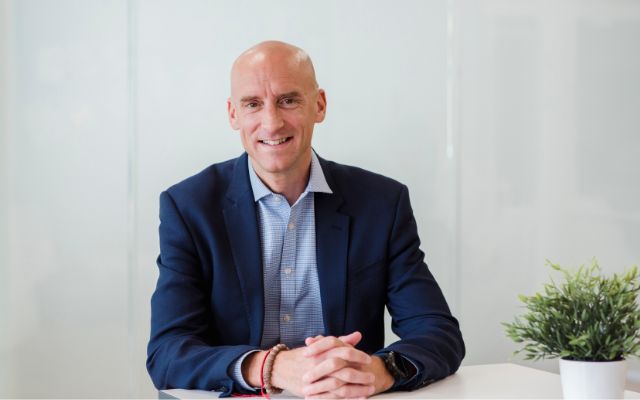
Alan Thornburrow, CEO, Salvesen Mindroom Centre
|
||
|
||
|
Neurodiversity is rising up the agenda as public understanding increases. Alan Thornburrow, CEO of Mindroom, a Scottish charity that champions all forms of neurodiversity, says institutions have not yet caught up.
After 25 years at the forefront of supporting neurodivergent children, young people, and adults, Mindroom has never seen anything like the surge in demand we are now experiencing.
Over the past five years, requests for our support have risen by nearly 300% - let’s let this sink in. That statistic alone should stop us in our tracks.
But behind it lies something far more important: a system under profound strain, and families, educators, employers, and health professionals grappling with needs they are not adequately equipped to meet.
We are seeing the symptoms everywhere: classrooms where teachers can’t possibly meet every individual need, GP surgeries without clear pathways, workplaces unsure where to begin, and kitchen tables where parents are exhausted from years of fighting for help. The need is rising not because neurodiversity is new, but because awareness has finally caught up with reality. People understand more, expect more, and are asking for the support they deserve. Our institutions have not yet caught up and the reality is, they might never be able to do so.
The national picture is stark. In Scotland alone, more than 42,000 children and 23,000 adults are waiting for neurodevelopmental assessments. Some families face delays of years - three, four, even more - before receiving a diagnosis that unlocks support. In England, the picture is similar.
These are not just numbers. They are formative years of a child’s life. They are adults whose health, confidence, and careers are put on hold. [Source: Scottish parliament]
At Mindroom, our 2024 Impact Report shows the scale of this unmet need: over 25,000 direct contacts last year, supporting families who often arrive at our door, often distressed, exhausted, and unsure where else to turn. At the same time, demand for our professional training has grown by 240%, and our consultancy work by 160%. Professionals want to do better; they simply need the tools, insight, and confidence to act.
The workplace tells another story of progress and pressure.
While neuroinclusion is finally becoming part of corporate strategy, more than half of neurodivergent employees say they’ve had to take time off due to inadequate support. Psychological safety is talked about more than it is experienced.
Too often, neuroinclusion is framed as a compliance issue rather than a cultural one. Yet the evidence is clear: when workplaces understand and value differences, they unlock talent, innovation, and loyalty that cannot be engineered any other way.
There is cause for optimism.
Public understanding of neurodiversity has expanded faster in the last five years than in the two decades before it. Young people especially are more comfortable talking openly about differences. Employers are beginning to recognise that inclusive design is not a retrofit, but a route to competitiveness. And across schools, health systems, and businesses, there is a genuine appetite to do better.
To mark our 25th anniversary, Mindroom is expanding initiatives that bring neuroinclusion into classrooms, organisations, and boardrooms. We have trained more than 10,000 people over the last three years, and we are building new national partnerships to drive systemic change. But we cannot solve this crisis alone. The gap between awareness and action must close, and that requires leadership across every sector.
Behind every statistic is a story: a child finally thriving because their needs could be met, a parent who no longer feels alone or a workplace transformed by valuing different ways of thinking.
These stories are why we do what we do. And they remind us that neurodivergent young people are not just a group to be supported, they are the future workforce, innovators, and leaders our society needs.
We have a once-in-a-generation opportunity to turn understanding into action. Let’s not waste it.
For more information about Mindroom and the work they do, please visit: Salvesen Mindroom Centre
Salvesen Mindroom Centre is a charity that champions all forms of neurodiversity and supports all kinds of minds. Their mission is to be a leading centre for change, in how we live, work and learn. They will achieve this through support, education, advocacy, and research. The charity has been delivering on this mission since 2000.
Read more: Disabled working women ‘excluded by design’; ‘Whole-system shift’ needed on ADHD and autism support; Partnership urges action over Scotland’s mental health; Autistic Scots push MSPs for neurodivergent-led change
Sign up to our bulletin for key health & social care updates straight to your inbox. |