|
Infection risk petition set to fail |
Related newsConcern as COVID protections reduced Scotland should set up pandemic centre Scotland at the table with UN healthy air commission Aberdeen A&E first to offer routine HIV tests Long COVID putting Scots at risk of poverty COVID jags end for staff and chronically ill 
|
|
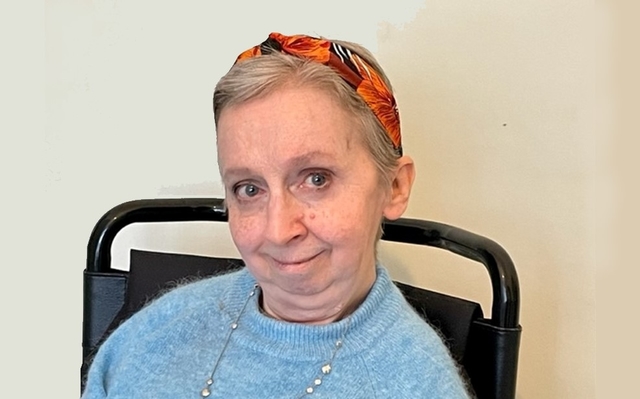
Image Credit: © Feena Mckinnell
|
||
|
||
|
A leading campaigner says a ‘chasm’ has opened up between the evidence of the risks to people from airborne infections and the willingness of policymakers to do enough about it. The comments from Dr Sally Witcher come as a Scottish parliament committee looks again this week at a petition calling for better protection for people in health and care settings – with little likelihood, she believes, that MSPs will take the process further.
Long-time disability rights campaigner and founder of Edinburgh-based social enterprise Inclusive New Normal, Sally Witcher came to the fore during the early years of the COVID pandemic when she raised concerns that government repeatedly failed to consider the risks being face by people most vulnerable to infection when deciding on when to lift restrictions.
She says too few lessons have been learned from the pandemic about the impact of all airborne infections – and too little continues to be done to reduce the risks from them:
“Every winter it is and will continue to be like watching a car crash in slow motion as the NHS is once again overwhelmed by airborne infections that they knew were coming and could have acted to prevent,” Dr Witcher told healthandcare.scot.
In December 2023 she submitted a petition to the Scottish parliament to parliament’s Citizen Participation and Public Petitions Committee urging the Scottish government to protect people from airborne infections in health and social care settings, by:
Submitting her petition, Dr Witcher highlighted the immediate and long term harm being done to people working in health and care from a raft of airborne infections – and the lack of confidence clinically vulnerable people have that they were safe to attend essential health appointments.
The public petitions committee discussed the petition on several occasions and sought the views of professional and third sector organisations as well as the Scottish government.
In a submission to the committee in April 2025, the government’s Chief Nursing Officer’s team stated:
‘The Scottish Government has taken account of all the learning from the pandemic in relation to IPC [Infection Prevention and Control] in health and social care settings. We want to ensure that the diverse experiences of the people of Scotland are fully considered. As such, we have started the initial planning for ensuring participation and engagement with the public and undertaking an equality impact assessment in the development of the future ‘Infection Prevention and Control Strategy’ for Scotland. We will ensure that the voice of those with lived experience is heard as part of how we develop the strategy and any associated policies arising from the strategy.’
In October last year, the health secretary Neil Gray told the committee a ten year strategy will be ready by Spring 2026, adding:
‘The strategic vision and priorities statement will support our mission to ensure everyone accessing or providing health and social care is safe from preventable associated infection. The statement will ultimately be underpinned by multi-year action plans, which will be developed after publication, and build on the learning and progress made within existing strategies.’
However, Sally Witcher says she is not clear who has been involved in ensuring the new strategy is fully informed:
“I would ask the committee to seek assurance that experts in airborne infection and its prevention have been involved, and to clarify how clinically vulnerable people have been included. I for one would have warmly welcomed the opportunity to contribute.”
“The facts won’t go away”
Dr Witcher says the looming end of the parliamentary term means it’s likely the committee will call time on the petition at its meeting this week.
She told healthandcare.scot:
“The most a petitioner can do is show the committee that an issue has public support, provide the committee with evidence and arguments, in the hope they will use their position to flush out more information, but I feel there is a lot still to do to hold those responsible to account.
“On this occasion, responses to the committee’s inquiries have helpfully clarified the scale of the chasm between the evidence base and the actions – or rather inactions – of ministers, the bodies responsible for infection prevention and control and others. They have also revealed how little they understand about airborne infections, how to prevent their spread, and the cumulative dire consequences of that failure for the nation’s health, NHS and economy.
“I’m afraid I have little confidence that this week’s meeting will do more than close the petition, leaving critically important questions hanging, and the need to start all over again after the election. Because whether or not those responsible choose to recognize the facts, the facts won’t go away.
“No matter how much they insist airborne infections inhaled like smoke can be prevented by washing hands, it can’t make it true. Until they accept the way to prevent it is by ventilating, filtering and sterilising the air and wearing respiratory masks designed for the purpose, hospitals will be among the riskiest places for clinically vulnerable people to be and where anyone is most likely to catch respiratory infection. Until it is recognised that COVID-19 is not a routine acute respiratory illness but that reinfections cause cumulative long-term health damage – including immune-dysfunction leaving some people more vulnerable to illness over time – soaring rises since 2020/21 in many illnesses, labour market inactivity, school absence due to sickness, and disability benefit expenditure will continue.”
Dr Witcher added:
“My heart goes out to clinically vulnerable people for whom life is particularly difficult in these circumstances and to everyone who has been horribly ill this winter, particularly those who have lost their health, their livelihoods and their loved ones, when action could have been taken to prevent it.”
Read more: Scotland at the table with UN healthy air commission; Long COVID: Alone and forgotten; Removal of mask wearing ‘dangerous’; In full: Plea for caution from at-risk Scots
Sign up to receive our bulletin for key health & social care updates straight to your inbox. |
