|
Radiographers pioneer doorstep diagnostics |
Related newsCall for stoma care to be equal across Scotland Call to rethink rollout of walk-in GP services Bloods and Go service for Lanarkshire Half of angina patients have hidden heart problem Scots kidney disease patients urge politicians to act NHS and Glasgow rethink routes into healthcare 
|
|
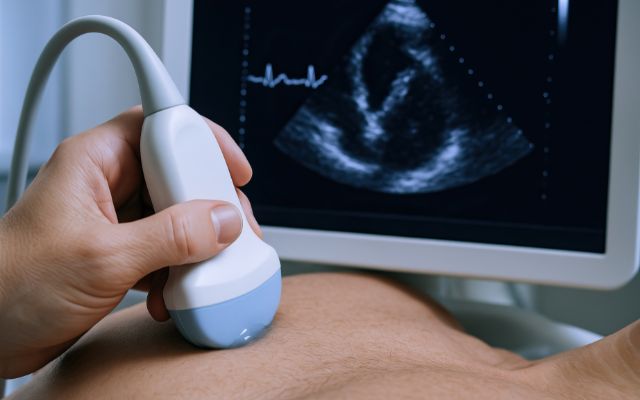
Image: © Fay Melronna / Adobe Stock
|
||
|
||
|
An innovative mobile diagnostic service, which will help patients receive vital medical tests in their own homes, is being launched in NHS Greater Glasgow and Clyde. The two year project follows earlier pilots which have already shown that taking tests to people’s doors allows earlier intervention and reduces A&E visits and hospital admissions.
Greater Glasgow and Clyde’s new community diagnostic vehicle will carry state-of-the-art portable X-ray kit and, for the first time in the UK, equipment to undertake blood and urine tests, and carry out ultrasounds.
The tests will be conducted by radiographers, working with wider clinical teams, and is being supported by the Society of Radiographers in Scotland, the professional body for medical imaging and radiotherapy.
Consultant radiographer Val Middleton, who has been involved in setting up the GGC project, says the aim is to keep people out of hospital wherever possible:
“If you’re a frail or elderly person who’s fallen and is in pain, you'd want to stay in your own home. You don’t want to end up stuck in hospital for days on end.
“And a patient in a block of flats in Glasgow maybe can’t get to hospital to have diagnostic tests, so we’re bringing the testing to them. It’s making the services we provide more accessible to communities, reducing inequality.
“The community vehicle allows a patient to stay at home for the examination. The patient will only be taken into hospital if they have a fracture or another condition that needs hospital care.”
The response of those already involved in a small-scale pilot of the mobile X-ray service has been positive.
“I’m paraplegic and was expecting to go to hospital,” one person fed back. “I was surprised to get a mobile X-ray.”
And the child of an elderly patient said:
“It minimised the anxiety for Mum, who has advanced dementia.”
Multiple benefits
The Society of Radiographers (SoR) says earlier pilot versions of the car, which offered only X-ray facilities, reduced patient waiting times by an average of four hours, cut the number of patients being cared for in corridors and freed up an equivalent of 9.3 hospital-bed days per person from patients not being admitted to hospital, saving over £1,000 per patient.
The programme was presented last week to MSPs at the Scottish parliament by the SoR alongside other clinicians and representatives of Sovereign Talents, a firm partnering with Fujifilm to put the car on the road.
Those behind the innovation believe the Glasgow scheme could also help address a chronic shortage of diagnostic radiographers – the clinicians who carry out X-rays, CT and MRI scans, as well as ultrasounds and mammograms. The current radiographer vacancy rate is 13.4 per cent, contributing to longer waits for patients.
The SoR says Scottish hospitals currently offer limited career-development opportunities for radiographers, meaning some seeking more diverse advanced-practice roles move to England.
Val Middleton believes that the Glasgow scheme could keep more professionals here:
“The community vehicle is giving new career opportunities to radiographers in Scotland that trump what’s being done elsewhere,” she says.
Mrs Middleton’s career choice may have been influenced by her grandfather who kitted out his own X-ray vehicle in the late 1940s, trialling his mobile service on racehorses. He died before he could extend it to human patients.
“It’s exciting that we can actually make a difference to patients in this way,” she says of the new era community car where drainpipes have been replaced by digital technology. “Ultimately, that’s why we join the profession. That’s what we’re here to do.”
Read more: AI for lung cancer care to help tackle “hidden killer”; We “cannot be complacent” on breast cancer rise; NHS Scotland relying on older diagnostic kit; Cancer workforce “not on right trajectory” |
