|
Care at home: A guide for new health ministers |
Related newsDonald Macaskill: Where is Scotland going? One precedent, inconsistently applied Moves to extend FOI to care homes Beyond the edge: why care homes are in crisis The in-between: what’s happened to care reform? Care worker visa changes ‘inhumane’ and risks services 
|
|
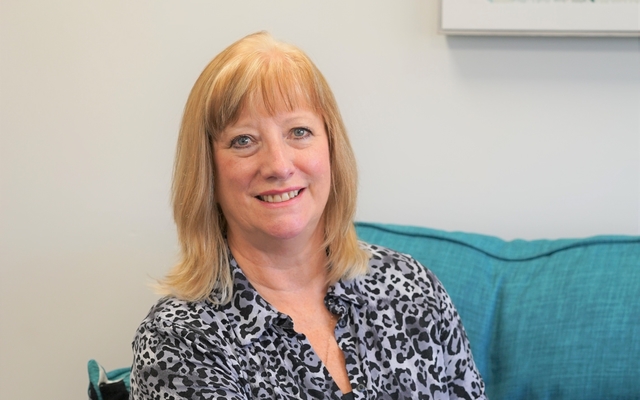
Lynn Laughland
|
||
|
||
|
With the election over and the new health and care ministerial team starting to get to grips with their complex portfolios, now is the time, says one Scottish homecare leader, for some mistaken assumptions to be corrected and damaging policies to be discarded.
In the third of her series of articles making the case for reform, Lynn Laughland directly addresses Health and Care secretary Angela Constance and Community Care minister Alison Thewliss, setting out three things they need to understand about care at home before policy commitments become delivery plans.
Across Scotland right now, thousands of care workers are getting up early, travelling to someone’s home, and making it possible for that person to start their day with dignity. They help a person dress, prepare breakfast, manage medication, or simply sit for a few minutes with someone who might not otherwise speak to another person that day. It is skilled, demanding, deeply human work. And it is the foundation on which everything else in Scotland’s health and care system rests.
I have run a care at home organisation for thirty-three years. I have also spent the past year assembling a detailed evidence base on the state of the sector, drawing on published data from Public Health Scotland and Audit Scotland, the Christie Commission, the Feeley Review, and the Care Reform Act 2025.
What I have found is not a surprise to anyone working in care at home. But it is, I believe, something a new health secretary needs to understand clearly before the policy commitments of the election campaign are translated into delivery plans.
Fear of retribution too often holds providers back from putting their heads above the parapet, even when they have practical solutions to offer.
So, here, in the spirit of the constructive conversation this sector has always wanted to have with government, are three things I would want Angela Constance to know. As a qualified social worker herself, she will understand from her own professional experience what care at home actually means in people’s lives. And with Alison Thewliss now holding the day-to-day brief for community care, there is a real opportunity for that understanding to shape decisions at every level of the new government.
First: the waiting list is not an administrative problem.
By October 2025, nearly 8,000 people in Scotland were waiting for a social care assessment. A further 3,300 had already been assessed and were waiting for their care to begin. Behind those figures lay almost 31,000 weekly hours of care going undelivered. These numbers have remained persistently high across multiple reporting periods. They are not a backlog that will clear. They are a structural gap between assessed need and system capacity, and with Scotland’s population ageing and long-term conditions becoming more prevalent, that gap will widen unless something changes deliberately. Every week those numbers persist, real people are managing without support they have been told they are entitled to. That is the starting point.
Second: constrained commissioning is not saving money.
This is perhaps the most important thing I want to say, because it runs counter to how the care at home budget is often understood. When care at home capacity falls short, the cost does not disappear. It moves. People deteriorate faster, stay in hospital longer, and sometimes enter residential care earlier than they need to.
Audit Scotland has confirmed that managing the crisis is taking priority over prevention across community health and social care.
A hospital bed costs more than six times as much per day as the equivalent care at home. The £440 million annual cost of delayed discharge in Scotland is, in part, the financial consequence of underinvestment in community care.
Every manifesto commitment to shift the balance of care from hospital to community will remain aspirational until the commissioning system is funded at a level that makes it deliverable. The arithmetic of prevention is compelling when we do the whole sum, not just the part that fits on the commissioning budget.
Third: the independent and voluntary sector is not a risk to be managed. It is the system.
In 2023/24, Scotland’s independent and voluntary care at home providers delivered 49% of all publicly funded care at home. More than a thousand small businesses and voluntary organisations, the majority locally owned and rooted in the communities they serve, are providing the backbone of Scotland’s community care system. They exist because successive Scottish governments, through legislation going back to 1990 and most recently through the Care Reform Act 2025, deliberately created a mixed economy of care because they understood that this kind of locally embedded, relationship-based provision is what person-centred care actually requires.
Yet not one Scottish council currently meets the independently modelled minimum sustainable commissioning rate. The financial conditions for this sector to invest, develop and thrive are not in place. That is not a provider concern. It is a system design failure with direct consequences for the people who depend on care.
None of this is beyond resolution.
Scotland has the legislative architecture, the reform frameworks and, I believe, the political will to get this right. The Christie Commission, the Feeley Review and the Care Reform Act all point in the same direction.
What has been missing is the consistent connection between national policy intent and local commissioning reality.
This is the third in a series of articles I have written for healthandcare.scot on fixing Scotland’s care at home sector.
Alongside that work, I have spent the past year developing a detailed evidence series on what the system requires and what becomes possible when those conditions are in place.
I would welcome the chance to share that work with the new health secretary and her team.
Care at home is not a line in a budget. It is the infrastructure that makes everything else in Scotland’s health and care system possible. And right now, it needs a government that sees it that way.
Lynn Laughland MBE is CEO of HSC Futures Ltd and HRM Homecare Services Ltd. As a guest contributor, her views are her own.
Read more from Lynn: Care pay reform must come with stability not strain; Step away from the skills funding cliff edge; Why I created our Homecare Wellness Care Team; Insight: Where is the “levelling up” for social care?
Sign up to receive our bulletin for key health & social care updates straight to your inbox. Tags: Home Care; Scottish Government; Social Care. |