|
From 14 to 5 – one lesson from Denmark |
Related newsNHS boards told to collaborate as two regions Scots kidney disease patients urge politicians to act Pharmacists urge leaders to act for the profession Scotland to work with UK on Physician Associate reform Holyrood ADHD and autism inquiry launched Call for ‘urgent’ review of ADHD and autism services 
|
|
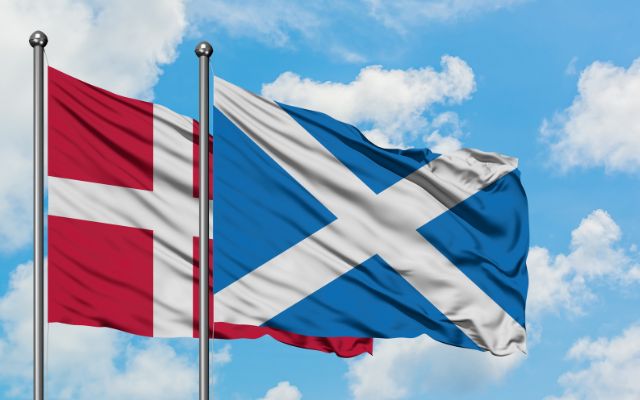
Image: © sezerozger / Adobe Stock
|
||
|
||
|
With its plans to slash the number of NHS boards, the Scottish government is set to follow an almost identical path to one already travelled by Denmark. But, as long-time NHS analyst Neil MacDonald argues, the experience from Denmark is that success will not hinge on whether you can redraw your organisational map – but on what you do – and invest – to make it work.
In his Programme for Government, John Swinney confirmed the most significant structural reform of NHS Scotland in the devolution era: replacing 14 territorial health boards with two strategic mainland boards, alongside different arrangements for the islands. If Orkney, Shetland and the Western Isles retain their own boards, Scotland will end up with five.
That is the same number Denmark chose in 2007, when it replaced 14 counties with five regions and reduced 271 municipalities to 98.
The comparison is useful, but only up to a point.
Denmark shows consolidation – government now wants it to be known as ‘simplification – but also the danger of treating consolidation as the reform itself.
Denmark did not simply redraw boundaries. It linked structure to clinical planning, investment, and a clearer division of responsibility between hospital and community care.
Islands are special
Keeping separate island boards in Scotland would be the right call. Island healthcare is different in practical, unavoidable ways: transport, workforce, weather, resilience and trust all matter. Folding Orkney or Shetland into a board run from Aberdeen or Inverness would quickly look less like reform and more like centralisation. Keeping them separate would show that geography has been built into the design, not added as a caveat afterwards.
But that does not settle the rurality question.
Caithness, Sutherland, Argyll, the Borders and Dumfries and Galloway will still sit inside very large mainland boards under the Scottish government’s plan. For someone in Wick, even a specialist appointment in Inverness can mean a long day. In a larger system, the concern is whether places like that become too easy to overlook. The island settlement shows ministers recognise the principle. The mainland is where they will have to prove it.
What Denmark got right
What Denmark appears to have done well was avoid the trap of merging organisations and calling that reform. Structural change was tied to a clinical strategy. Acute and specialist services were deliberately concentrated, supported by major investment in a new generation of hospitals and by national planning on where highly specialised care should sit. The point was not administrative neatness- it was to deliver a clearer and more consistent model of care.
Just as important, Denmark clarified the responsibilities of municipalities – for prevention, rehabilitation and community support. Regions ran hospitals; municipalities supported people closer to home. The reform was designed with both parts of the system in view.
The missing piece in Scotland
Scotland’s closest equivalent is its health and social care partnerships, but they have not yet featured strongly enough in the public debate.
There are currently 31 integration authorities. Under two mainland boards, each board would have to work with multiple councils – albeit, government wants to redraw their map too – each with its own priorities, budgets and democratic mandate.
COSLA has already warned that the implications for local government, and particularly social care, need careful attention.
If Denmark’s lesson is that hospital and community care must be designed together, Scotland needs to say much more about integration before boundaries are fixed. Otherwise the risk is obvious: larger, acute-focused organisations are created, while the services that keep people well, supported and out of hospital are left trying to fit around them.
Denmark did not stop at five
Denmark’s reform has often been viewed positively, but it was not painless. Remote communities raised concerns about distance from decision-making and access to services, and staff faced pressure during transition.
Reform in Denmark was also supported by investment in infrastructure, transport arrangements and digital follow-up for patients travelling further. That matters, because Scotland is attempting reform in a much tighter financial climate.
If the support does not come with the structure, we risk copying the difficult part of the Danish model while missing the conditions that made it workable.
Denmark has also continued to adapt. Further reform is now planned, with renewed emphasis on care closer to home. Restructuring there has never been treated as the finish line.
The wrong argument
The debate at Holyrood has quickly become a numbers game. Scottish Labour has previously argued for three territorial boards. Jackie Baillie has called for a dedicated Highlands and North East board. The BMA has highlighted how little detail currently sits beneath the headline proposal.
Those questions matter. But I would be very surprised if the public judges this reform by the number of boards on a chart. They will judge it by whether it is easier to get care, whether staff feel less stretched, whether delayed discharge improves, and whether rural communities feel more or less visible than they do now. Administrative simplicity is not the same as transformation.
What ministers should publish first
The lesson from the Dane is: before boundaries are finalised, the Scottish government should publish three things.
In quality improvement by the private sector, that final point would be routine: define the measures before changing the system, not after. A reform of this scale deserves the same discipline. Without it, we may not know whether the new structure has improved care or simply rearranged responsibility.
Having worked across NHS Scotland, government and industry, I have seen enough reform programmes to know that structure is usually the easy part. The harder question is what changes for patients, staff and communities once the new map is drawn.
There is a genuine opportunity here. Fragmented planning, digital systems and workforce arrangements have held Scotland back, and fewer strategic bodies could help address that. But Denmark’s lesson is not that five is the magic number. It is that structural reform only works when it is tied to service design, investment and accountability. Scotland should copy that discipline, not just the arithmetic.
Neil MacDonald writes in a personal capacity. He has over 30 years’ experience across NHS Scotland, Scottish Government and working with industries supplying the NHS in Scotland. As a guest contributor, his views are his own.
Read more: NHS Scotland chief named as battle lines emerge; Briefing: The 5-year plan for NHS, care and science; New NHS staff data makes case for workforce plan
Sign up to receive our bulletin for key health & social care updates straight to your inbox. |