|
Scotland must prioritise new bladder cancer test |
Related newsBoost to Glasgow leukaemia research Scots women at the forefront of medical sciences Call for genomic test for every cancer patient Navigating ‘next frontier’ of AI in medical devices Ancestry clues to lottery of who gets cancer Discarded bowel tests offer ‘unparalleled’ insights 
|
|
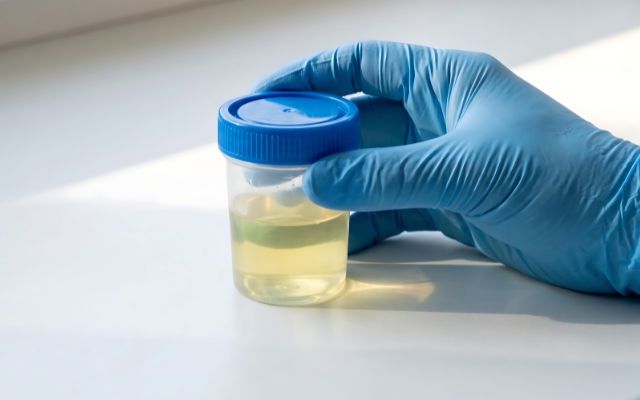
Image generated using AI: © Berlian / Adobe Stock
|
||
|
||
|
A bladder cancer charity is calling on NHS Scotland to act quickly to offer routinely a urine test that can identify nine in 10 bladder cancers – saying the case for embedding the test into routine cancer diagnostic practice is greater in Scotland than anywhere else in the UK and patients here have most to gain.
Last month clinicians at Edinburgh and Birmingham universities alongside NHS colleagues and the diagnostics company Nonacus published the results of a trial of a urine test involving nearly 1,000 patients referred urgently to seven NHS urology departments across Scotland and England.
The GALEAS Bladder test, which looks for DNA shed by bladder cancer into urine, identified 71 of 77 cancers (92.2%) — including every one of the 17 muscle-invasive cancers found during the study and 35 of 36 high-grade cancers.
Among the 30% of patients whose blood in the urine was not visible to the naked eye, the test picked up every cancer.
A negative result meant a 99.3% likelihood that the patient did not have bladder cancer.
Some 1,700 people in Scotland are diagnosed with bladder cancer every year, and incidence is increasing. The charity Fight Bladder Cancer Scotland says a litany of factors indicate Scotland is doing less well for these patients than the rest of the UK.
With early diagnosis a key factor in survival, only just over half (53%) of people in Scotland are diagnosed at an early stage (stages I and II), compared with three-quarters across England, Wales and Northern Ireland. Meanwhile, Scotland is also the only UK nation with five-year survival below the European average.
Deprivation is a key driver of both incidence and later-stage diagnosis. Older men living in Scotland’s most deprived communities are least likely to present promptly with symptoms and most likely to face the longest waits for investigation.
The chair of Fight Bladder Cancer Scotland Dorothy Markham says effective, early diagnosis of bladder cancer is now a possibility – and an urgent priority for Scotland:
“Scotland’s survival deficit in bladder cancer is, at root, an early-diagnosis deficit. Nearly half of Scottish patients are diagnosed late, and we know that gap is concentrated in our most deprived communities.
“A simple urine test that can be done at home, and that catches every muscle-invasive cancer in a real-world NHS setting, is exactly the kind of tool that could change those numbers.
“Scottish patients and Scottish hospitals helped generate this evidence. We now want to see Scotland lead on adopting it.
“We are calling on the Scottish Government, Scottish Health Technologies Group and NHS Scotland health boards to evaluate this test for use in the urgent suspicion-of-cancer pathway without delay, and to prioritise roll-out in the areas of highest deprivation where late diagnosis is most common.”
Targeting cystoscopy
The study authors say the urine test does not replace cystoscopy, the insertion of a scope into the bladder, but it could allow clinicians to identify which patients are most urgent, and those who might not need the procedure.
Fight Bladder Cancer Scotland says adopting the test will help Scotland address long waits for cystoscopy and the wider failure to meet several Quality Performance Indicator targets, often due to workforce and theatre capacity.
The charity says it would welcome a public awareness push on blood in the urine, targeted at older men, so that more Scots come forward early enough for a test to make a difference.
GALEAS Bladder: prospective real-world evaluation in urgent referral haematuria patients was published in European Urology Oncology on 2 September 2026. It was led by the University of Birmingham and Nonacus Ltd and involved 964 patients at seven NHS urology departments in Scotland and England.
Read more: Call for stoma care to be equal across Scotland; Robotic surgery shows pioneering path to the future; Post-surgery patients to benefit from bladder scanner
Sign up to receive our bulletin for key health & social care updates straight to your inbox.
Tags: Cancer; Diagnostics; Life Sciences; Research & Innovation. |