|
Structural change alone is not sufficient |
Related newsFrom 14 to 5 – one lesson from Denmark NHS boards told to collaborate as two regions Scots kidney disease patients urge politicians to act Pharmacists urge leaders to act for the profession Scotland to work with UK on Physician Associate reform Holyrood ADHD and autism inquiry launched 
|
|
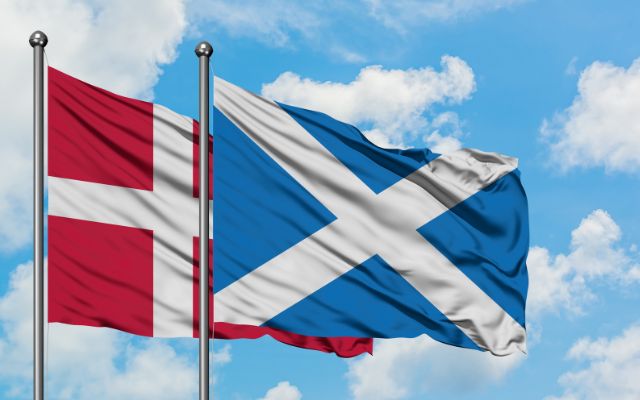
mage: © sezerozger / Adobe Stock
|
||
|
||
|
On New Year’s Day, Denmark’s long-planned package of reforms to its health and social care system comes into force. Denmark’s Health Close to You is the next step in the nation’s efforts to move more healthcare out of large hospitals and closer to people’s homes and communities, while also reducing geographical inequalities in access.
As the Scottish government develops its plans for public service reform that will redraw both the NHS and local government maps, Gerry Marr, a Scottish former NHS board chief executive, says ministers here should carefully consider adopting some of the changes being brought in by the Danes.
As members of the faculty of the Institute for Healthcare Improvement, he and Professor Jason Leitch spent three years working with the Danish health service to set up a national patient safety programme:
“They wanted their service to be modelled on the Scottish Patient Safety Programme,” says Gerry. “In the end, they adopted our model lock, stock and barrel, which is, I think, an incredible tribute to Scotland.”
Now, he says, Scotland should look carefully at how the Danes are reforming their public services, as Denmark transfers responsibility for key areas – acute nursing; all health and care beds; specialised rehabilitation; and prevention – from local municipalities (equivalent to local councils) to four regions.
In 2007, Denmark, which has a similarly sized population and similar geographical challenges to Scotland, moved from 14 health regions to five.
In 2027, Health Close to You merges two of those five regions, sparsely populated and underserved Zetland and capital city region Copenhagen, into one.
17 new elected Health Councils will work across the four regions to plan and oversee services, negotiate agreements with GPs and specialists, and oversee a new three-year National Health Plan that prioritises chronic disease pathways, digital integration, strengthening primary care and simplifying patients’ journeys.
“Working with the faculty of The Institute for Healthcare Improvement, I’ve coined the phrase that structural change is necessary but never sufficient. ,” says Gerry.
“To make it work, the Close to You reform package introduces explicit legal and financial incentives to move care away from centralised ‘super hospitals’ and into the community.
“The shift is incentivised by the way money flows. A ‘One-Way Valve’ has been put in place where growth in hospital spending is capped at inflation and, while the regions are legally permitted to shift money out of hospital budgets and into primary care, they are strictly barred from moving community funds back into hospitals.
“There is also a new 96-hour rule. I'm a clinician, a nurse, by background, and this reform makes sense. It extends post-discharge hospital responsibility for certain categories of elderly patients so that, for 96 hours after a patient leaves, the hospital department remains clinically accountable for their care, managing remote care alongside municipal nurses to prevent avoidable readmissions and. I believe, helping to address delayed discharge, a perennial problem for every health system.
“On top of this, for the first time, specialised home nursing and acute local clinics are being stripped from local municipalities and handed to the regions. And, because regions now control both the hospitals and the specialised home care, they have an internal financial incentive to scale up home care to save on expensive acute beds.
“Beyond that, although Denmark is the most digitally enabled health system in Europe, they are now reforming their whole digital system, merging all digital platforms under a single digital authority to give people the ability to control their own lives, including their healthcare.”
Local government’s role
On his trips to Denmark, Gerry Marr saw at first hand the work of an organisation called Kommunernes Landsforening (KL), the national body representing local government in Denmark, whose nearest equivalent in Scotland is COSLA.
With local municipalities responsible for social care, community nursing and prevention, KL, he says, has been central to the relationship between the municipalities and the regions – and a strong voice in shaping these latest reforms:
“KL was responsible for holding the ring in the negotiations between the municipalities and the regions.
“Every year, they lead negotiations on behalf of local government and supports the 4 year agreements on cooperation between local government and regions
“The history of Denmark is that structural change happens as a means to an end: to delivering the redesign of services, and the underpinning resources, that effect care ‘Close to You’.”
Read more: From 14 to 5 – one lesson from Denmark; NHS Scotland chief named as battle lines emerge; Briefing: The 5-year plan for NHS, care and science; New NHS staff data makes case for workforce plan
Sign up to receive our bulletin for key health & social care updates straight to your inbox. |

 Gerry Marr (pictured) spent some 40 years working as a nurse and healthcare leader in Scotland, Australia and the USA, including serving as chief executive of NHS Tayside.