|
New green inhaler prescribing guidance |
Related newsNational Pharmaceutical Agency remains on hold Pharmacy’s road to stigma-free drug dependency care Pharmacists urge leaders to act for the profession Scots honoured in health, care and sciences Report spotlights drug shortage crisis GPs told not to prescribe hundreds of items NHS Tayside welcomes largest intake of doctors New funds for home healthcare tech innovators Experts: Drugs deaths need emergency response now Scotland’s first Advanced MS Champion appointed 3D model could transform pregnancy care Chief Scientist calls for more research volunteers 
|
|
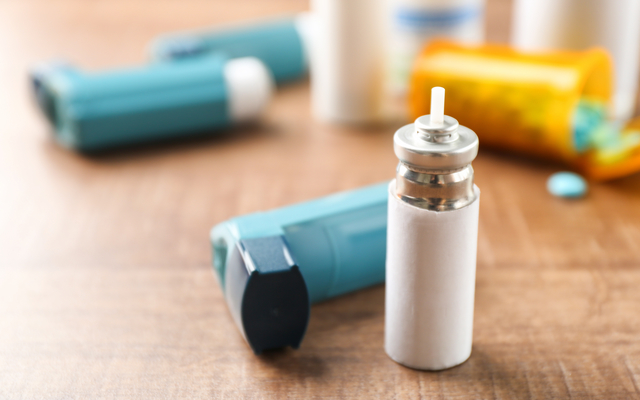
Image Credit: © Africa Studio
|
||
|
||
|
Updated prescribing guidance is set to be published in the coming weeks, promoting person-centred care and helping NHS clinicians and patients switch, where possible, to more environmentally friendly inhalers.
Visiting a Tayside GP practice yesterday, Health Secretary Humza Yousaf announced that the government will release this new guidance as part of its wider NHS Scotland climate emergency and sustainability strategy this autumn.
Mr Yousaf said that reducing medicines emissions is central to the strategy:
“The climate crisis is a public health crisis, that is why earlier this year we committed to NHS Scotland becoming a net-zero organisation by 2040.
“Reducing the use of emissions from medicines, such as inhalers, will make a significant difference to our overall carbon footprint and we will support patients and medical professionals to make that switch, only where it is clinically appropriate to do so.”
Used for treatment of asthma and chronic obstructive pulmonary disease, the two main kinds of inhalers are preventers and relievers – with concerns raised regarding an over-reliance on relievers raised earlier this years by Asthma and Lung UK. The national charity appealed for improved guidance and public messaging as a survey revealed 1 in 5 people in Scotland use their reliever inhaler too often.
This new guidance has “patient safety at the centre” and aims to help clinicians change their inhaler prescribing practices – where suitable – to avoid unnecessary environmental harm. It will support shared conversations with patients and improved understanding of the different types of inhalers.
Inhalers’ overall environmental impact is estimated to be equivalent to around 79,000 tones of CO2 a year - more than transport emissions from 9,300 ambulances, cars, HGVs and motorbikes from the NHS.
Current widespread use of the ‘metered dose’ inhalers which adopt propellants to deliver a ‘puff’ of medicines as a person inhales. However, these propellants are greenhouse gases which contributes to the overall carbon footprint of inhalers.
Although some inhalers use less propellent per puff or a propellent with a lower environmental impact, this new guidance will highlight the benefit of dry powder inhalers. Dry powder inhalers use a person’s own breath to deliver their medicine and have less powerful global warming potential.
Arlene Shaw, NHS Tayside Respiratory Managed Clinical Network Lead Pharmacist, welcomed the Health Secretary to learn about Tayside’s climate action work across patient care:
“We have recently agreed our own inhaler prescribing strategy which promotes effective treatment regimes, while considering the environmental impact. Our strategy ensures we’re working to reduce our CO2 emissions whilst making sure patients remain at the centre of everything we do.”
This includes improved techniques for patients prescribed inhaler medicines and the strategy – as part of a wider clinical network plan – which aims to support the best outcomes for patients while reducing CO2 emissions when safe. Ms Shaw adds that personalised care is key to its delivery:
“The type of treatment and the type of device to deliver treatment are carefully considered to ensure they are best suited to individual patients.”
Responding to the national climate emergency strategy, Clare Morrison from the Royal Pharmaceutical Society (RPS) Scotland welcomed the focus on medicines' contribution and prioritisation of shared decision-making. RPS have called for the Scottish government to establish supportive infrastructure to help enable green prescribing and improve social prescribing delivery.
Ms Morrison adds that medicines environmental impact should be included in all prescribing guidance, telling healthandcare.scot that it is as essential as costing information:
“All prescribers have medical information formularies produced by health boards – and within that there’s information on clinical and cost effectiveness but there isn’t anything about environmental impact.
“We need to see that information included as part of these formularies so at the point of prescribing they have this information which can then be shared and discussed with patients.”
Currently, the broader updated guidance to reduce inhaler CO2 emissions is being finalised, with input from NHS specialists and patients, and is due to be published by the end of autumn.
Read more: NHS sustainability strategy launched; How air pollution affects our health; The case for virus-killing uniforms
Sign up to our bulletin for key health & social care updates straight to your inbox and you can follow healthandcare.scot on Google News. |
