|
Insight: Public have “huge” covid-19 responsibility |
Related newsInfection risk petition set to fail Aberdeen A&E first to offer routine HIV tests ‘Major’ update to One Health AMR register Children’s doctor new Chief Scientific Adviser Chief Medical Officer: ‘Critical connections’ priority Livingston-made vaccine gets UK green light 
|
|
|
||
|
||
|
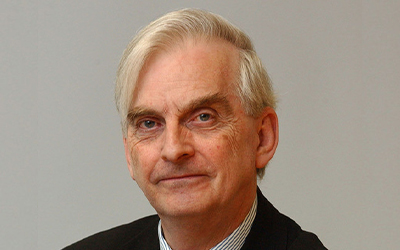
Professor Hugh Pennington, Emeritus Professor of Bacteriology at the University of Aberdeen and former chair of inquiries into E-coli outbreaks in both Scotland and Wales, speaks to healthandcare.scot about the covid-19 pandemic.
He says that, although healthcare workers are inevitably on the front line in treating the virus and have an impact on its spread, there is still a huge responsibility on the rest of the public to help break the cycle of infection:
“It was the same in the SARS outbreak. They are in the frontline and some young healthcare workers have got the virus and died from it…Although the health impact is much less on young people, that doesn’t mean that it’s zero. It’s the same with flu – that can still kill young-ish people. I have seen cases where younger people with no pre-existing health conditions have died from the flu; it’s not common but it has happened.
“And a lot of young people seem to think it’s not going to be a problem for them – ‘I’ll have a bit of a cough and get over it but I can still go to the pub and so on.’
“That is dangerous from two points of view. One is that you are still at risk of getting a nasty infection although possibly less nasty than what Granddad might get. But on the other hand you can still spread the virus.
“What I have been saying for weeks is that the virus will not surge in all parts of the country at the same rate – some parts of the country will be busier than others for reasons that are not all that clear. But the reasons don’t matter, it’s the fact that there will be hotspots that does.
“I suspect tighter restrictions will come but the prime minister has been very reluctant to do things like close pubs and restaurants for reasons best known unto himself.
“We really do need to get a grip on London because there will be hotspots – as in Italy where in the north the virus had its terrible impact except for one or two places where they have done a lot of testing and managed to get hold of it.”
The virus has so far behaved in a relatively predictable way, Professor Pennington says, but we lack medicines that we know can treat the infection:
“We know it is easy to spread, or it is showing itself to be very adept at infecting people. It spreads in the same respiratory way that flu does although in many ways it is different from flu because it has a different effect on different parts of the population.
“It’s much less aggressive for young people and, like flu, it is very aggressive in the elderly, relatively speaking; but unlike flu it is three times nastier in terms of when it meets with somebody over the age of 70.
“The treatment when you get to that point – so say if you are 80 and you have acute pneumonia – the treatment is exactly the same as if you have flu but the disadvantage is that we don’t have antivirals for covid-19.
“There’s a lot of talk about antivirals and whether they are going to work but it’s too early to say. There is a degree of optimism, but that might be misplaced in the sense that the drugs I’m talking about are ones that are in the formulary as approved as being safe but that doesn’t mean they’ll have any effect on the covid-19.”
Asked about the UK and Scottish governments’ decision to adopt a policy of community surveillance where a sample group is tested and results extrapolated, Professor Pennington says there are steps that he believes should be taken to increase testing, including drafting in the military or taking advantage of the laboratory expertise that lies outwith NHS laboratories:
“The absolute necessity is to test, test, test – as the WHO says – and that doesn’t mean focusing the test on this group or that group.
“My view is that they should be testing everyone – anybody who wants to be tested should be and they should be testing the general public as it were. We need to know, if someone has symptoms or thinks they have the virus and we need to know if a healthcare worker has it or not…The only way you can tell is by doing testing.
“We’ve been rather slow at building the capacity for testing for reasons which I don’t really understand.
“It just hasn’t been given high enough priority. They have prioritised the production of ventilators which is absolutely fair enough, but testing is in exactly the same category and it doesn’t need to interfere with other issues like ventilation at all…there’s absolutely no conflict.
“The only thing is the budget – you need to spend money on both these things and that’s not a problem at the moment because the chancellor has an open cheque book.
“My view for some time is that the infrastructure hasn’t been there, but let’s put it there – as simple as that.
“Let’s buy testing machines and install them in laboratories. I know there are certainly enough laboratories and there enough trained staff in laboratories to do the tests and there are quite a lot of people out there who know about that kind of technology who are not doing NHS work that could be drafted in – researchers, people doing PhDs and so on – people who use this technology in their daily work.
“They could be asked to help for the next three months, doing what they are doing now and help the hospital labs or even in their own places of work and research institutes.
“…I’d like to see them have drive-through tests where people who go to the supermarket to do their panic buying, they’re only allowed in if they give a swab sample.
“It’s not an invasive test, you’re not taking a blood sample, just a swab. You don’t have to have excessively trained people to do that. That’s a role that you could easily train soldiers to do – this is a logistical problem which the military is very good at solving.”
On Boris Johnson’s suggestion earlier this week that the tide could be turned on the virus within 12 weeks, Professor Pennington says there is so little that is predictable about the current situation to allow for any accurate timescales, but much the public can do to influence the outcome:
“Once it’s said it is now repeated and it creates an expectation. Johnson doesn’t know that any more than I do, or any of his experts do and all we can go on is what has happened in other countries and how long the virus has taken to spread, but nobody knows when the peak will be.
“It seems there will be a peak judging by what’s happened in China, South Korea and so on, but will we get into an Italian situation where you can’t seem to see the end of the road at all? Let’s hope not.
“When people say ‘how long will this go on for?’, well we are in the hands of the virus.
“Now, of course we are not just in the hands of the virus; we are in the hands of the general public in terms of taking all the measures which are going to stop the virus spreading.
“At the end of the day the one statistic that really matters is the number of cases diagnosed on a daily basis and that is telling us probably what happened five days before but there’s nothing you can do about that because you can’t identify people who have just been exposed.
“You can identify people who have just been diagnosed and say five days ago so many people were exposed, and that’s all you can do.
“The number of deaths is only a marker of how nasty the virus is – it tells you nothing, nothing about what’s happening now because it can take somebody two to three weeks after they have been infected to die, which only tells you what happened three weeks ago.
“So to rely on deaths as any kind of measure of anything except how nasty the virus is and how good we are at treating it – it is not something I would emphasise at all.
“The one statistic that really matters is how many cases were diagnosed yesterday or today and is that number going up; is it staying the same; or is it going down?
“What we are looking for is for it to start going down and we need to keep fingers crossed and hope that the virus is declining in terms of transmission.”
Sign up to our bulletin sent twice a week so you don’t miss out on the latest health and social care news.
Tags: Infectious disease. |
