|
Quality of testing key to new phase of virus response |
Related newsInfection risk petition set to fail Aberdeen A&E first to offer routine HIV tests ‘Major’ update to One Health AMR register Children’s doctor new Chief Scientific Adviser Chief Medical Officer: ‘Critical connections’ priority Livingston-made vaccine gets UK green light 
|
|
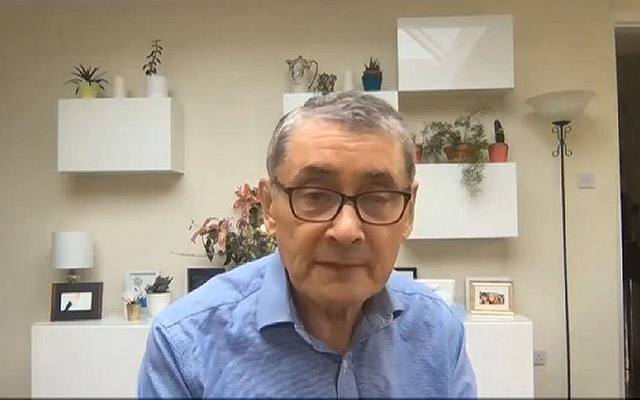
Image courtesy of the Scottish Parliament
|
||
|
||
|
As lockdown is extended, Professor Sir Harry Burns has told the Scottish Parliament that the quality of testing, not just quantity, needs to be improved to enable a safe transition.
Giving evidence to Holyrood’s Covid-19 Committee, the former Chief Medical Officer for Scotland also raised concerns about the rise in the number of people dying from non-covid related conditions. He told MSPs messaging from government around protecting the NHS by staying home may have meant some people have not reached out for help with conditions that should have received more urgent attention.
The Scottish Government is in the coming weeks set to bring in a test, trace, isolate and support programme that Nicola Sturgeon said could in some cases see people being asked to isolate repeatedly.
“We have a long way to go on test, trace and isolate at this time,” Professor Burns said.
“There is an inconsistency across the UK on testing, so we need to have a protocol in place that sees people suspected of having the virus all been tested properly, not just being told to self isolate.
“That’s particularly true of care homes and the people going into care homes who may have a cough or a subtle change in temperature, taste or smell. We need that to happen and we need also a process for tracking their contacts.”
Professor Burns said a nurse he had been in touch with said, when she felt unwell and attended a drive through test centre with her partner and two children, test kits were handed over that her children were expected to use themselves.
There were also instances of individuals being denied access to a test and told simply to go home and isolate instead with no discussion of whether there was anyone vulnerable at home were further cause for concern, he said.
“There has been a huge emphasis on testing – that’s all very well so long as the testing is accurate and you know what you are going to do about testing, and what you are going to do about tracing, because that’s a step that is needed in order to then go ahead and isolate people and stop further spread, so what I’m hearing are slightly worrying things about the testing process.”
New guidance was issued last week recommending people wear face coverings in situations where social distancing is harder to do, including in shops and on public transport. Doubts have been widely raised about the effectiveness of face coverings when it comes to reducing the spread of the virus, but Professor Burns says the First Minister has been right to bring in the new advice.
“If you are a carrier of the virus you are capable of spreading it but then if you wear a mask the risk of spread reduces – there is very significant evidence on that so we should be encouraging mask wearing.”
He said it was one of a number of things that should be done that have a small effect on their own, but combined with other things like quality testing and public buy in to a programme of tracing and isolating, “have a significant effect, hopefully one that is as great as present lockdown, so that moving out of current restrictions can be done safely”.
The committee heard there is little doubt about the effectiveness of the current lockdown in terms of limiting the spread of covid-19 and preventing the NHS from becoming overwhelmed, but concerns are growing about unintended consequences.
Professor Burns explained: “At one point during March the number of deaths that we were seeing in Scotland per week that were non-covid related was potentially two to three hundred more than you would have seen in previous weeks.
“Now that may well have been because people were sitting at home with conditions that would normally receive urgent attention but they were too scared to go to hospital.
“The message that was put out around protecting the NHS may have had some of those effects. The prospect of overwhelming services was a very real one but we needed to maintain primary care and support primary care in a way that allowed people to feel they were able to go and see their GP and be referred to non-covid parts of hospitals that were still functioning.
“So yes, there are physical health consequences of lockdown and clearly mental health consequences, all of which are damaging for the well-being of society.”
Sign up to our bulletin sent twice a week so you don’t miss out on the latest health and social care news.
Tags: Infectious disease. |
